


As practice shows, in many cases, overhauling the cylinder in a garage does not produce the desired result.
Therefore, in the event of a malfunction, we recommend replacing the entire brake master cylinder.
Replacing the Brake Master Cylinder Reservoir
You will need a screwdriver.
Disconnect the wire from the negative terminal of the battery.
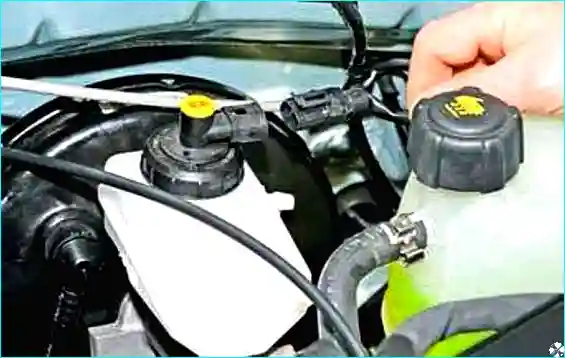
Disconnect the wiring harness connector from the brake fluid level sensor.
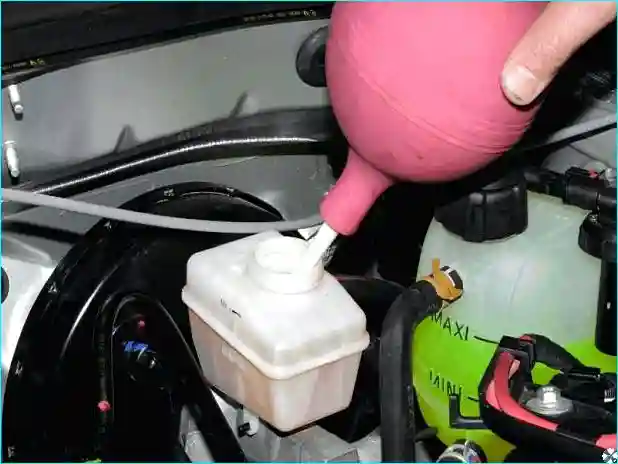
Unscrew the reservoir cap and pump out the brake fluid, for example, with a rubber bulb or a medical syringe.
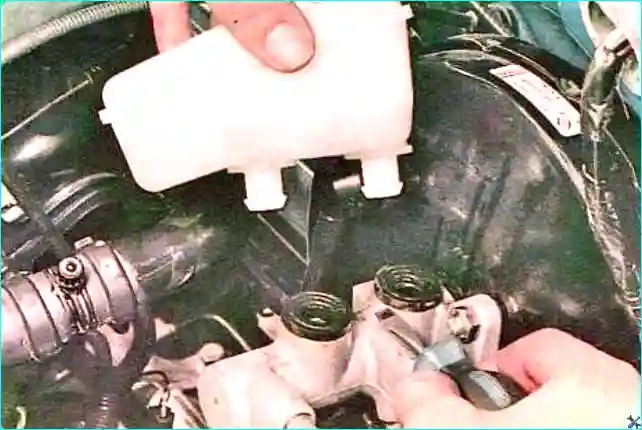
Using a screwdriver, remove the reservoir, removing its pipes from the connecting parts bushings
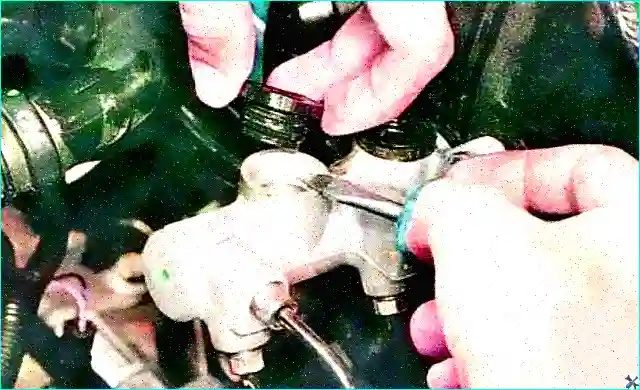
Remove the connecting bushings from the cylinder body holes.
Inspect the bushings and, if there are signs of rubber aging, replace them.
Install the parts in the reverse order of removal.
To facilitate installation of the reservoir, moisten the connecting bushings with fresh brake fluid.
Fill with brake fluid and bleed air from the hydraulic system (see "Replacing the Renault Logan Brake Fluid")
Replacing the Brake Master Cylinder
You You will need: a special 11 mm wrench for brake lines, and a 13 mm wrench.
Disconnect the negative battery terminal.
Unscrew the cap of the brake master cylinder reservoir and pump out the brake fluid from the reservoir, for example, using a rubber bulb.
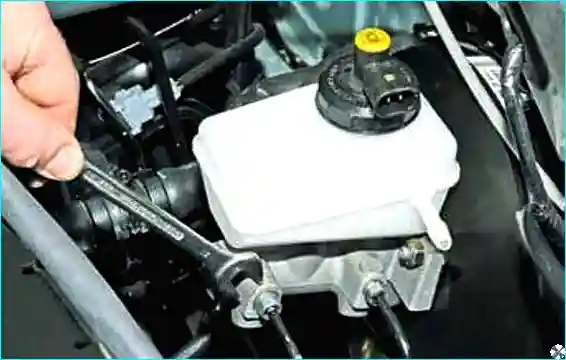
Unscrew the nuts securing the four lines to the cylinder and move the lines to the side.
Seal the lines using any available method (for example, by placing protective caps on the bleeder valves on their ends) to prevent brake fluid from leaking. Fluids.
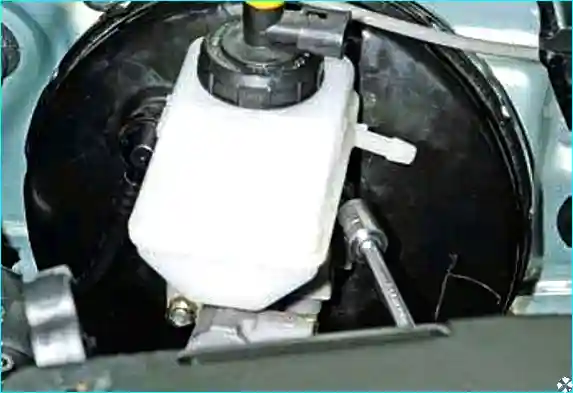
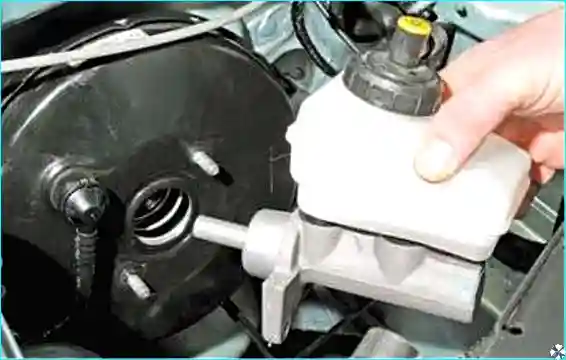
Remove the two nuts securing the brake master cylinder to the brake booster and remove the brake master cylinder.
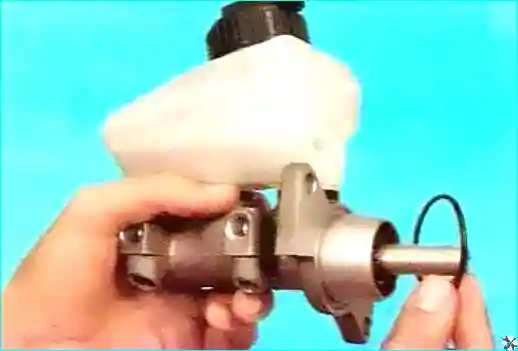
Note that the brake master cylinder flange is sealed with a rubber ring.
Replace any ring that is too compressed, hardened, or torn.
Reinstall the parts in the reverse order of removal, fill with brake fluid, and bleed the system (see "Replacing the Renault Logan Brake Fluid").


