 ZH
 FR
 BE
 DE
 RU
 UK
 KK
 EN
 ES
It is recommended to check the oil level in the automatic transmission (AT) every 15,000 km. A complete fluid change is scheduled every 60,000 km (or 45,000 km under severe operating conditions).
If the oil has darkened, turned black, or has a burnt smell, or if metallic particles are detected, the fluid must be replaced urgently, and a computer diagnostic must be performed to identify the cause.
The automatic transmission (DP0/AL4 type) must be filled only with the specified fluid: ELF Renaultmatic D3 SYN (or a full equivalent that meets the LT 71141 specification). The total system capacity is approximately 6–7 litres, but during a partial change through the drain plug, approximately 3–4 litres are drained.
Checking the level and topping up the oil
We start the engine and warm up the transmission. The oil temperature in the AT should be in the range of 50–60 °C (ideally 60 °C).
To speed up warming, a short drive can be performed. The exact oil temperature is determined using a diagnostic scanner connected to the vehicle's OBD-II diagnostic connector.
We park the vehicle strictly on a flat, level surface and apply the parking brake.
We press the brake pedal and, keeping it depressed, sequentially move the selector to all positions (P, R, N, D), pausing in each mode for 3–5 seconds to fill the torque converter and hydraulic block with oil.
After that, we move the selector to the «N» (Neutral) position and release the brake pedal. The engine must be running at idle speed.
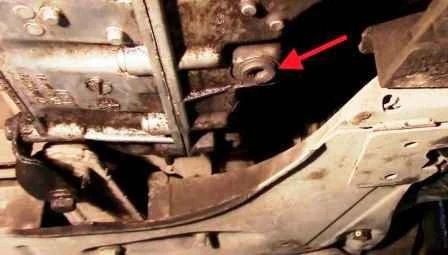
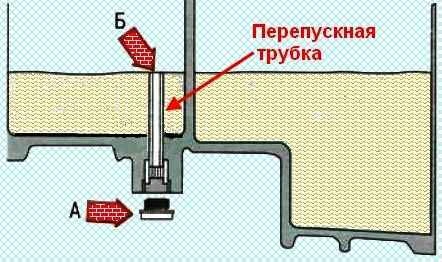
We place a wide, clean container under the transmission to collect the working fluid.
We unscrew the plug of the check (drain) hole located on the bottom of the transmission sump. With a normal level and an oil temperature of 50–60 °C, the fluid should begin to flow out in a thin stream that turns into frequent drops.
Warning! A burnt smell of oil or the presence of metallic particles (fractions) in it indicates internal wear of the friction plates and the need for a complete overhaul of the AT.
If the oil does not begin to flow out of the check hole even when the temperature rises to 60 °C, topping up is required.
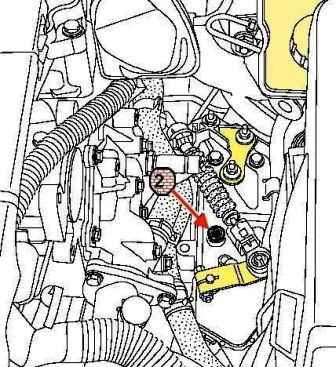
To top up, we disconnect the selector control cable from the transmission (for ease of access). We unscrew the plug of the filler hole located in the upper part of the transmission sump.
We pour in the specified oil through a funnel with a long flexible hose until it begins to flow out of the lower check hole.
The oil should flow out of the check hole in separate, infrequent drops. If it flows out in a continuous stream, let it drain until infrequent dripping begins.
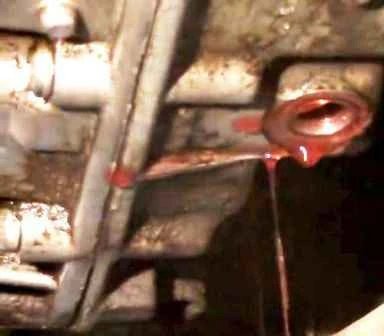
We screw in the plugs of the check and filler holes with a tightening torque of 30–35 N·m.
Complete oil change in the AT
We warm up the oil in the AT to operating temperature by taking a short drive (10–15 km).
We park the vehicle on a flat inspection pit or lift.
We move the selector lever to the «P» (Park) position and apply the parking brake.
We place a 4–5 litre container under the transmission to drain the oil.
Using a square key (or hex key) size 8 mm, we unscrew the lower drain (check) plug.
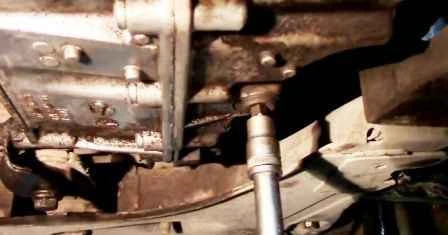
We drain the oil. Since a plastic level tube (overflow tube) is installed inside the sump, only part of the fluid will drain by gravity (about 3 litres).
After that, without closing the lower hole, we insert an 8 mm hex key into it and unscrew the level tube itself to drain the remaining oil from the sump.
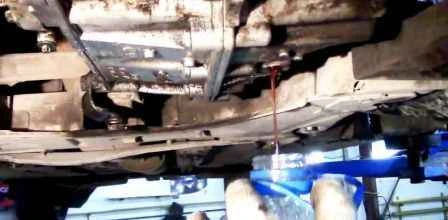
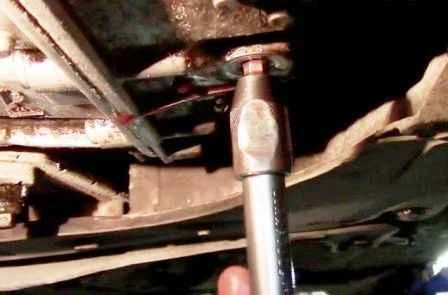
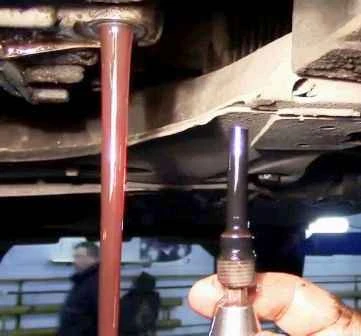
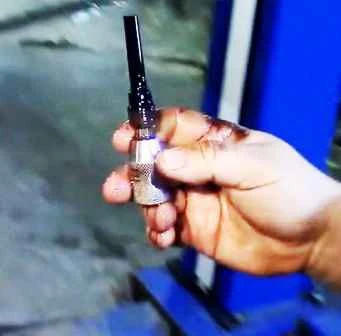
The level tube is plastic, so when reinstalling, it must be tightened carefully, by hand, without excessive force, to avoid stripping the thread.
After all the oil has drained, we install and tighten the level tube by hand. Then we also tighten the lower drain check plug by hand (the final tightening with a torque of 30–35 N·m is done at the very end).
We determine the exact amount of oil drained from the transmission. We need to pour in approximately the same volume (usually 3–3.5 litres).
If the vehicle was on a lift, we lower it to the wheels and prepare to fill the oil from above.
We open the bonnet. For ease of access, we loosen the clips and remove the air duct.
Using an 8 mm square key, we unscrew the upper filler plug.
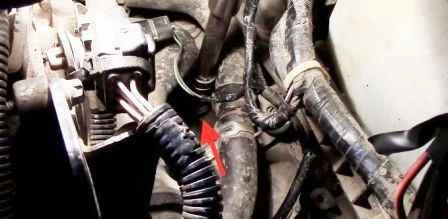
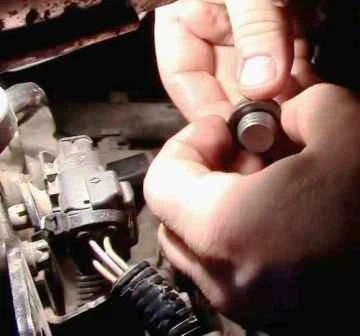
We insert a funnel with a long flexible extension into the filler hole and pour in new oil in a volume equal to the amount drained.
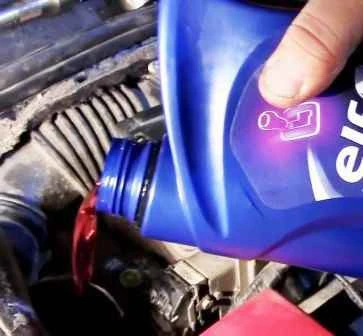
After that, we start the engine and warm it up to operating temperature.
Without turning off the engine and keeping the brake pedal depressed, we sequentially switch all modes with the selector lever (P, R, N, D), pausing in each for 5–10 seconds, so that the oil flows through the internal cavities of the AT.
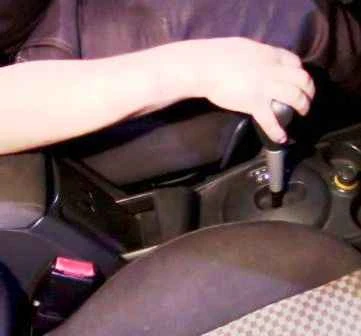
We move the selector to the «N» position. We place a container under the lower check hole and, with the engine running, carefully unscrew the check plug.
If the oil does not flow out or the volume of oil that has flowed out is less than 0.1 litres, we perform the following procedure:
- Stop the engine and screw in the lower drain plug.
- Top up with another 0.5 litres of oil from above.
- Allow the transmission to cool slightly (to a temperature of about 50 °C).
- Start the engine again at idle speed.
- Using the scanner, wait for the AT oil temperature to rise to 60 ± 1 °C.
- Place a container under the lower plug.
- Unscrew the drain hole plug.
These operations must be repeated until, at 60 °C, at least 0.1–0.2 litres of oil begins to flow out of the hole (turning into infrequent drops).
Finally, tighten the plugs with a torque of 30–35 N·m, and reinstall all removed parts (air duct, sump guard) in reverse order.