


Check the timing belt tension at every maintenance.
Adjust the tension if necessary, as a loose belt will wear out its teeth quickly and may also cause the belt to jump on the crankshaft and camshaft pulleys. This will lead to incorrect valve timing and loss of engine power, and if the belt jumps significantly, it can even cause damage.
The manufacturer recommends checking the belt tension and monitoring it during adjustments using a special strain gauge.
Therefore, there is no information in the technical documentation on the force required to deflect a belt section by a certain amount.
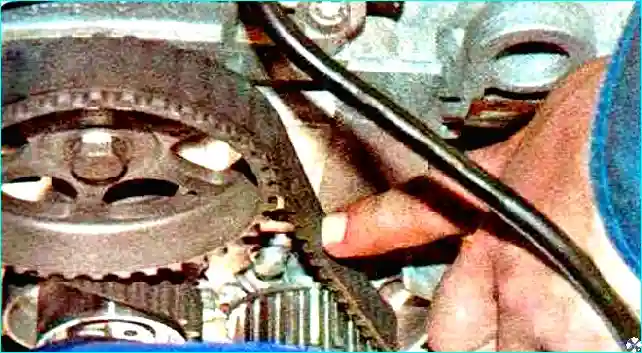
In practice, you can initially roughly estimate the correct belt tension using the "rule of thumb": press on the belt section with your thumb and measure the deflection with a ruler.
According to this universal rule, if the distance between pulley centers is between 180 and 280 mm, the deflection should be approximately 6 mm.
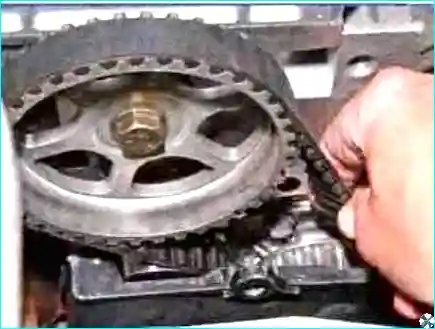
There is another way to pre-check the belt tension by twisting its drive section along the axis. If you can twist the belt by hand more than 90°, the belt is too loose.
These methods can only diagnose excessive belt looseness, so contact a service center for a precise tension check and adjustment.
Replace the timing belt if, upon inspection, you find:
- - traces of oil on any surface of the belt;
- - signs of wear on the toothed surface, cracks, cuts, folds, and separation of the fabric from the rubber;
- - cracks, folds, indentations, or bulges on the outer surface of the belt;
- - fraying or delamination on the end surfaces of the belt.
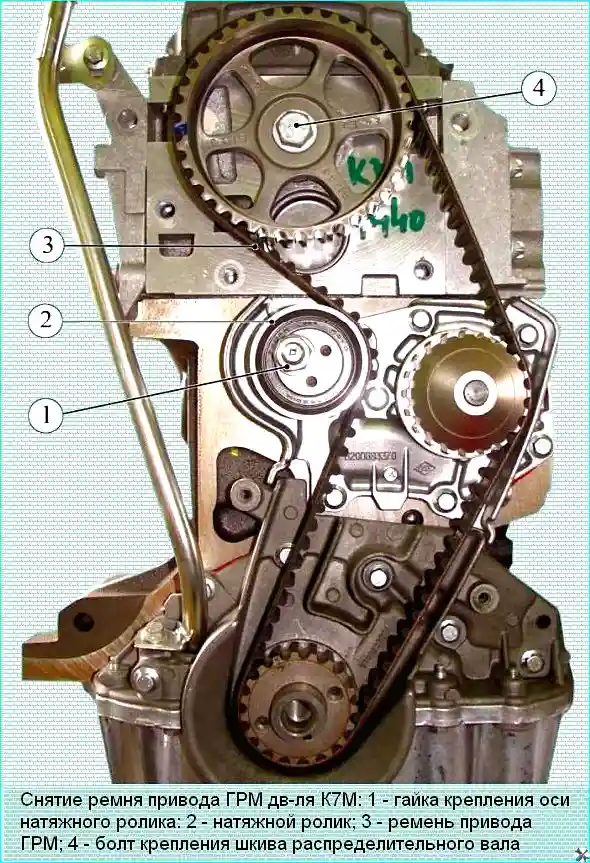
Any belt with traces of engine oil on any surface must be replaced, as oil quickly degrades rubber.
Immediately correct the cause of oil getting on the belt (usually a leak in the crankshaft and camshaft seals).
Carry out this work on an inspection pit, overpass, or, if possible, on a lift.
Set the piston of cylinder #1 to TDC on the compression stroke and remove the accessory drive pulley and the lower timing belt cover.
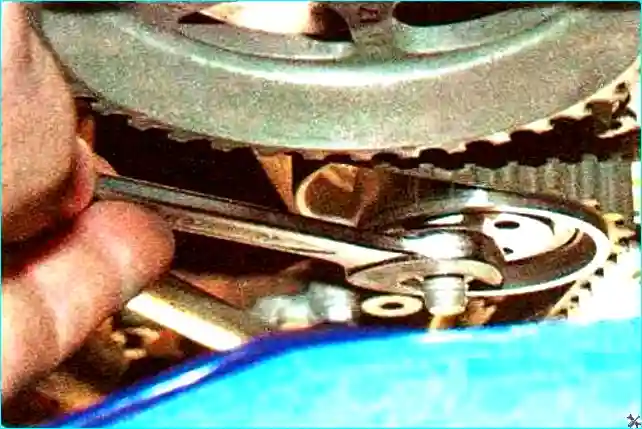
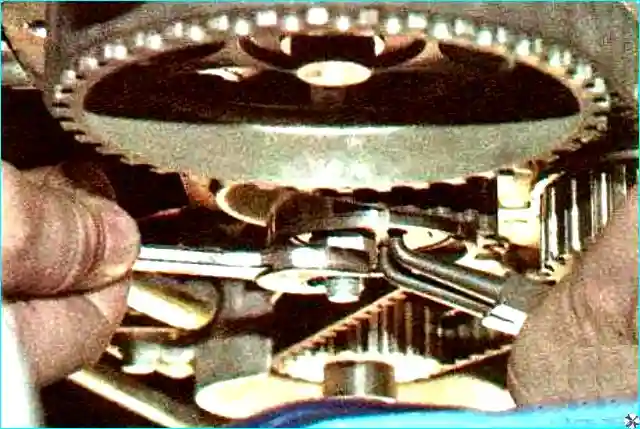
Remember or mark the position of the tension roller relative to the axle, loosen the tension roller mounting nut.
Turn the roller clockwise, thereby loosening the timing belt tension.
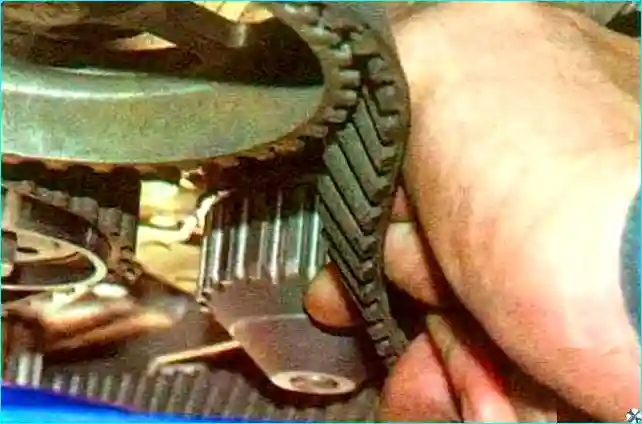
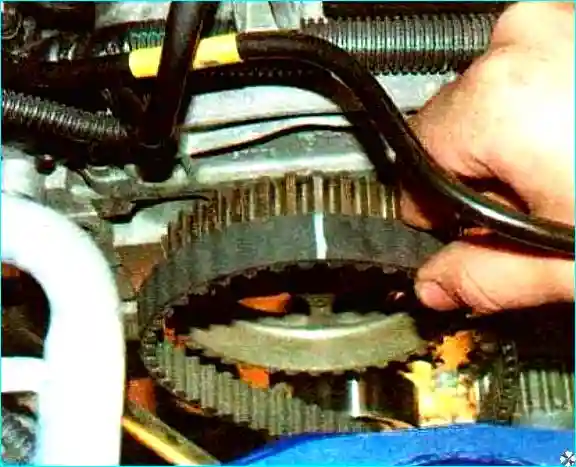
Removing the belt from the water pump sprocket
Removing the belt from the camshaft
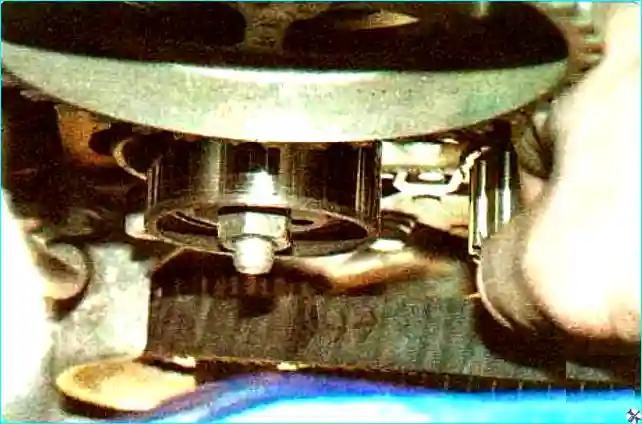
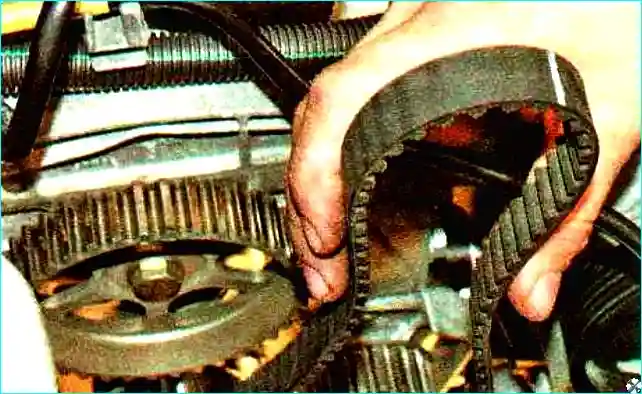
Remove the belt from the crankshaft
And remove the belt completely
The original belt should have arrows indicating the direction of its rotation when the engine is running.
If there are no such arrows on the belt, you need to apply them with paint or a marker to install the belt in its original position.
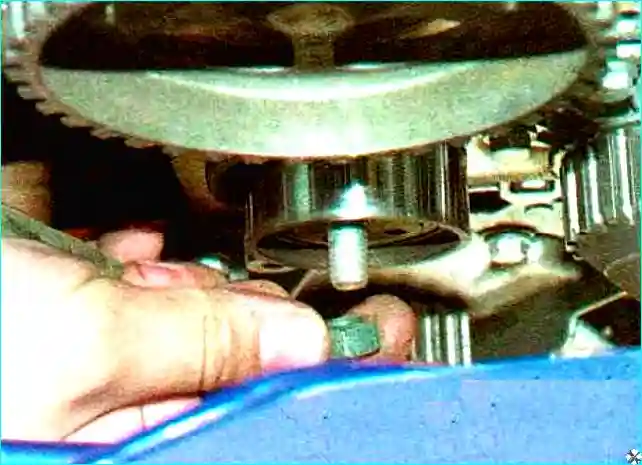
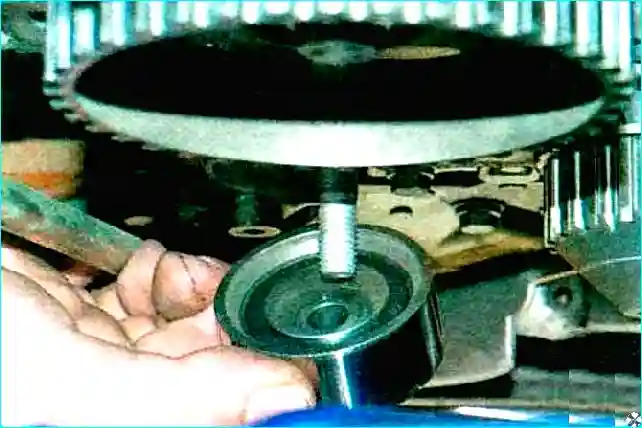
To replace the tensioner pulley, completely unscrew the nut from its axle.
Remove the pulley.
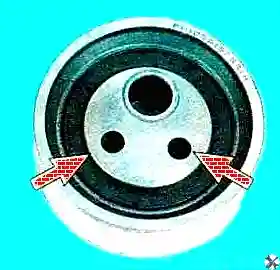
Install the new tensioner roller in reverse order. The holes for the special key should be facing outward.
Installing the belt
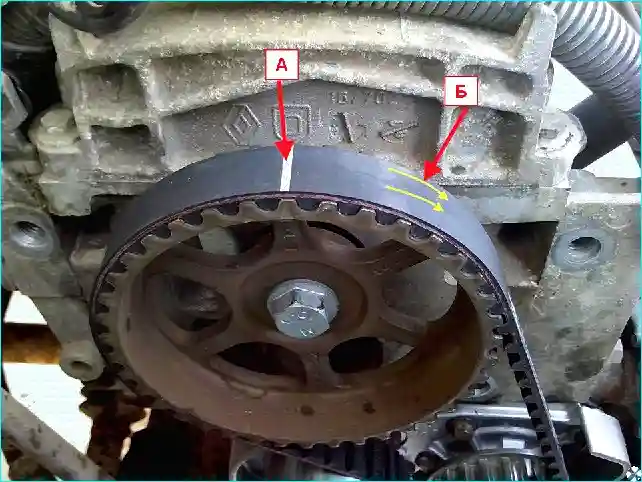
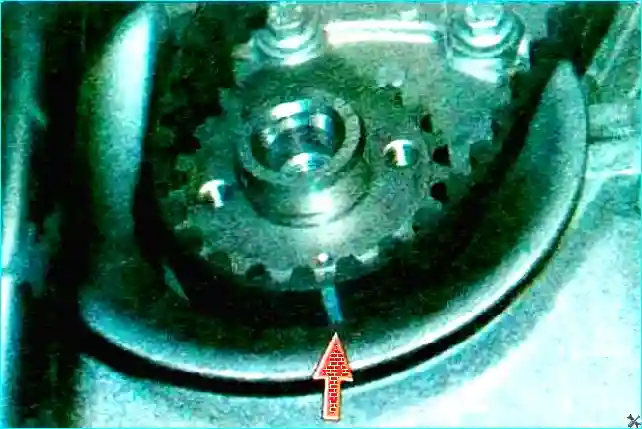
Installing First, place the belt on the camshaft sprocket, aligning it with the arrows "B" in the direction of engine rotation and aligning the line "A" with the timing mark on the sprocket.
Next, tighten the drive belt onto the water pump sprocket.
And the crankshaft sprocket, also aligning the line on the belt with the timing mark on the sprocket. Next, install the belt on the tensioner pulley.
Tighten the belt by turning the tensioner pulley counterclockwise until the previously applied marks align, and tighten the sprocket retaining nut.
Install the accessory drive pulley on the crankshaft and rotate the crankshaft by the retaining bolt two turns, checking that the marks are correctly aligned. Then, reassemble all parts in reverse order.


