


The top dead center (TDC) and crankshaft speed (RPM) sensor, consisting of a magnet and a winding, is mounted on top of the clutch housing.
If a fault occurs in the sensor circuit, the engine stops running, the controller stores a fault code, and illuminates a warning light in the instrument cluster.
In this case, check the sensor and ring gear for missing teeth, runout, or other damage.
Replacing the Crankshaft Sensor
You will need: a 10 mm wrench and a tester.
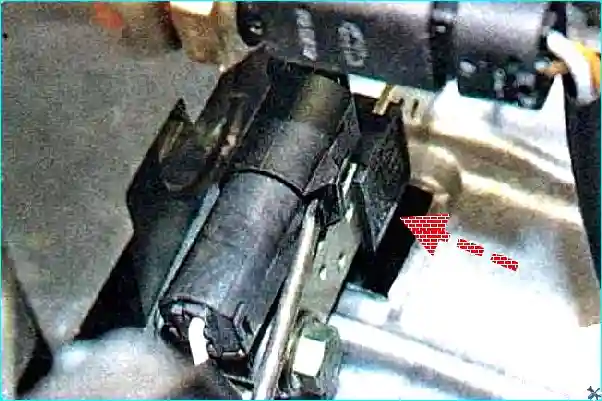
Use a screwdriver to release the sensor wiring harness connector.
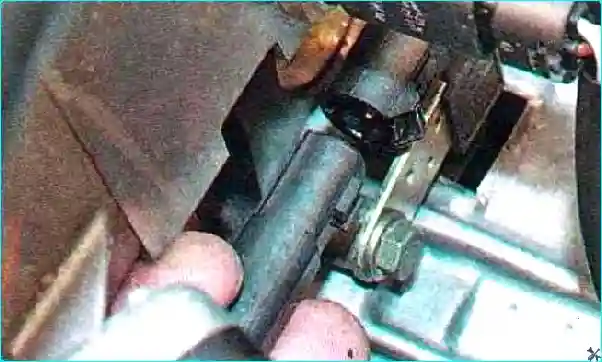
Disconnect the wire from the negative battery terminal.
Disconnect the sensor wiring harness connector.
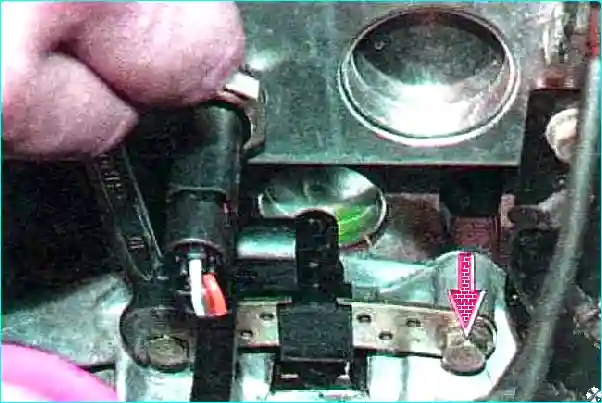
Remove the two sensor mounting bolts and remove the sensor.
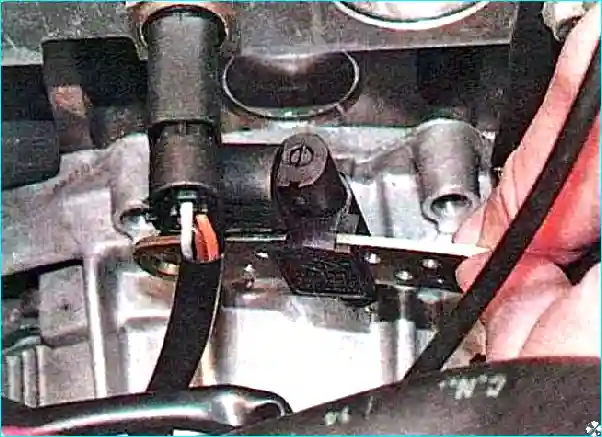
Install the TDC/Crankshaft Speed sensor in the reverse order of removal.
To ensure the correct operation of the fuel injection system after replacing the TDC/Crankshaft Speed sensor or flywheel, it is necessary to perform a check using a special device, which includes the following:
Decelerate the vehicle with the fuel supply cut off in 2nd, 3rd, 4th, or 5th gear at an engine speed of 3500-3000 rpm for at least 2 s;
- - repeated deceleration with fuel cut-off in 2nd, 3rd, 4th, or 5th gear at an engine speed of 2400-2000 min-1 for at least 3 s;
- - check for fault codes and, if necessary, troubleshoot;
- - erase codes.
Replacing the coolant temperature sensor
The coolant temperature sensor is installed at the end of the cylinder head on the side of cylinder 1.
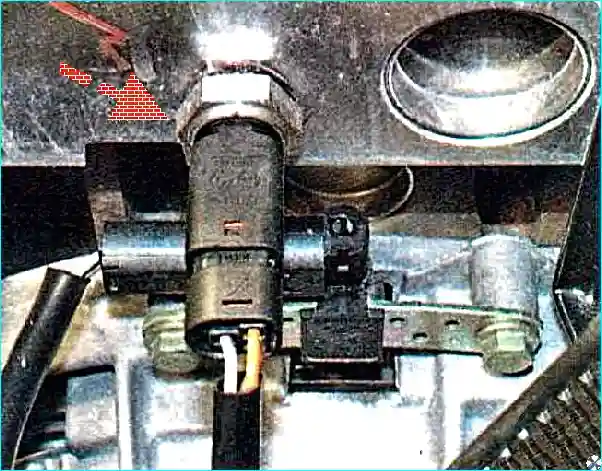
The sensor is The E6U is a thermistor with a negative temperature coefficient: the electrical resistance of the sensor decreases with increasing temperature.
The E6U processes the sensor signal and sets the optimal enrichment of the working mixture during engine warm-up.
You will need: a 21 mm wrench, a flat-blade screwdriver, a tester, and a thermometer.
Disconnect the wire from the negative terminal of the battery.
Drain the coolant.
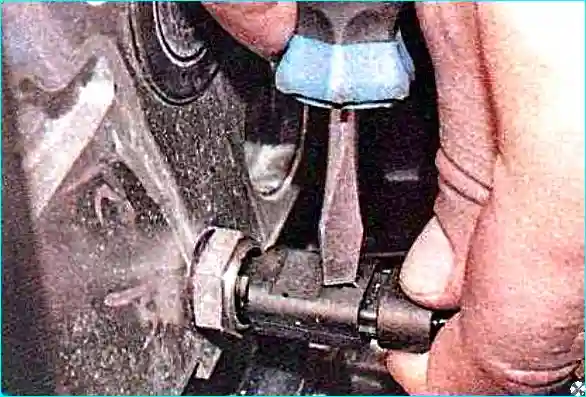
Use a screwdriver to release the latch (Fig. 6) and disconnect the wiring harness connector from the coolant temperature sensor. fluids.
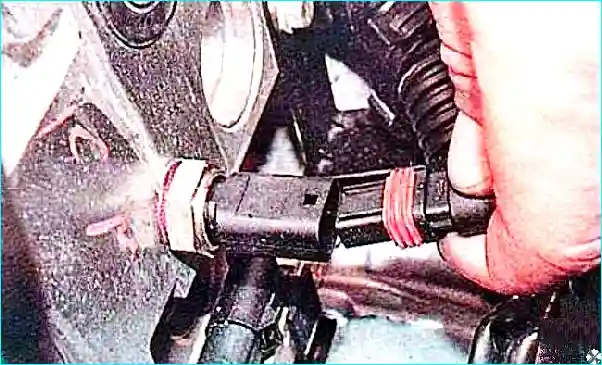
Loosen the sensor with a wrench and unscrew it by hand.
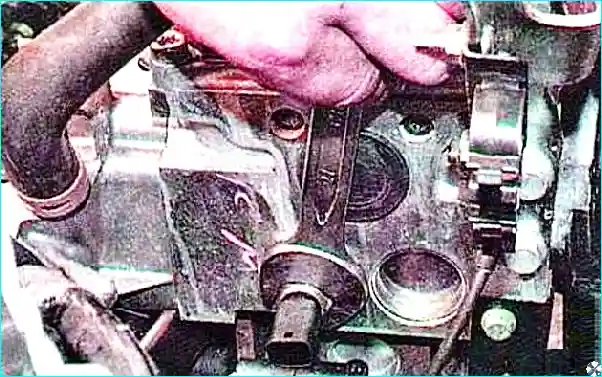
Install the parts in the reverse order of removal.
Fill with coolant.
Throttle Position Sensor Replacement Throttle position sensor
The throttle position sensor is a potentiometer mounted on the throttle shaft.
Rotation of the throttle shaft causes a change in the sensor's signal voltage, which the ECU uses to determine the throttle valve's opening.
If the engine runs rough at idle or accelerates poorly, check the sensor and its connector.
You will need: a T20 TORX wrench, a tester.
Disconnect the negative battery terminal.
Remove the air filter.
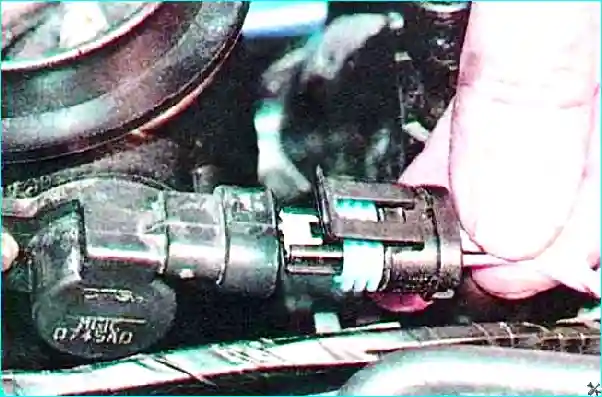
Press the lock and disconnect the wiring harness connector from the sensor.
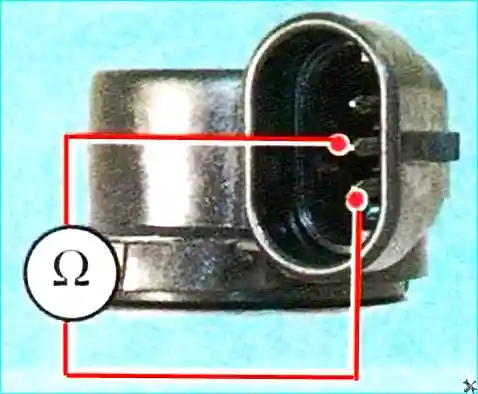
Connect the tester in resistance measurement mode to terminals "B" and "C" of the sensor.
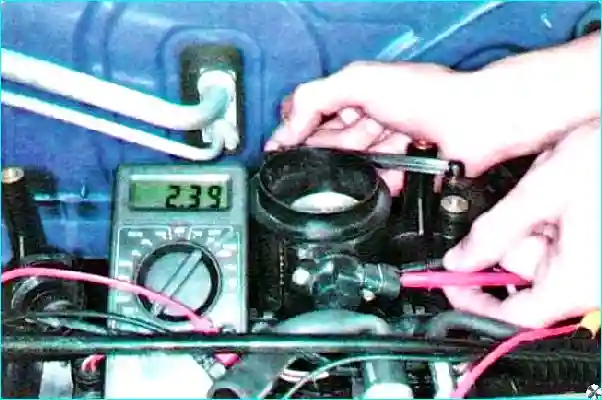
Measure the resistance at the sensor terminals with the throttle fully closed.
It should be 2.3-2.4 kOhm.
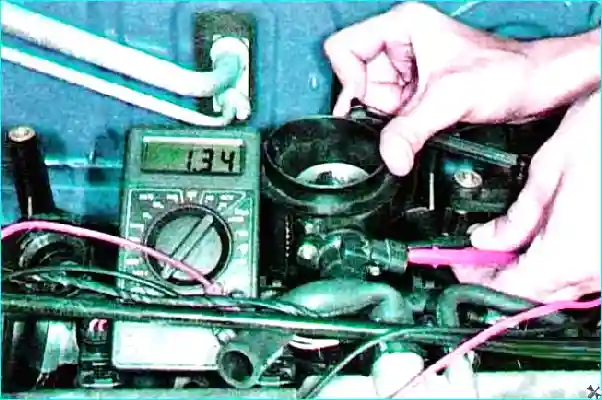
Turn the throttle valve by hand until it is fully open and measure the resistance again.
It should be 1.3-1.4 kOhm.

To replace the sensor, unscrew the two mounting bolts (shown on the removed throttle assembly for clarity) and remove the throttle position sensor.
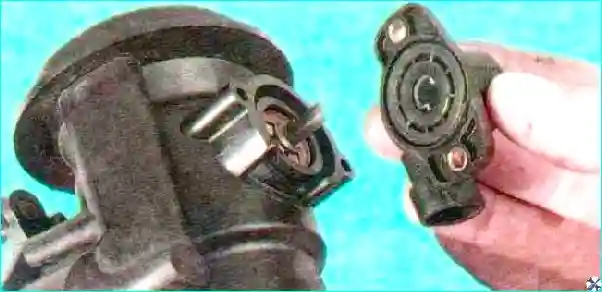
Install the parts in the reverse order Removal.
Replacing the Absolute Pressure Sensor in the Intake Manifold
The absolute pressure (vacuum) sensor in the intake manifold is installed on the intake manifold.
The sensor records changes in pressure (vacuum) in the intake manifold depending on changes in load and engine speed and converts them into an output voltage.
Based on the sensor signal, the ECU calculates the amount of air entering the engine.
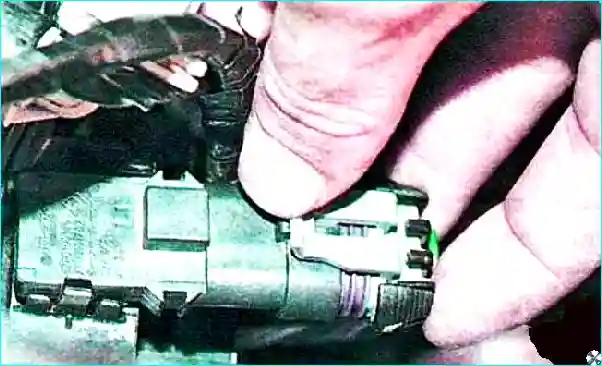
Disconnect the negative battery terminal.
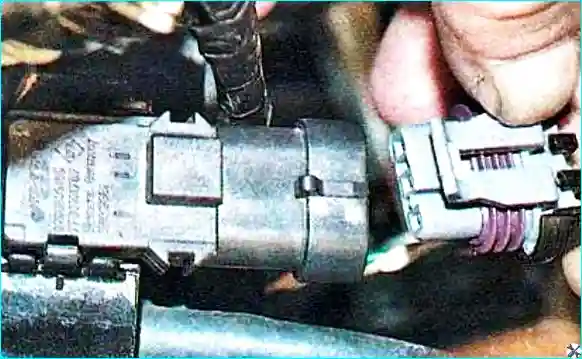
Press the latch and disconnect the wiring harness connector from the sensor.
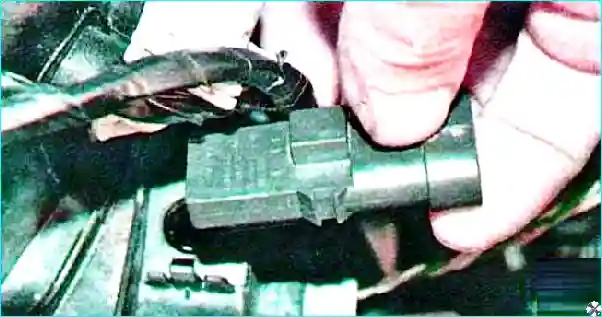
Carefully remove the absolute pressure sensor, overcoming the resistance of the rubber sealing rings (the sensor fitting is installed with tension in the intake manifold opening).
Install the sensor in the reverse order of removal.
Replacing the Intake Manifold Air Temperature Sensor
The intake manifold air temperature sensor is mounted on the intake manifold near the throttle body.
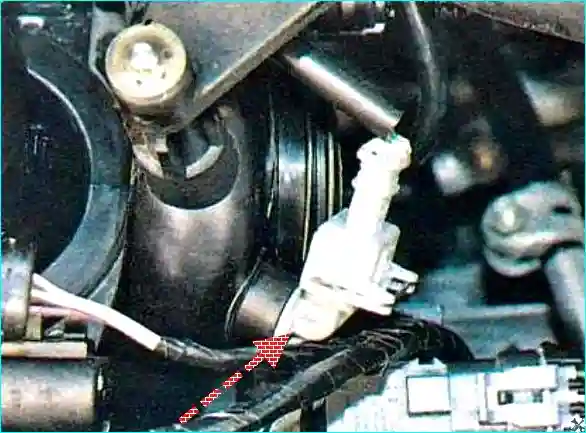
The sensor is a negative temperature coefficient thermistor: the sensor's electrical resistance Decreases with increasing temperature.
Based on the air temperature information from the sensor, the electronic control unit regulates the amount of fuel injected.
You will need a flat-blade screwdriver.
Disconnect the negative battery terminal.
Remove the air filter.
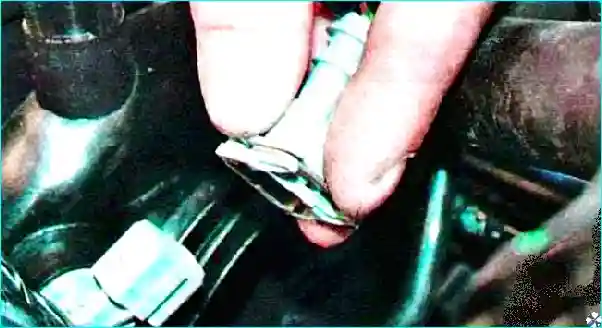
Disconnect the wiring harness connector from the sensor by squeezing the spring clip with your fingers.
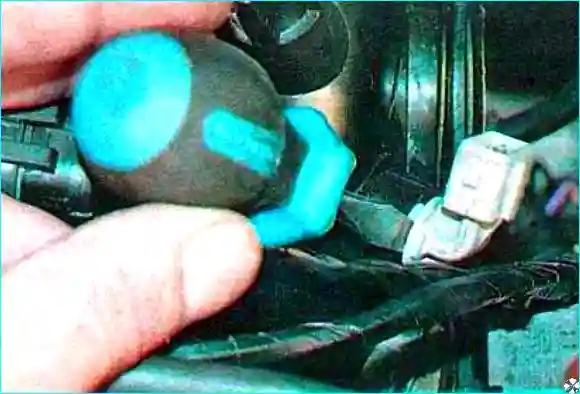
Use a screwdriver to pry the sensor out.
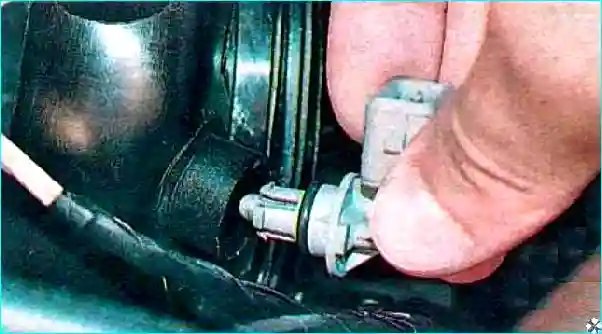
Install the sensor in the reverse order of removal.
Replacing the Knock Sensor
The knock sensor, attached to the cylinder block between cylinders 2 and 3, detects abnormal vibrations (detonation knocks) in the engine.
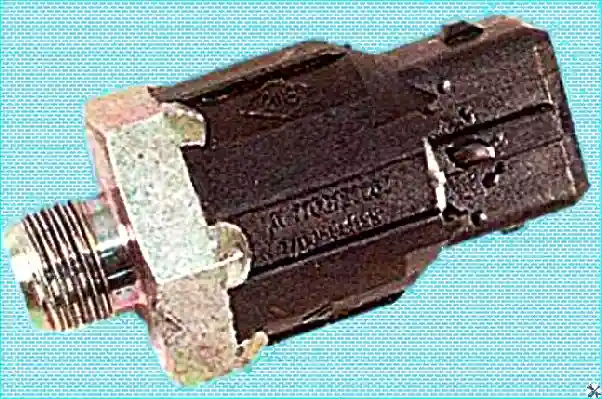
It is more convenient to replace the sensor with the vehicle on a lift, as access to the sensor from above is very difficult.
You will need a 24 mm wrench.
Disconnect the wire from the negative terminal of the battery.
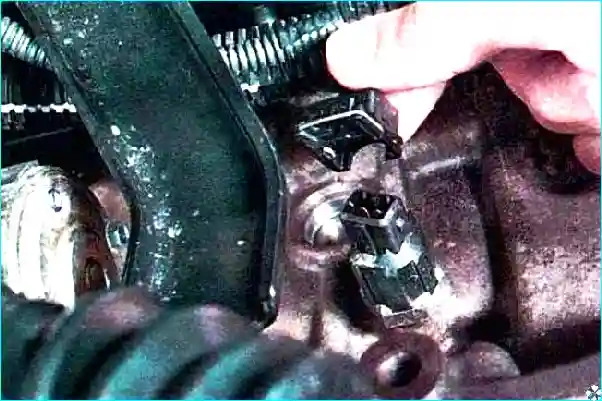
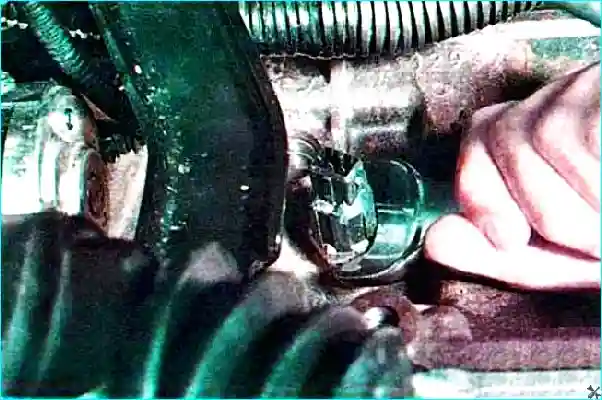
Squeeze the retainer and disconnect the wiring harness connector from the sensor.
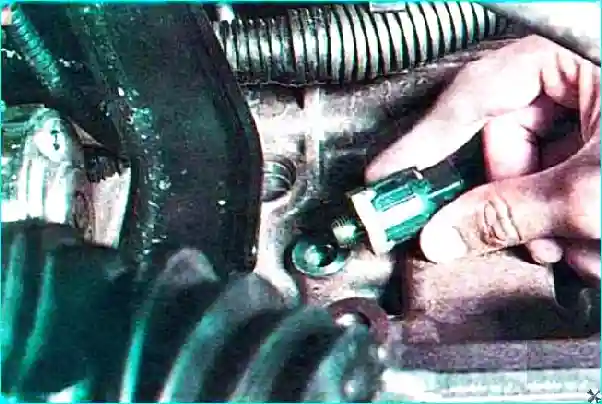
Unscrew the knock sensor and remove it.
Install the parts in the reverse order of removal.
Replacing the Oxygen Sensor
The oxygen sensor (lambda probe) is mounted on the exhaust manifold.
On some vehicles, a second sensor is installed after the catalytic converter. catalytic converter.
The sensor measures the oxygen content in the exhaust gases and converts the measured value into a voltage signal, which is sent to the engine control unit.
Using the sensor signals, the ECU controls fuel injection to obtain the calculated air-fuel mixture.
If the oxygen sensor is faulty, exhaust emissions can increase sharply.
You will need: 10 mm and 22 mm wrenches.
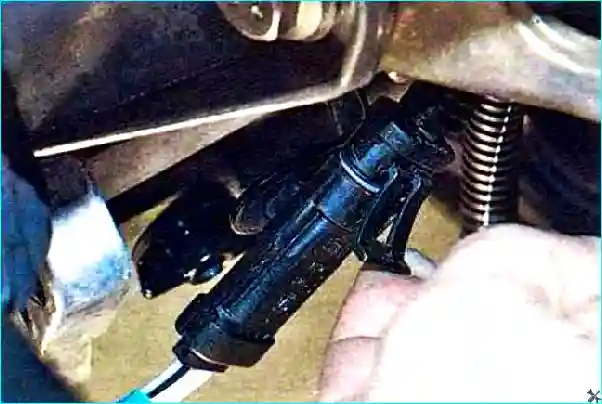
Disconnect the negative battery terminal.
Press the latch and disconnect the wiring harness connector.
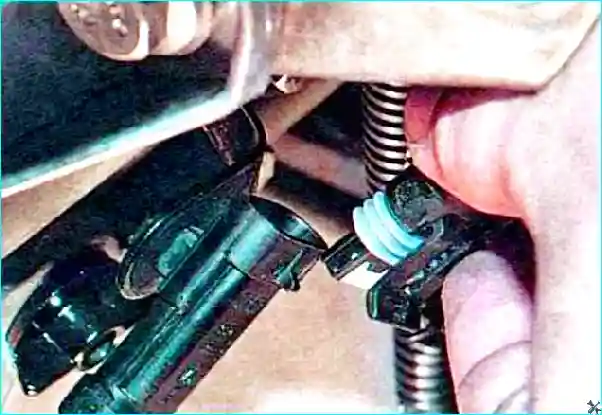
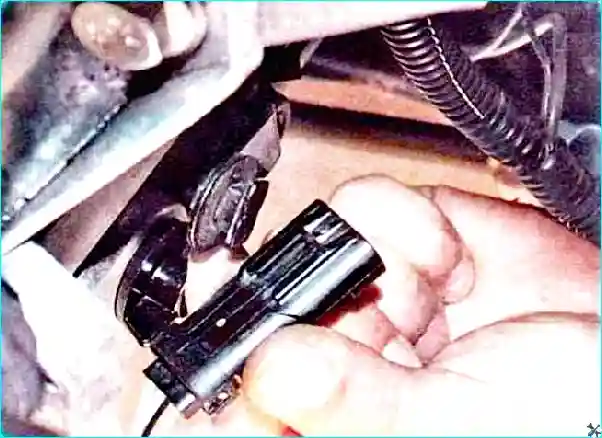
Remove the connector from the bracket by sliding it forward.
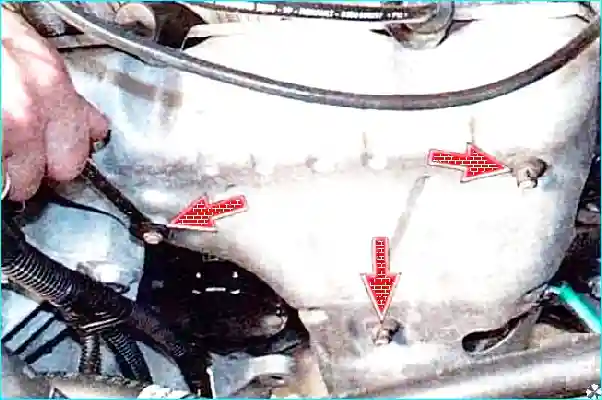
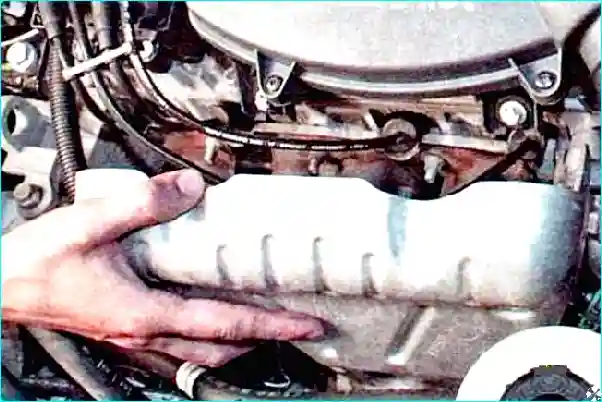
Remove the three nuts and remove the heat shield.
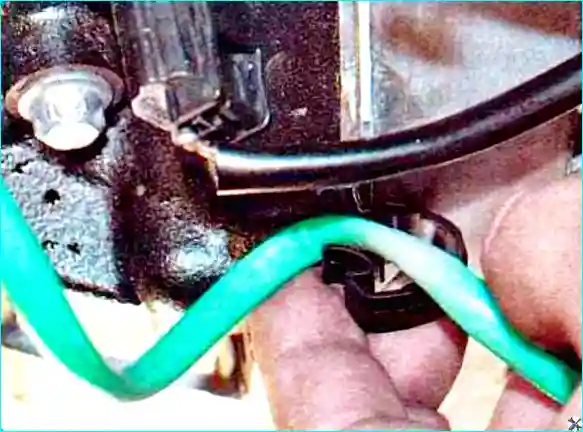
Remove the wire from the holder.

Loosen the tightening screw and remove the sensor from the exhaust manifold.
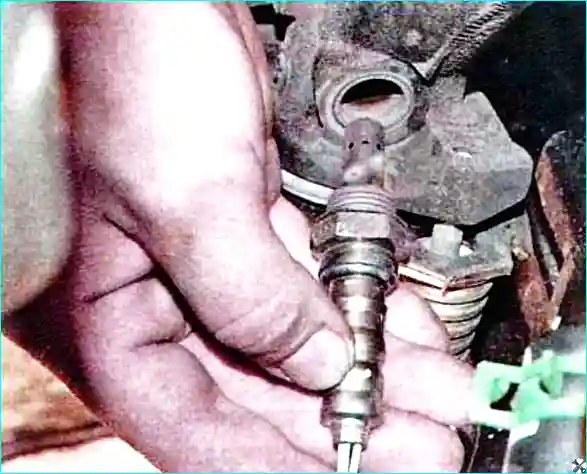
Install the sensor in the reverse order of removal.
Vehicle Speed Sensor Replacement
The vehicle speed sensor is mounted on the gearbox and is a Hall effect sensor.
It sends data to the electronic control unit The engine control pulse signal is proportional to the speed of the drive wheels.
To replace the speed sensor, disconnect the wire from the negative terminal of the battery.
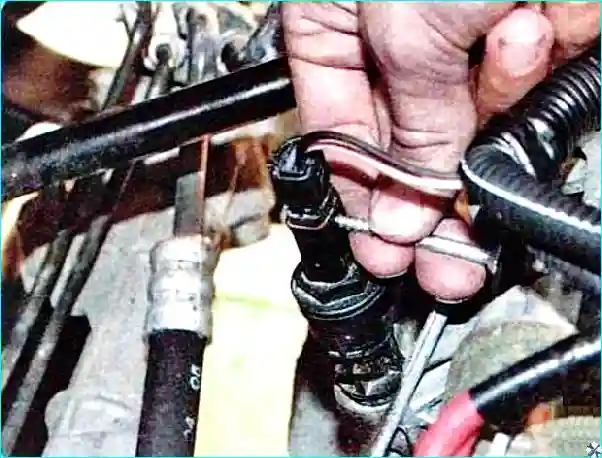
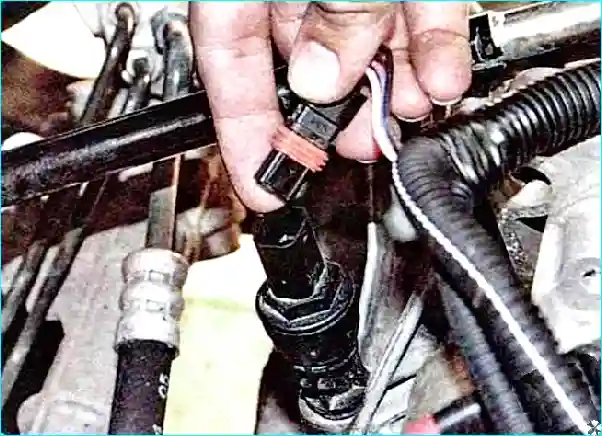
Press the latch and disconnect the wiring harness connector from the speed sensor.

Carefully Use a screwdriver to pry the speed sensor out of the gearbox housing.
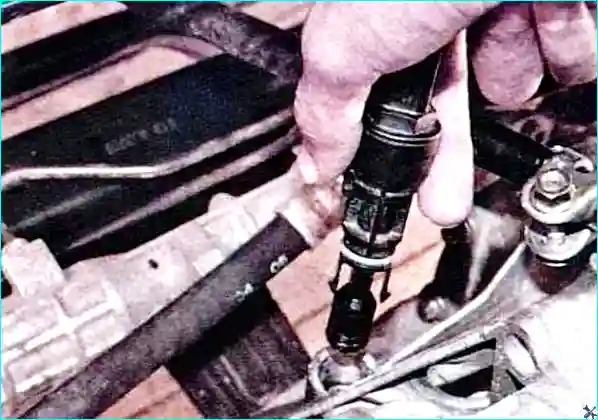
Install the speed sensor in the reverse order of removal.


