


Check the condition of the brake pads at every maintenance
Brake pads must be replaced if the linings are worn, the linings are loosely connected to the base, the working surfaces are oily, or there are deep grooves or chips.
Replace the front brake pads only in sets of 4. (two on each side).
Before replacing the brake pads, check the brake fluid level in the master cylinder reservoir.
If the level is close to the upper mark, you need to pump out some of the fluid: after replacing the worn pads, the fluid level will rise.
You will need: 13mm and 17mm wrenches, and a screwdriver.
Remove the left front wheel.
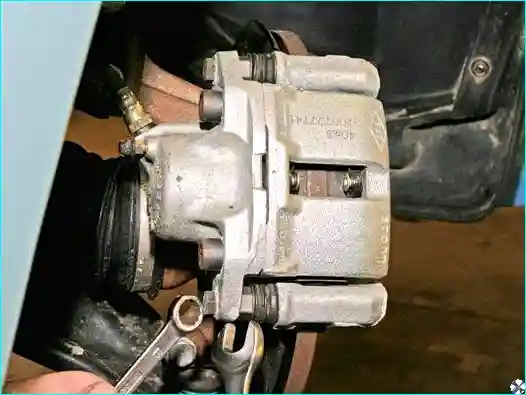
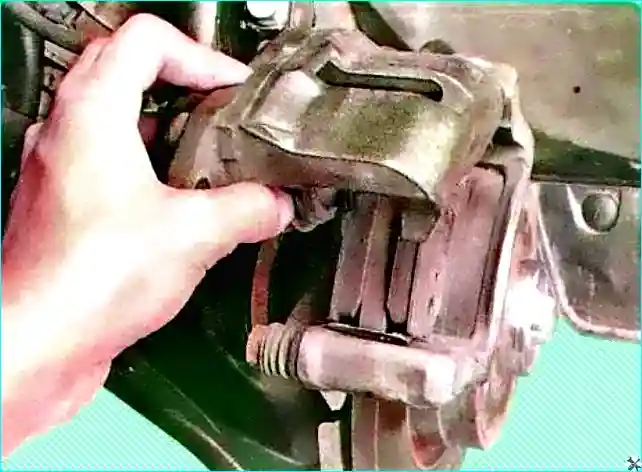
Remove the lower caliper guide pin mounting bolt and lift the caliper up.
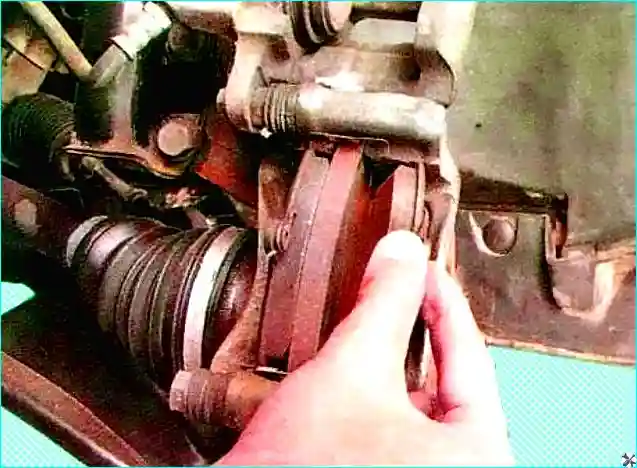
Remove the outer brake pad from the guide pad.
Lower the caliper into place and depress the piston of the working cylinder by inserting a screwdriver between the caliper and the brake disc and sliding the caliper outward.
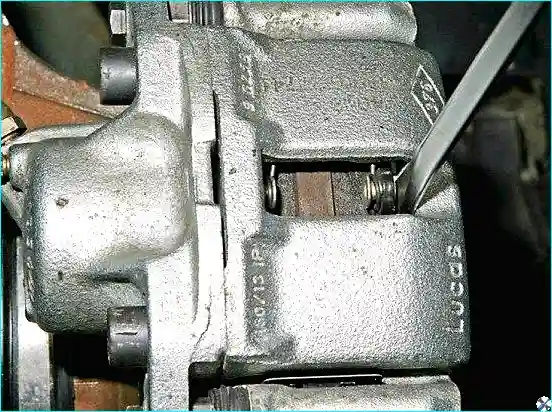
Tilt the caliper upward and remove the inner brake pad from the guide.
Every time you replace the brake pads, be sure to check the condition of the protective rubber boots of the guide pin, as well as the movement of the caliper relative to the brake pad guide.
If movement is difficult, lubricate Grease the caliper guide pins.
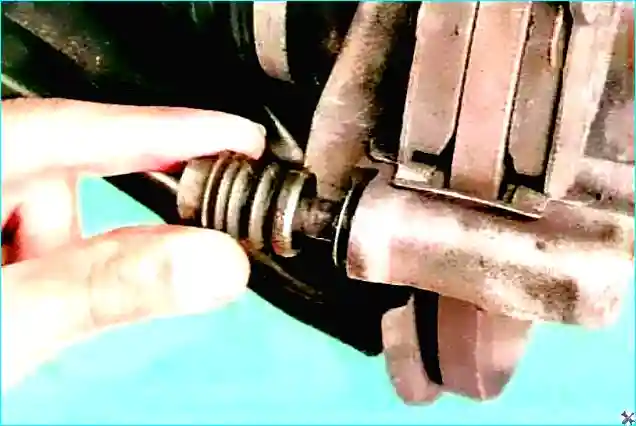
To do this, remove the guide pin.
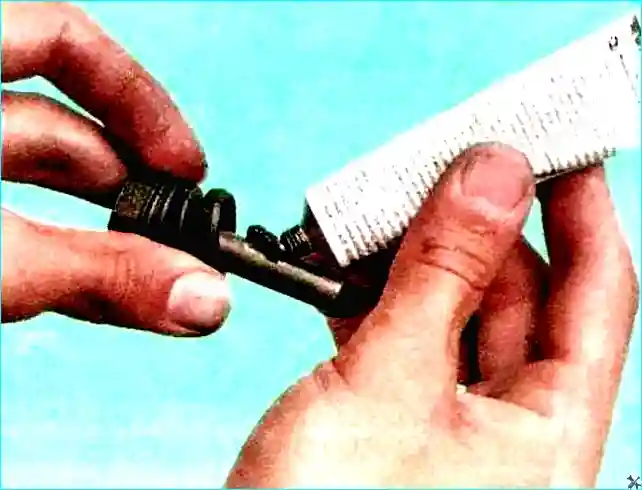
- lubricate it Grease and apply grease to the inner cavity of the boot.
Install the pin into the brake pad guide in the reverse order of removal.
If signs of rubber leakage appear, replace the guide pin boots.
Install the brake pads into the guides in the reverse order of removal.
To prevent the caliper guide pin mounting bolt from loosening, lubricate its threads with anaerobic thread locker before installation.
Tighten the bolt to a torque of 34 Nm (3.4 kgf-m).
Depress the brake pedal several times to bring the brake pads to the disc.
Install the wheel.
Replace the brake pads of the right wheel in the same manner.
Check and, if If necessary, top up the brake fluid level in the master cylinder reservoir.
After replacing worn brake pads with new ones, don't rush to hit busy roads.
It's possible that the first time you brake hard, you'll be unpleasantly surprised by poor braking performance, even though you're using genuine brake pads.
Brake discs also wear out, and new pads only touch them at the edges, producing virtually no braking.
Choose a quiet street or roadway without traffic and brake gently several times to allow the pads to bed in and ensure full contact. At the same time, evaluate the brake performance.
Try to avoid braking abruptly, at least for the first 100 km.
If unburned pads become very hot, The top layer of their linings burns and the brakes will not be as effective as they should be for a long time.


