


The instrument cluster is fitted with an audible warning device to additionally inform the driver of critical and emergency operating conditions of the vehicle's main systems.
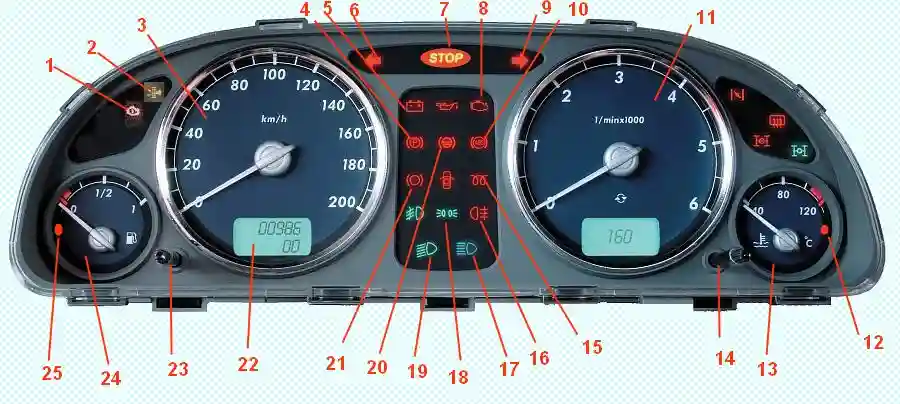
- Critical engine fault warning lamp.
When there are no faults, it illuminates when the ignition is switched on and remains continuously lit for 2–5 seconds, then goes out.
- Air filter clogging warning lamp.
- Speedometer.
- Parking brake warning lamp.
Flashes when the ignition and starter are switched on if the vehicle is held by the parking brake (accompanied by a brief audible warning when the vehicle is moving).
- Battery discharge warning lamp.
- Left turn signal warning lamp.
- «STOP» warning lamp.
Illuminates simultaneously with one of warning lamps 1, 4, 12 and 20. When these warning lamps illuminate, further operation of the vehicle is not permitted until the fault is rectified.
- «Attention» engine management system warning lamp.
With the system in good order, the warning lamp illuminates after the ignition is switched on and remains continuously lit for 3–10 seconds, then goes out. This indicates that the system is ready to start the engine.
A different illumination pattern while driving indicates a failure of some elements of the engine management system.
- Right turn signal warning lamp.
- Anti-lock braking system (ABS) fault warning lamp — fitted to some vehicles.
- Tachometer.
Indicates the crankshaft rotational speed in min-1.
- Coolant overtemperature warning lamp (accompanied by a brief audible warning with the engine running).
When the warning lamp illuminates, the engine must be stopped immediately, and the cause of the coolant level drop identified and rectified.
Operating the engine with an insufficient coolant level may lead to engine overheating and failure.
- Coolant temperature gauge.
Engine operation is permitted when the needle enters the beginning of the red zone of the scale, until the coolant overtemperature warning lamp illuminates.
- «Mode» button.
- Air heater warning lamp.
Informs the driver that the starter may be engaged after the warning lamp goes out.
- Rear fog light warning lamp.
- Main beam warning lamp.
- Sidelight warning lamp (accompanied by a brief audible warning when the ignition is switched off).
- Dipped beam warning lamp.
- Brake fluid level drop warning lamp (accompanied by a brief audible warning with the engine running).
Illuminates when the fluid level in the master cylinder reservoir falls below the permissible level. The vehicle must be checked immediately at a service facility.
- Brake pad wear warning lamp.
- Total and trip odometer.
Top row — total mileage reading.
Bottom row — trip mileage reading.
- «Reset» button.
Resets the trip odometer to zero.
- Fuel level gauge.
- Low fuel reserve warning lamp (accompanied by a brief audible warning on first ignition with the engine running).
Illuminates when the fuel level float is at around 8 litres.
Prolonged driving after the warning lamp illuminates is not permitted, as this will damage the in-tank fuel module.
Figure 2 shows the wiring diagram of the GAZ Valdai ISF3.8 instrument cluster.
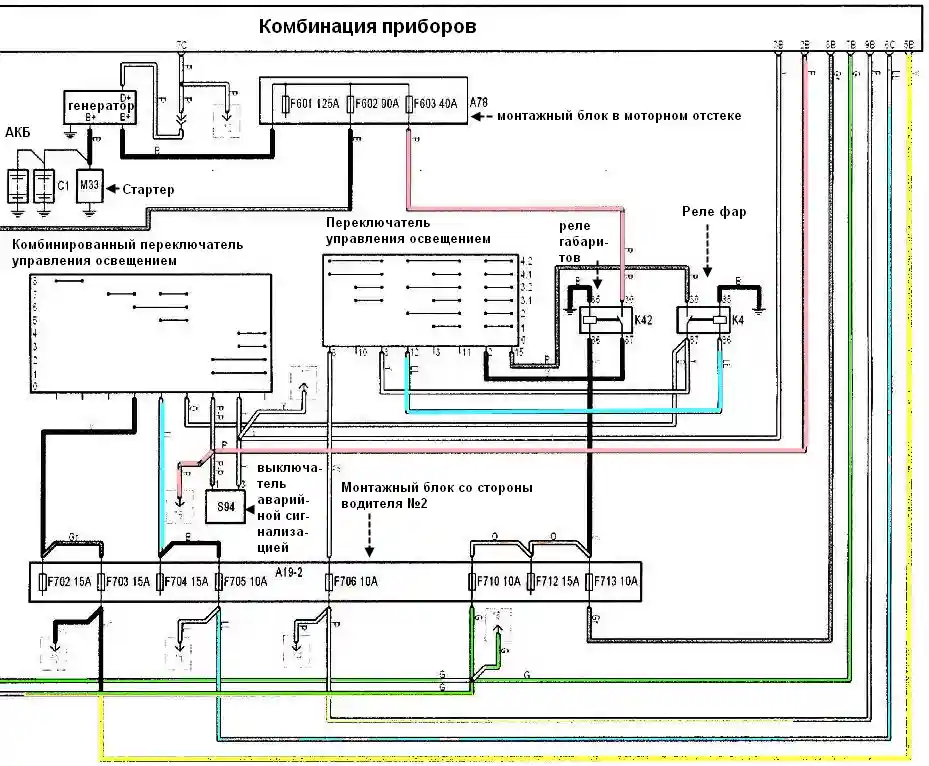
Figure 3 shows the wiring diagram of the GAZ Valdai ISF3.8 instrument cluster (continuation 1).

Figure 4 shows the wiring diagram of the GAZ Valdai ISF3.8 instrument cluster (continuation 2).
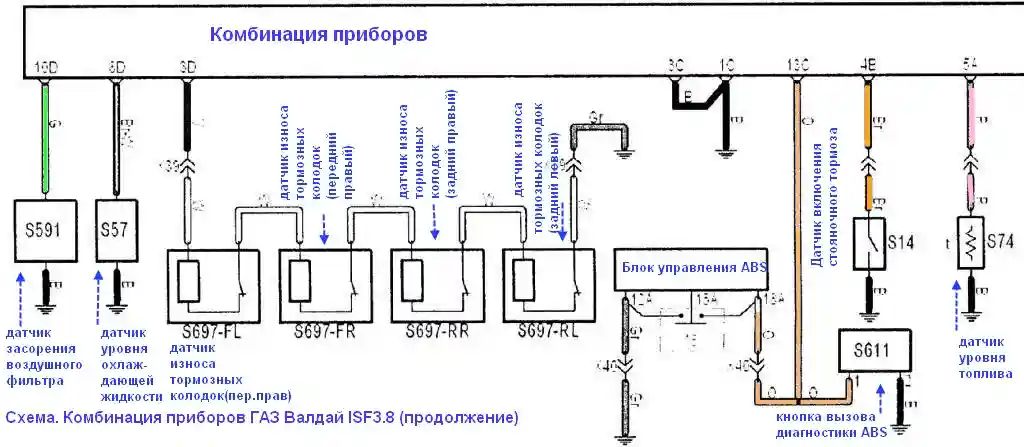
The above description of the instrument cluster and its wiring diagrams covers the purpose of the warning lamps, gauges and controls, as well as the electrical circuits of the instrument cluster of the GAZ Valdai vehicle fitted with the Cummins ISF3.8 engine. This material is intended for diagnostics, fault-finding and repair of the electrical system.


