


The vehicle is equipped with a BOSCH 8.0 ABS system
Depending on the vehicle's trim level, the BOSCH 8.0 system includes either ABS only or ABS combined with the Electronic Stability Program (ESP)
After performing any work on the ESP, the repair results must be verified during a road test and using a diagnostic tool (CLIP).
Description of the ABS system with ESP
The ABS system consists of:
- – a brake booster assembly with a master cylinder;
- – an electric pump unit, including a hydraulic pump and a pressure control unit (12 solenoid valves);
- – an ABS control unit;
- – a sensor pressure;
- – a steering wheel angle sensor integrated into the electric power steering;
- – a combined angular and lateral acceleration sensor;
- – four wheel speed sensors;
- – a switch for the trajectory stability function.
Operating principle of the ABS system with trajectory stability function
Optimal parameters are continuously calculated based on measurements of wheel speed and steering wheel angle.
These parameters reflect the optimal behavior of the vehicle on the road.
They are compared with the actual driving parameters of the vehicle based on measurements of angular and lateral acceleration.
If a deviation of the actual trajectory from the optimal trajectory is detected, the corresponding wheel is braked.
In some cases, due to insufficient control, the system brakes both wheels simultaneously.
The torque created in this way Returns the vehicle to the optimal trajectory.
In some cases, the system (when the traction control function is engaged) modifies engine torque.
Features of the Trajectory Stability System
The Trajectory Stability System function can be disabled using the switch located on the instrument panel.
The system cannot be disabled if the speed exceeds the 50 km/h threshold.
The system automatically reactivates when the ignition is turned on or if the speed exceeds 50 km/h.
Hydraulic Unit
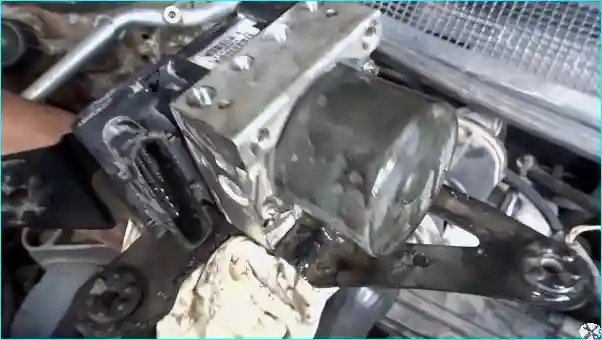
ABS System Electric Pump Assembly is equipped with an ECU with a 26-pin connector (Fig. 1).
The electric pump unit of the trajectory stabilization system and the ABS system is equipped with an ECU with a 46-pin connector (Fig. 2).
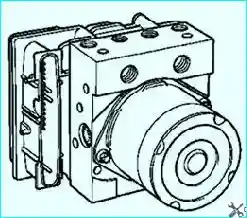
The ECU forms a single unit with the electric pump unit.
The following operating modes of the anti-lock braking system are distinguished:
- — normal braking mode.
During normal braking, the solenoid valve is de-energized, the inlet valve is open, and the outlet valve is closed.
When pressing Brake pedal: Pressurized brake fluid is supplied to the slave cylinder through the solenoid valve and activates the wheel brakes.
When the brake pedal is released, brake fluid returns to the master cylinder through the inlet and check valves;
- — emergency braking mode.
If a wheel locks during emergency braking, the module commands the solenoid valve to reduce the brake fluid flow. Voltage is then supplied to each solenoid valve.
The inlet valve closes, cutting off the brake fluid flow from the master cylinder. The outlet valve opens, and brake fluid flows from the slave cylinder to the master cylinder and then to the reservoir, causing a decrease in pressure;
- — pressure maintenance mode.
When the pressure in the slave cylinder drops to its maximum, the module commands the solenoid valve to maintain brake fluid pressure. Voltage is supplied to the inlet valve and not to the outlet valve.
In this case, the inlet and outlet valves are closed, and brake fluid does not leave the slave cylinder;
- — pressure increase mode.
If the module determines that the wheel is not locked, it de-energizes the solenoid valve.
No voltage is supplied to the solenoid valves, and brake fluid flows through the inlet valve to the slave cylinder, where the pressure increases.
Diagnosing and repairing the anti-lock braking system requires specialized equipment and tooling, so in the event of If it breaks down, contact a specialized service station.


