


To carry out certain work and to replace components of the cooling system, it is necessary to dismantle the units and components of the cooling system.
Required materials and tools
- 8 mm and 12 mm spanners, pliers, screwdriver.
- Torque wrench.
- Water-based silicone grease.
- New thermostat, gaskets, rubber rings (if necessary).
- Container for draining the coolant, funnel.
- Gloves and safety glasses.
Removal and installation of the radiator
We prepare the vehicle for the work.
We remove the bumper.
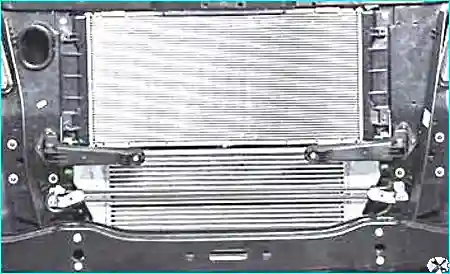
We remove the air filter housing.
We drain the fluid from the cooling system (article — Replacing the coolant).
We loosen the clip securing the radiator inlet hose and disconnect the hose from the upper radiator stub.
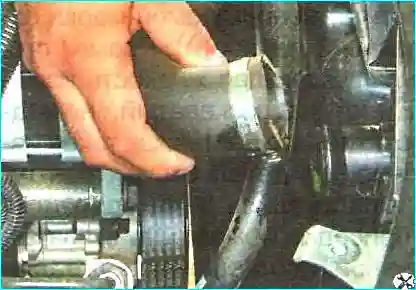
We loosen the clip and disconnect the hose from the lower radiator stub.
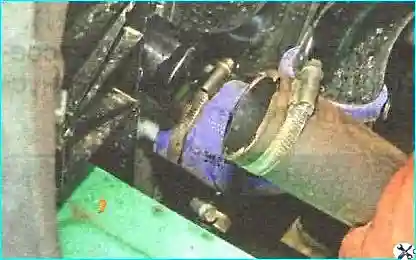
Holding the radiator, we unscrew the two bolts securing the radiator to the radiator frame base.
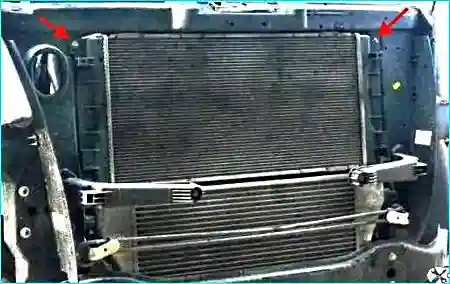
We tilt the radiator slightly forward. We squeeze the lugs of the bleed hose clip and slide the clip along the hose.
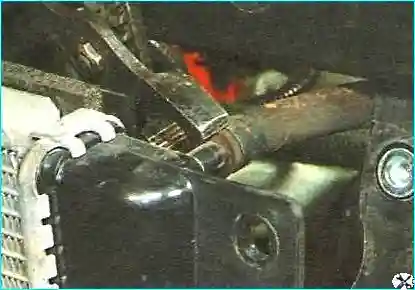
We disconnect the hose from the radiator stub.
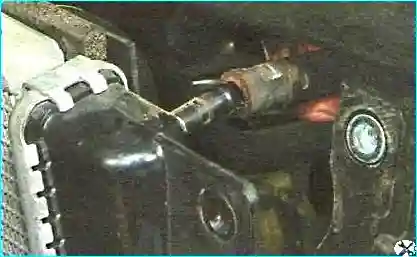
We lift the radiator upwards.
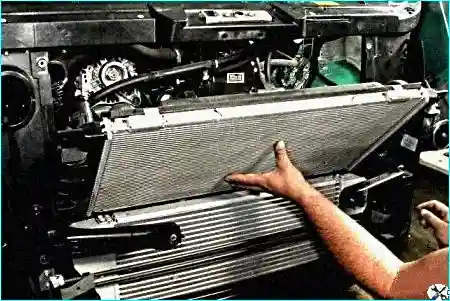
We remove the radiator together with the fan diffuser.
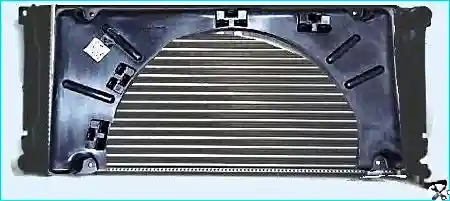
If necessary, we unscrew the four securing nuts and remove the upper part of the diffuser.
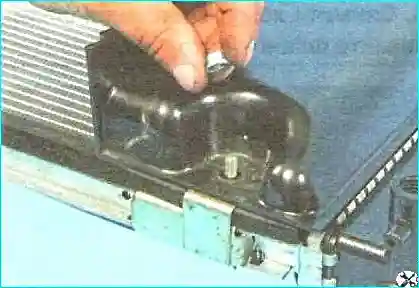
We install the radiator in the reverse order.
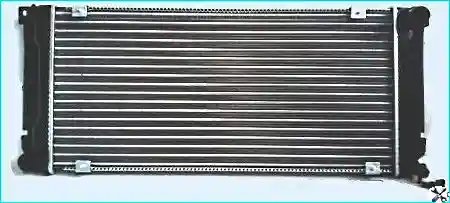
The lower radiator mounts are fitted through rubber bushes.
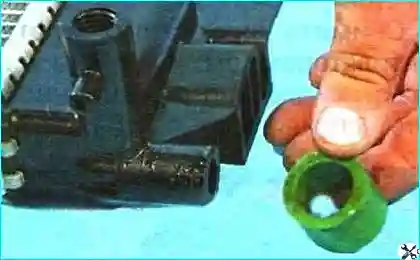
If the bushes have hardened considerably, we replace them.
Replacing the thermostat
The thermostat is installed in a housing secured to the cylinder block. It closes at 82 °C and opens at 95 °C.
To remove air during filling of the system, the thermostat is equipped with a device that allows air to be removed through the thermostat when it is closed.
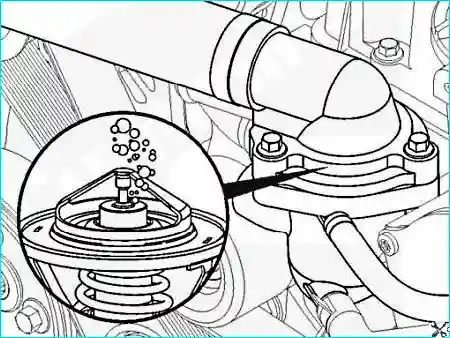
The air outlet is connected to the cooling system expansion tank.
To carry out the task, a 12 mm spanner and a screwdriver are required.
We drain the coolant.
We loosen the clip securing the radiator inlet hose and disconnect it from the thermostat cover.
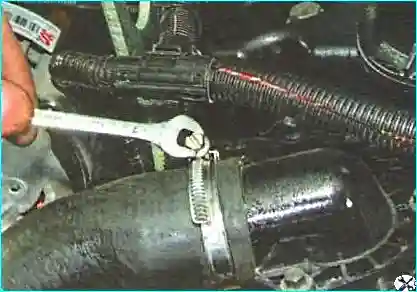
We unscrew the three bolts securing the thermostat cover to the housing.
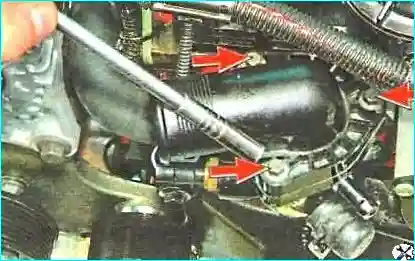
We remove the cover.
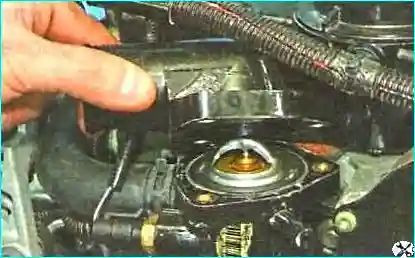
We extract the thermostat from the housing.
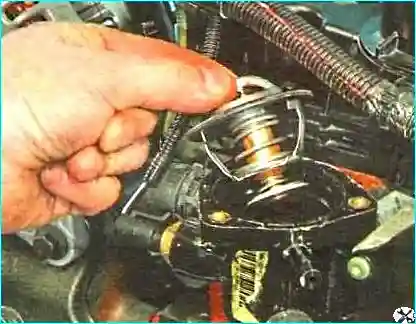
If necessary, we remove the sealing ring.
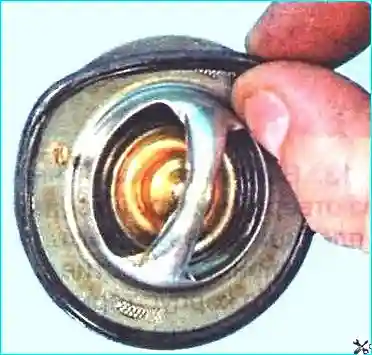
We install the thermostat in the reverse order.
Removal and installation of the thermostat housing
The thermostat housing is secured to the front part of the cylinder head.
It provides connections for the thermostat bypass channel, the cab heater, the coolant supply pipe to the exhaust gas recirculation system cooler and the coolant temperature sensor.
The water outlet stub is secured over the thermostat housing, retaining the thermostat in place.
We disconnect the negative terminal from the battery.
We drain the coolant from the cooling system.
We loosen the clip securing the radiator inlet hose and disconnect it from the thermostat cover.
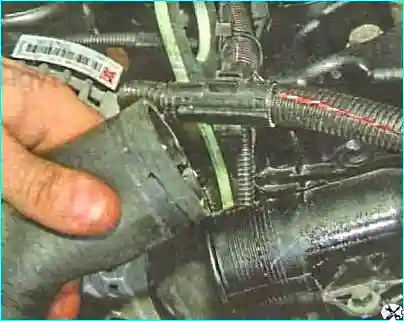
We loosen the clip securing the pipe from the cooler to the intake pipe, disconnect the pipe and move it aside.
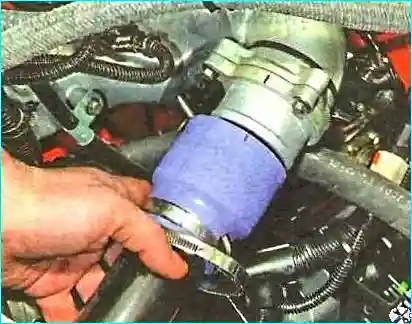
We unscrew the bolt securing the small coolant circulation circuit pipe to the front cylinder block cover.
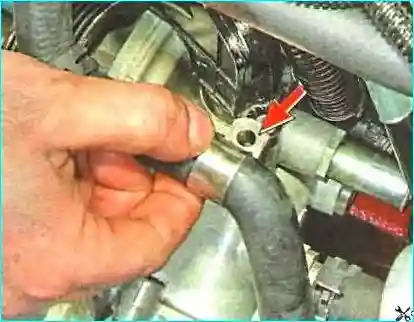
We remove the auxiliary drive belt (article — Replacing the auxiliary drive belt).
We disconnect the connector from the coolant temperature sensor.
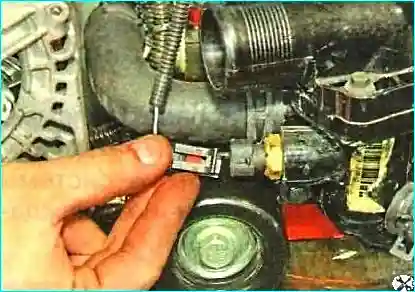
We unscrew the securing bolt and remove the belt intermediate idler.
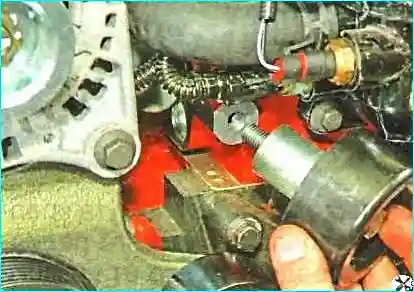
We disconnect the connector from the second coolant temperature sensor.
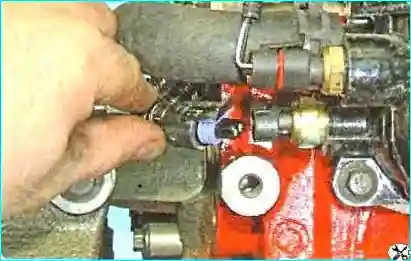
We squeeze the lugs of the heater hose clip and slide the clip along the hose.
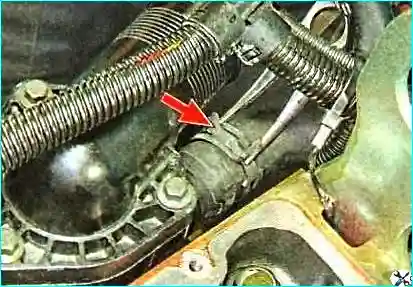
We disconnect the hose.
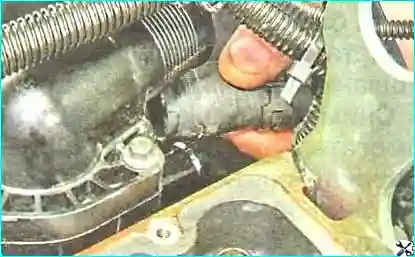
We unscrew the two bolts securing the thermostat housing to the cylinder head.
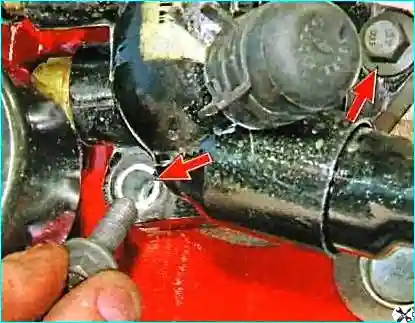
We withdraw the pipe end from the opening in the cover.
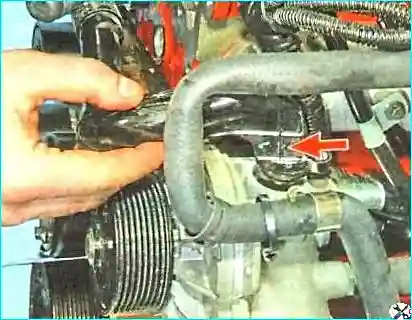
The end is sealed with a rubber ring and inserted into the opening with interference. We remove the thermostat housing.
We fit a new rubber ring on the small circuit pipe end and clean the walls of the opening in the cover.
We clean the block mating surface and the gasket groove on the thermostat housing.
We clean the parts with soapy water.
We check the units and parts for cracks or other damage.
We install the thermostat housing in the reverse order.
The sealing ring must be coated with water-based silicone grease to avoid damage during assembly. Bolt tightening torque — 23 N·m.
Removal and installation of the water pump
The engine is fitted with a centrifugal-type belt-driven pump; its inlet and bypass stubs are an integral part of the front timing gear cover.
The presence of traces or deposits of chemicals in the area of the drain hole is not grounds for replacing the water pump.
If there is a constant coolant leak through the drain hole, we install a new or repaired pump.
We drain the coolant.
We remove the cooling system radiator.
We remove the auxiliary drive belt.
We remove the viscous coupling with the fan.
We unscrew the eight bolts securing the water pump to the front cylinder block cover. We remove the water pump.
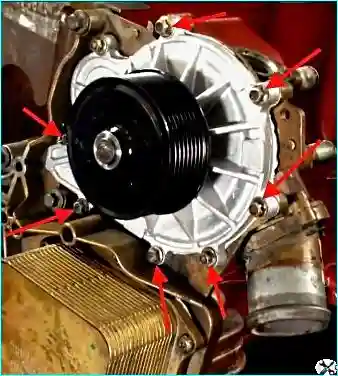
We remove the rubber sealing gasket.
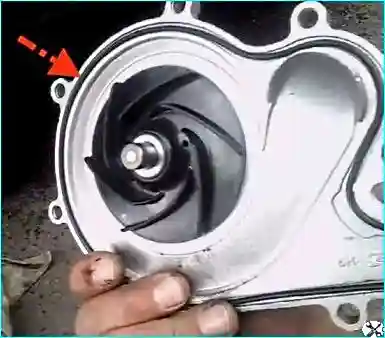
If we replace the pump, the kit must include a gasket.
We check the water pump impeller for burrs and damaged vanes, and for play.
We install the water pump in the reverse order. We tighten the bolts evenly to 8 N·m.
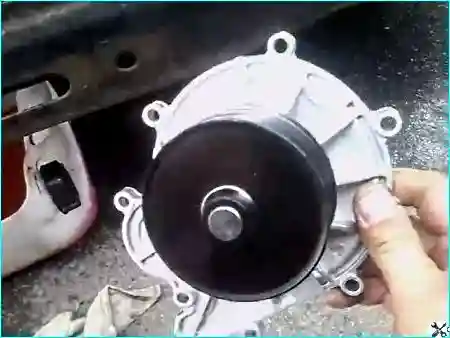
We fill the coolant.
Replacing the expansion tank
To carry out the work, pliers and an 8 mm spanner are required.
The Cummins engine cooling system operates at a higher pressure than engines of other models. Therefore, a valve with a modified characteristic is fitted in the expansion tank cap.
The tank cap for the Cummins engine is white.
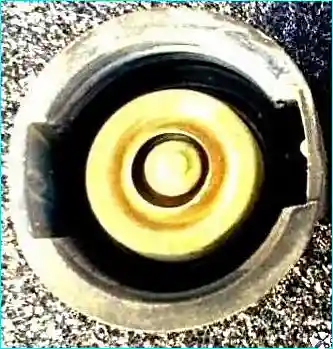
We unscrew the expansion tank cap. We extract the coolant from the tank.
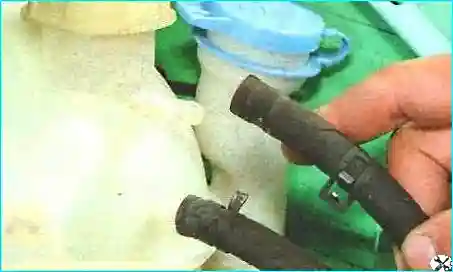
We squeeze the lugs of the return hose clip and slide the clip along the hose.
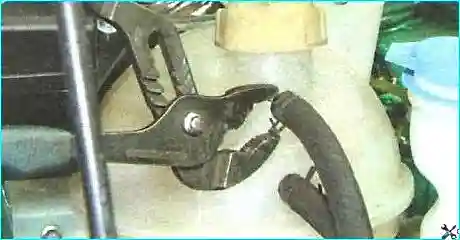
We disconnect the hose from the tank stub. We also disconnect the second hose.
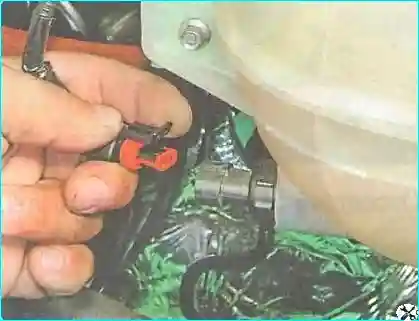
We release the clip and disconnect the connector from the coolant level sensor.
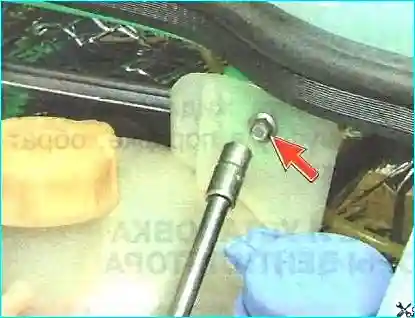
We unscrew the upper tank securing bolt.
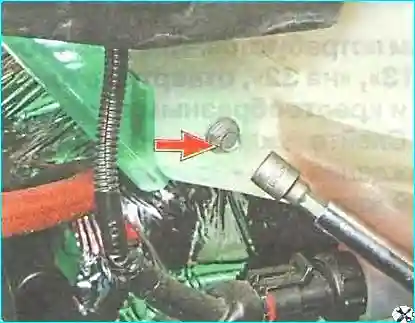
We unscrew the lower tank securing bolt.
We lift the tank, squeeze the lugs of the lower hose clip and slide the clip along the hose.
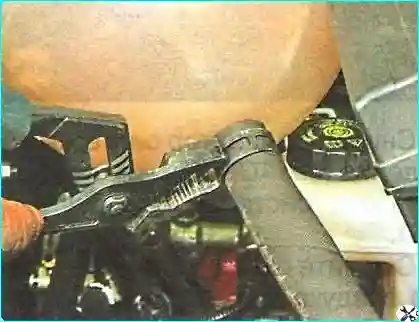
We disconnect the hose from the stub.
We remove the tank.
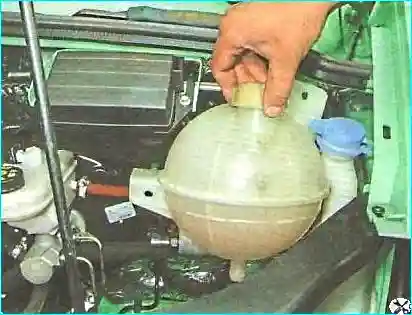
We turn anticlockwise and withdraw the fluid level sensor.
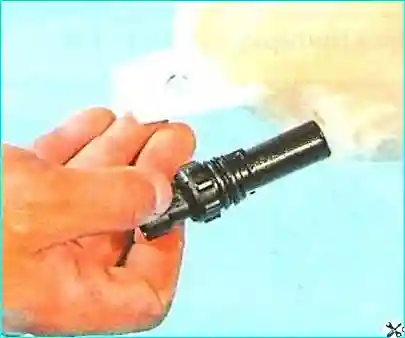
We install the expansion tank in the reverse order.
We fill the coolant up to the upper mark on the tank.