


We replace the rear wheel brake shoes in case of damage, oil contamination, or if the friction linings are worn down to a thickness of less than 1 mm.
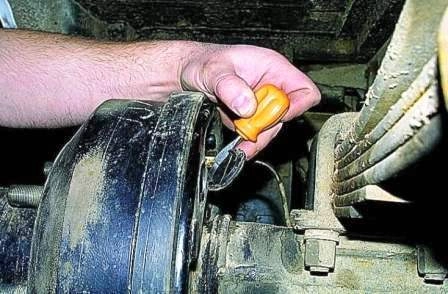
We replace the brake drum if it is damaged, has cracks, or if the working surface is worn to a diameter of more than 283 mm.
It is recommended to replace all four rear wheel brake shoes simultaneously.
Brake drums are machined in assembly with the hubs, so the removed drums must be installed only in their original positions.
The factory manual recommends machining new drums in assembly with the hub before installing them on the vehicle.
Important: It is strictly forbidden to press the brake pedal with the brake drum removed, to avoid pushing the pistons out of the wheel cylinders.
We remove the rear wheels.
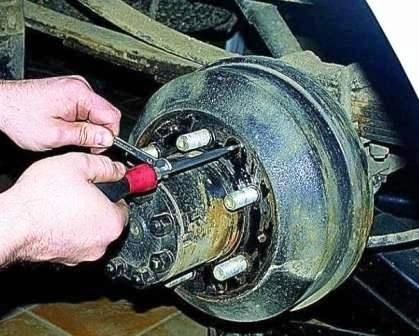
An impact screwdriver can be used to unscrew the screws.
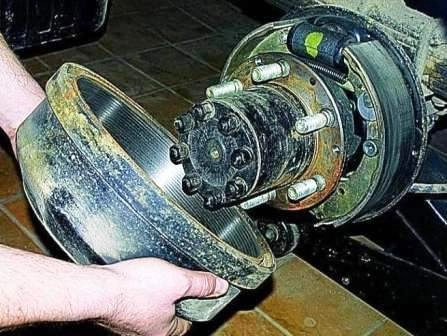
If there is difficulty in removing the drum, the brake shoes must be brought together beforehand.
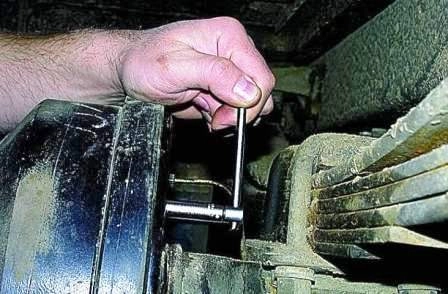
In case of a tight fit or "seizing" of the drum to the hub, it can be pressed out by screwing two M10 bolts into the special threaded holes.
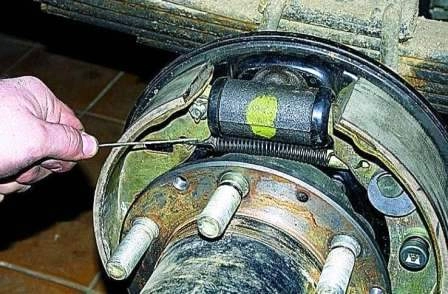
It is more convenient to use a special tool for this operation.
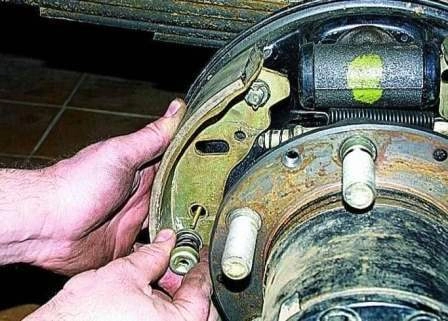
From the inside of the brake backplate, we press the head of the guide pin ("soldier") of the rear brake shoe with one hand, and press the cup with the other hand, compressing the spring.
We turn the spring cup by 90°.
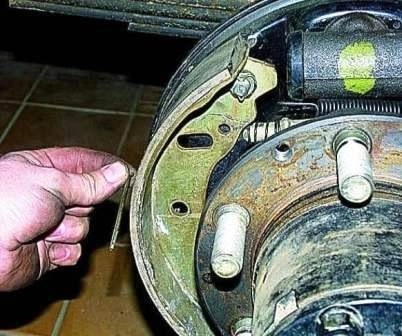
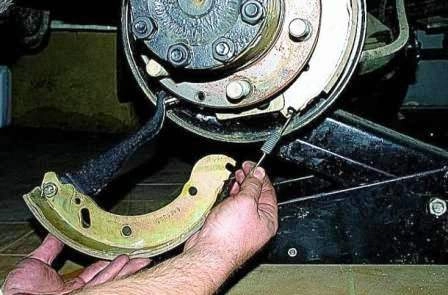
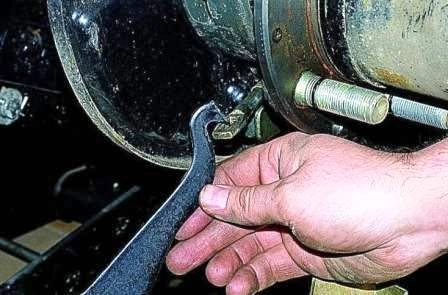
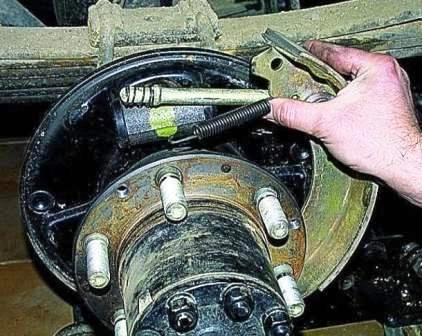
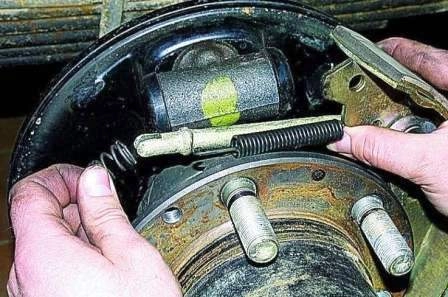
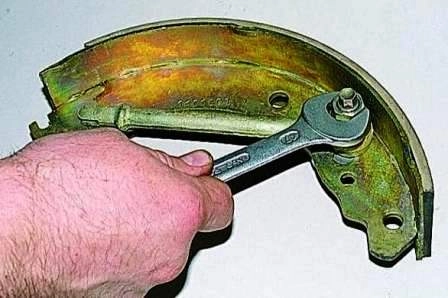
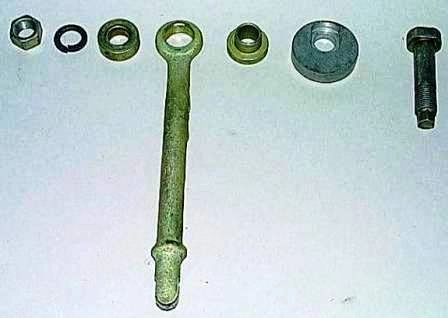
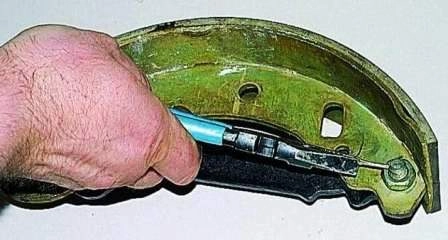
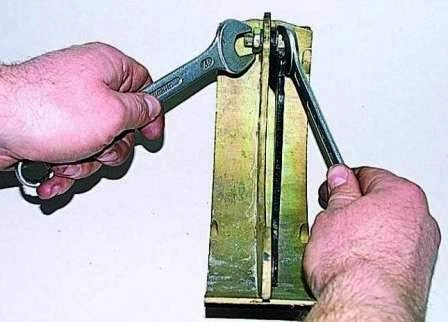
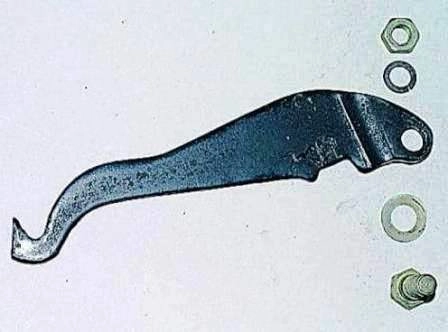
We transfer the removed parts of the parking brake mechanism to the new shoes.
We install the new brake shoes in reverse order, after which we must necessarily adjust the clearance between the shoes and the brake drum.
We install the drum, having previously lubricated its seating surface with high-temperature grease (e.g., CV joint grease or graphite grease) to prevent seizing.
We install the wheels and press the brake pedal several times for the self-adjustment of the braking mechanism elements.
We finally tighten the wheel fixing nuts on the vehicle standing on the ground, evenly in a cross pattern, with a torque of 300–380 N·m.