


Front wheel drive assemblies are removed for replacement if damaged or to replace the joints and their boots.
Furthermore, front wheel drive assemblies may need to be removed to gain access to other components.
The inner joints of the front wheel drive assemblies differ in design, so the left and right drive assemblies are partially removed using different techniques, described separately for each drive.
To remove the left front wheel drive assemblies, follow these steps.
Remove the engine sump guard.
Drain the transmission oil.
Remove the left front wheel trim cover.
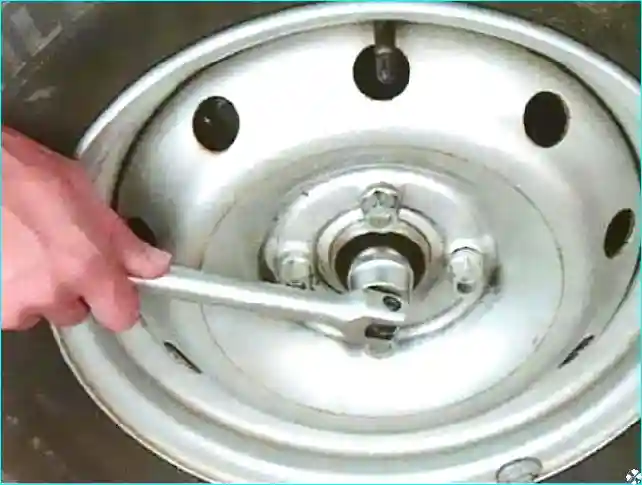
Loosen the hub nuts and wheel mounting bolts.
When loosening the hub nuts, the vehicle must be on the ground. Loosen and tighten the wheel mounting bolts only with the vehicle on the ground.
Apply the parking brake, place chocks under the rear wheels, and raise the front of the vehicle using secure supports. Remove the front wheel.
If the vehicle is equipped with anti-lock brakes (ABS), disconnect the wiring harness connector from the wheel speed sensor.
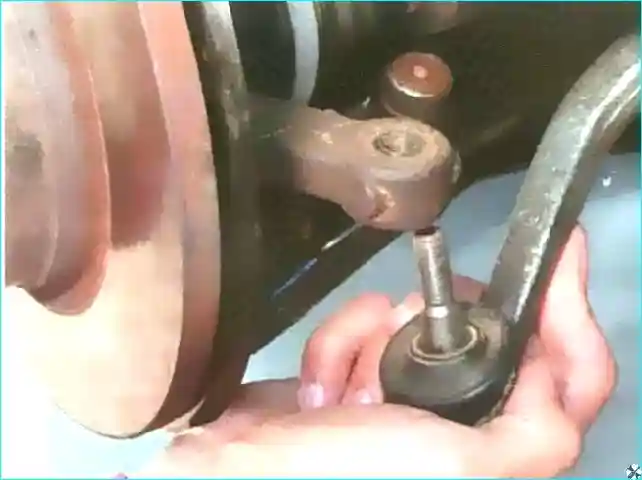
Disconnect the left tie rod from the steering arm.
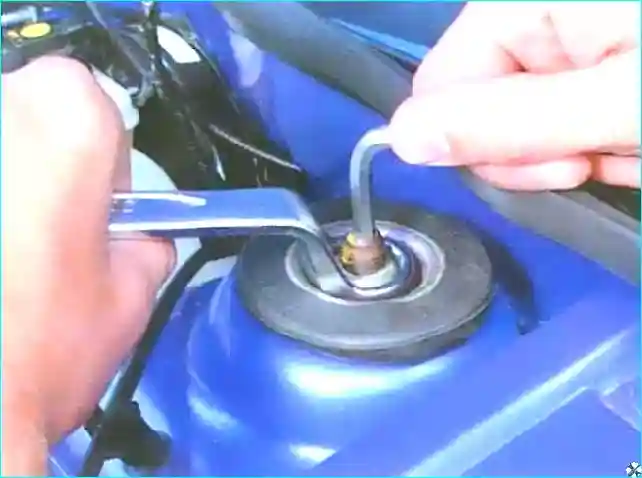
Loosen the shock absorber strut mounting nut and unscrew the nut to the end of the thread, but do not remove it.
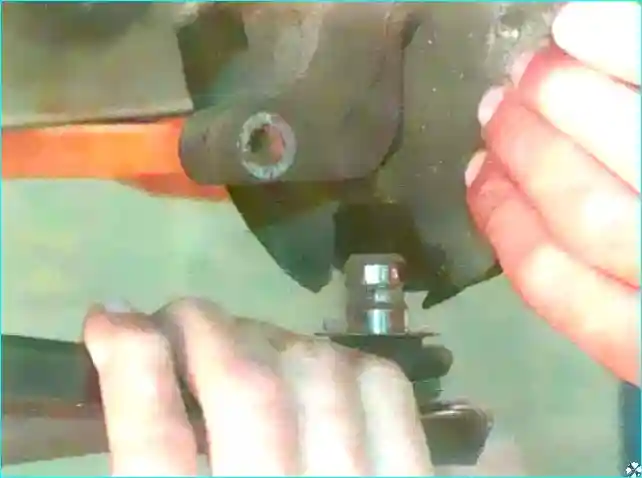
Disconnect the ball joint from the steering knuckle by pressing the lower arm down and overcoming the elastic resistance of the stabilizer bar.
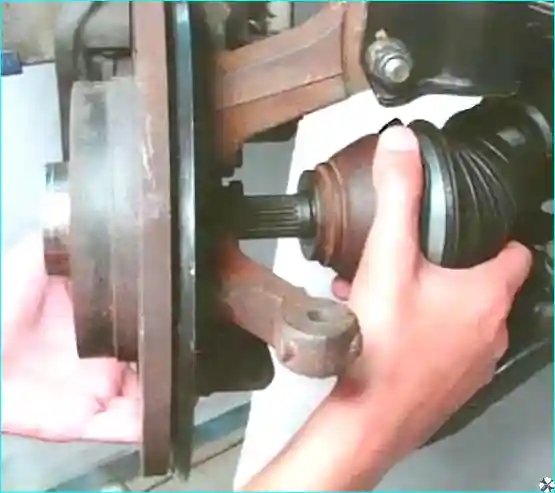
Move the shock absorber strut slightly to the side while simultaneously removing the outer constant velocity joint shaft from the hub.
If you cannot remove the shaft by hand, tap it out of the hub with a hammer through a spacer made of soft metal or wood.
Make sure the drive shaft does not come out of the axle gear; this may cause the constant velocity joint rollers to fall into the transmission housing.
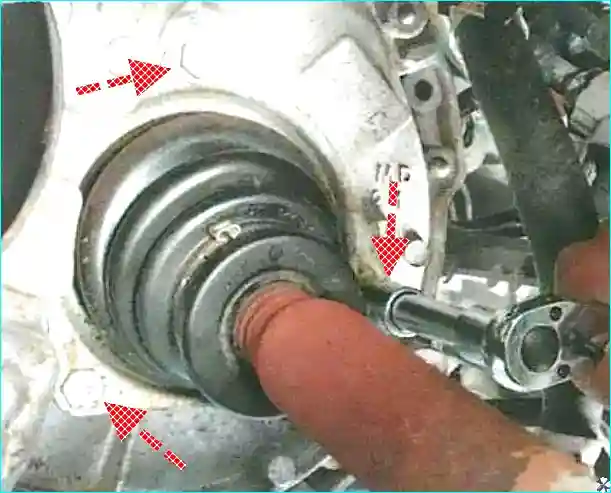
Remove the three bolts securing the inner joint boot bracket to the transmission housing.
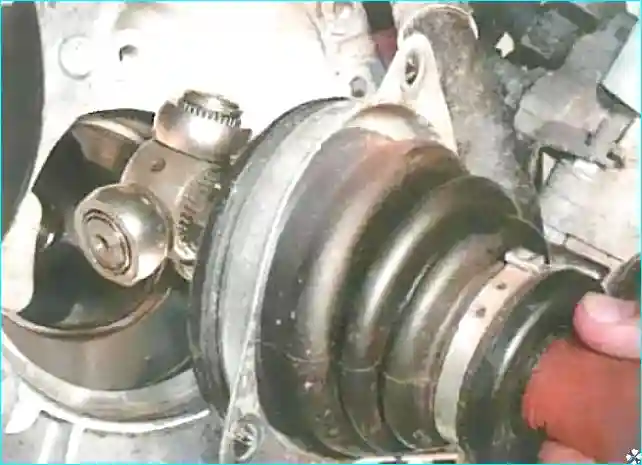
Remove the inner joint from the half-shaft gear slots and remove the drive.
When removing the joint from the half-shaft gear, check by hand how tightly the rollers fit on the three-pin joint hub journals.
If they move loosely, remove the drive carefully to avoid dropping the rollers into the transmission housing.
Also exercise caution when reinstalling Drive.
Install the left front wheel drive and all removed parts in the reverse order of removal.
After installing all parts, fill the gearbox with oil.
Install the wheel and tighten the wheel bolts until they stop, but do not tighten them completely.
Remove the vehicle from its jack stands and tighten the hub nut.
Final tightening of the hub nut should be performed with the vehicle on the ground; the tightening torque should be 280 Nm (28 kgf/m). Do not move the vehicle with a loose hub nut to avoid damaging the wheel bearing retainer.
Do not reuse hub nuts.
Tighten the wheel bolts.
Install the wheel trim.
Removing the Right Front Wheel Drive
To remove the right front wheel drive To remove the left front wheel drive, proceed as follows:
On the right side of the vehicle, perform steps 1~9 that were performed on the left side to remove the left front wheel drive (see above).
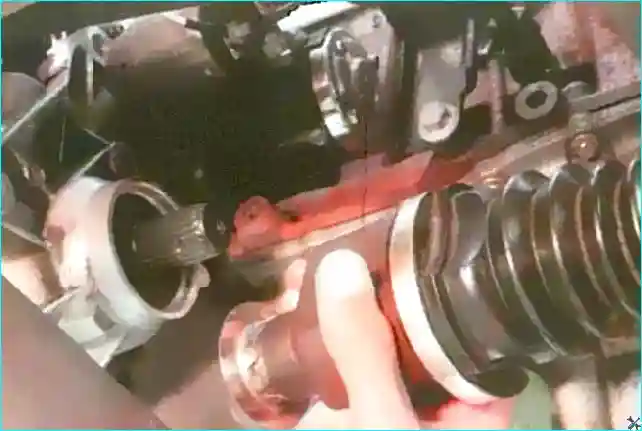
Slide the inner joint housing off the splined end of the axle gear and remove the right front wheel drive from the vehicle.
Reinstall the right front wheel drive and all removed parts in the reverse order of removal.
Before installing the drive, apply MOLYKOTE grease to the splines of the axle gear end. BR2.
After installing all parts, fill the gearbox with oil.
Install the wheel and tighten the wheel bolts until they stop, but do not tighten them completely.
Remove the vehicle from its supports and tighten the hub nut.
Finally tighten the hub nut with the vehicle on the ground. The tightening torque is 280 Nm (28 kgf/cm).
Moving the vehicle with a loose hub nut is strictly prohibited to avoid damage to the wheel bearing cage.
Do not reuse hub nuts.
Tighten the wheel bolts.
Install the wheel trim.
Repairing Wheel Drive Joints
Repairing constant velocity joints involves Replacing their parts and boots
Immediately replace the hinge boots at the first sign of damage (even in the case of pinpoint punctures, which are diagnosed by the leakage of grease on the boot surface).
In many cases, even cleaning the hinge and replacing the grease in it will help avoid replacing an expensive component.
Only inner hinges can be repaired by replacing parts.
If the outer hinges fail, they will have to be replaced completely along with the drive shaft, since the shaft is made integral with the hinge sleeve.
During operation, only the boots of the outer hinges can be replaced (including replacing the grease).
To repair the hinges, you will need: a circlip puller or round-nose pliers with thin jaws bent at an angle of 90°, fine-nosed pliers, side cutters, or a hacksaw Metal for removing the boot mounting clamps, a punch, a hammer, and a flat-blade screwdriver.
To repair the left front wheel drive inner joint, do the following.
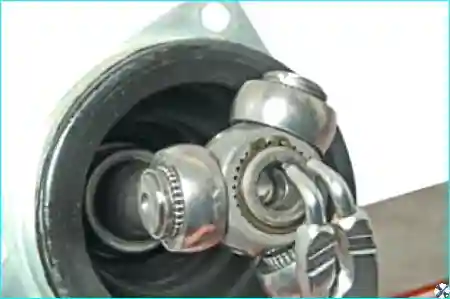
Remove the joint hub retaining ring by spreading it with a retaining ring plier or round-nose pliers and removing the ring from the shaft groove.
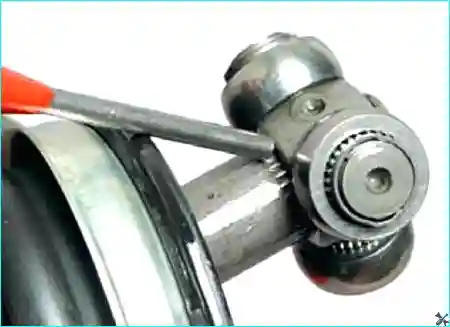
Slide the hub and rollers along the shaft splines.
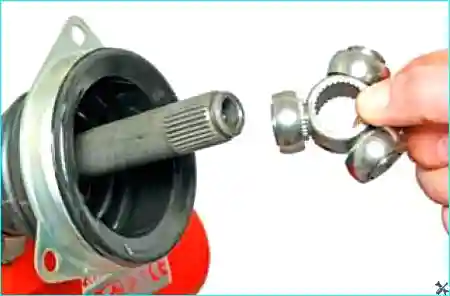
Remove the hub from the shaft.
Mark the position of the hub relative to the shaft and, when reassembling, align it according to the marks.
If installing a new hub, orient it according to the marks on the old hub.
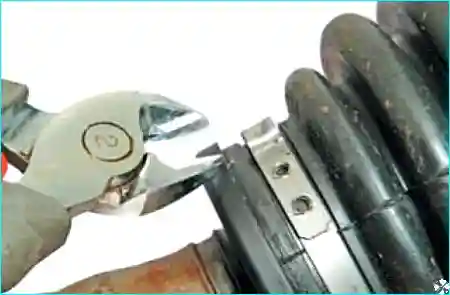
Remove the boot mounting clamp with pliers
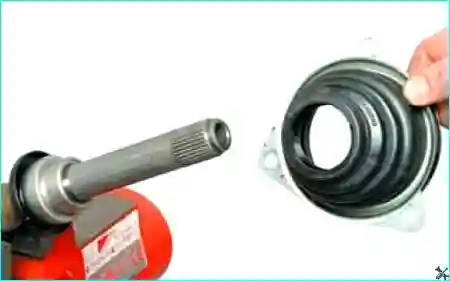
The boot mounting clamp can be (and much more easily) removed by cutting it with side cutters, since a new one is always included in the joint repair kit. Clamp.
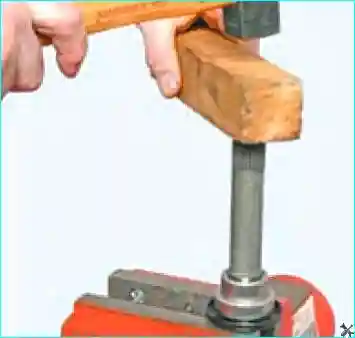
Remove the boot and its holder from the drive shaft.
If the seal needs to be replaced (in case of an oil leak from the gearbox), knock it off the shaft with hammer blows through a wooden block.
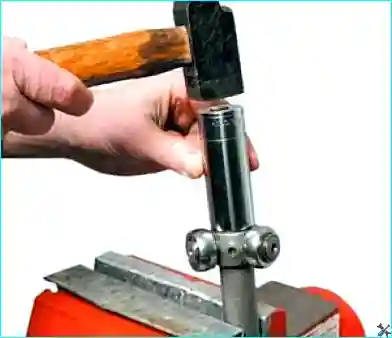
Using a suitable mandrel (it can be made from a pipe), press the new bearing assembly onto the shaft, maintaining a dimension of (118 + 0.2) mm between the ends of the shaft and the bearing.
When pressing the bearing assembly, proceed carefully. To avoid damaging the bearing and seal, press the bearing assembly onto the shaft using a press rather than hammering.
Install the boot on the shaft, secure it with a clamp, press the joint hub assembly with rollers onto the shaft splines (you can use a suitable socket from the tool kit as a mandrel), aligning the marks made during disassembly, and install the snap ring.
To repair the inner joint Right front wheel drive:
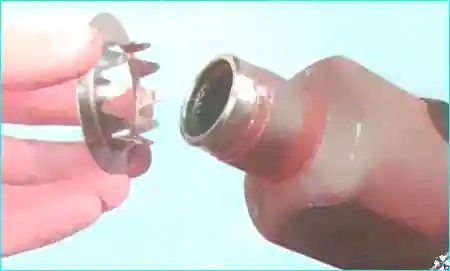
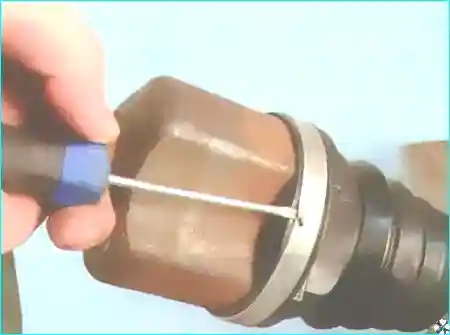
Remove the mudguard washer from the joint housing tailpiece.
Remove the large boot mounting clamp by bending it back antenna with a screwdriver
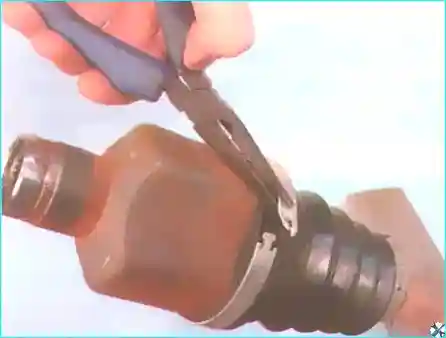
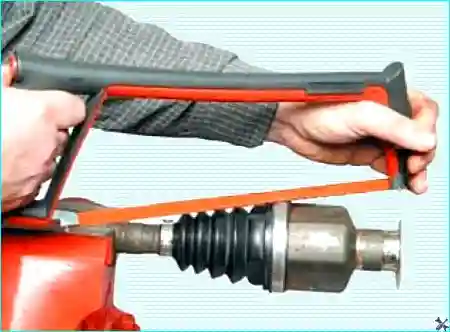
grasping the clamp with thin-nose pliers.
To make it easier to remove the clamp, you can cut it with a hacksaw for metal, since it contains The joint repair kit always includes a new clamp.
When cutting the clamp, be careful not to damage the edges of the boot groove on the joint housing.
Remove the small boot mounting clamp in the same way.
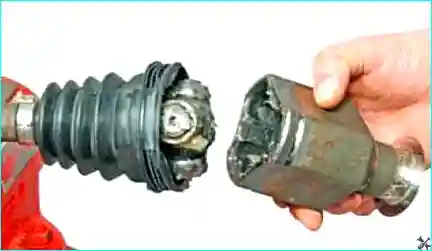
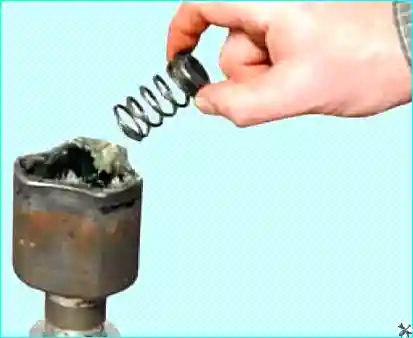
Remove the joint housing.
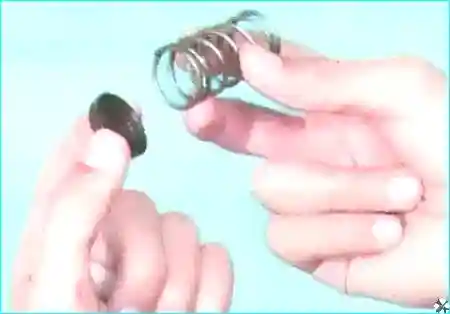
Remove the spacer spring and thrust washer from the housing.
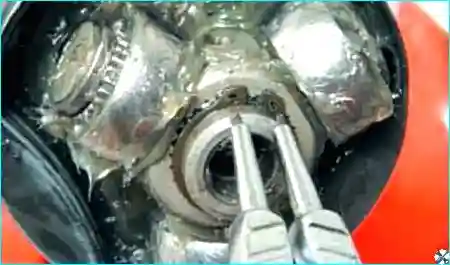
Remove The hub retaining ring of the joint, by loosening it with a circlip plier or round-nose pliers and removing the ring from the shaft groove.
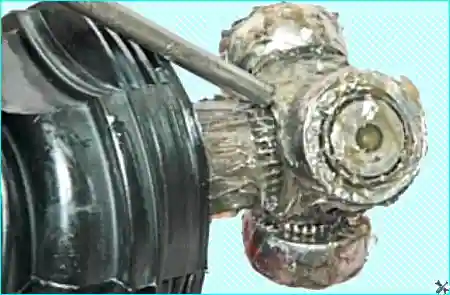
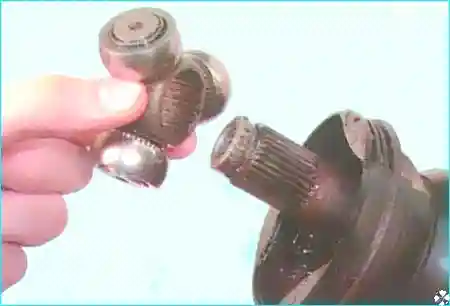
Slide the hub with rollers along the shaft splines, Remove the hub from the shaft.
Mark the position of the hub relative to the shaft and install it according to the marks during reassembly.
If installing a new hub, orient it according to the marks on the old hub.
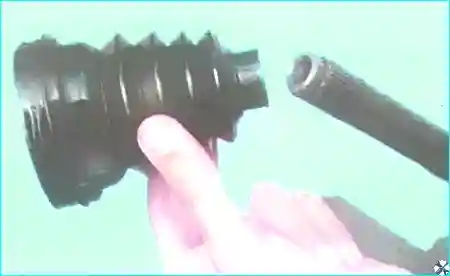
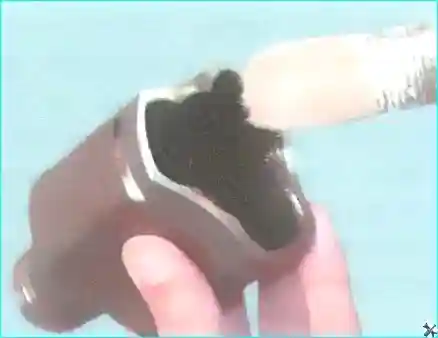
Remove the boot from the drive shaft.
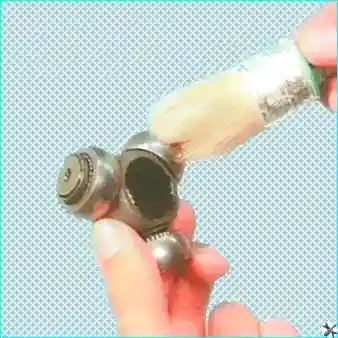
If the joint was disassembled only to replace the boot, remove the old grease by rinsing the inside of the joint housing and the hub with kerosene or gasoline.
Dry the parts with compressed air.
Install the new boot on the drive shaft.
Make sure the annular projection on the inner surface of the boot near the small diameter collar fits into the groove on the shaft.
To facilitate installation of the boot on the shaft, lubricate the shaft with a thin layer of grease designed for filling the joint.
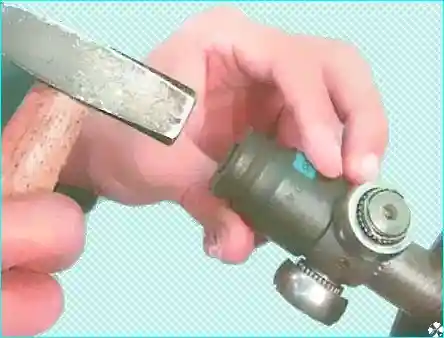
Press the CVJ hub assembly with rollers onto the shaft splines (you can use a suitable socket from the tool kit as a mandrel), aligning the marks made during disassembly, and install the retaining ring.
Pour half the required amount of MOBIL CVJ 825 BLACK STAR grease into the boot; the total amount of grease is (124 ± 10) g. Apply the remaining grease evenly into the cavity of the CVJ housing.
Do not reduce or increase the recommended amount of grease in the CVJ.
Install the spacer spring and thrust washer into the cavity of the CVJ housing.
Install the CVJ housing onto the rollers. Three-pronged hub and slide the joint boot onto the housing.
Make sure the annular protrusion on the inner surface of the boot near the large diameter flange fits into the groove on the joint housing.
Remove excess air from the boot by lifting the large edge of the boot and inserting a round rod, such as a punch, under it.
Without removing the rod from under the boot edge, move the joint parts so that the distance between the ends of the small flange of the boot and the joint housing tail is 190 mm.
If excess air is not removed from under the boot and the required hinge length is not set before securing the boot with clamps, the boot may be damaged during operation.
Without changing the position of the joint parts, remove the rod from under the boot edge and secure the boot. Clamps.
Install a mudguard washer on the joint housing tail.
To replace the outer joint boots on both drives, do the following:
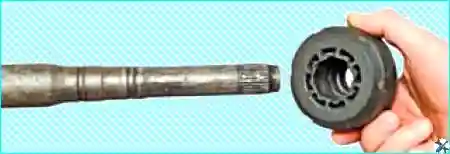
Remove the inner joints and their boots from the drive shafts.
In addition, when replacing the left front wheel drive boot, press the boot bearing assembly with the oil seal and mudguard off the shaft, as described above in this article.
When replacing the outer joint boot Additionally, remove the dynamic damper from the right front wheel drive shaft, overcoming the elastic resistance of the damper's rubber mass.
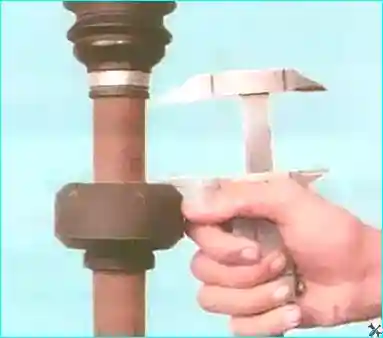
Before removing the dynamic damper, measure and note the distance between the ends of the damper and the joint boot so that you can return the damper to its original position during reassembly.
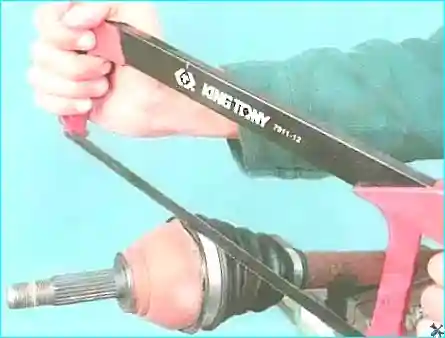
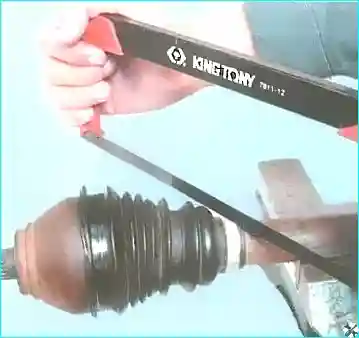
Remove the large clamp or cut it with a hacksaw.
Remove the small boot mounting clamps with a screwdriver, pliers, or by sawing them off with a hacksaw.
Damaging the clamps when removing the boot is acceptable, as the joint repair kit always includes new clamps.
When sawing Be careful when using the clamps - do not damage the edges of the boot grooves on the joint housing and the drive shaft.
Remove the boot by pulling it along the drive shaft.
To make it easier to remove a damaged boot from the shaft, cut it with scissors or a knife.
To avoid damaging the joint during operation, do not separate the joint housing and the drive shaft after removing the boot.
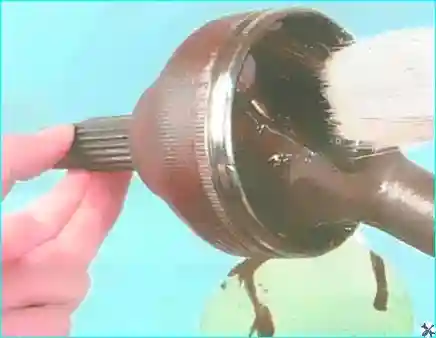
Remove old grease from the joint by flushing its cavity with gasoline or kerosene, and dry the joint with compressed air.
Do not use solvents to flush the joint.
Install a new boot on the drive shaft.
Make sure the annular projection on the inner surface of the boot near the small diameter belt fits into the groove on the shaft.
To facilitate pulling the boot along the drive shaft and prevent contamination of the joint cavity, thoroughly clean the shaft of dirt and rust with fine-grained sandpaper and lubricate it with a thin layer of grease designed for filling the joint.
Pour half the required amount of "MOBIL CVJ 825 BLACK STAR" grease into the boot; the total amount of grease is (294 ± 10) g. Evenly distribute the remaining grease into the cavity of the hinge housing.
Do not reduce or increase the recommended amount of grease in the hinge.
Place the hinge boot onto the housing. Make sure the annular projection on the inner surface of the boot near the large diameter collar fits into the groove on the hinge housing.
Remove excess air from the boot by lifting the large edge of the boot and inserting a round rod, such as a punch, under it.
Failure to remove excess air from under the boot may damage the boot during operation.
Remove the rod from under the edge of the boot and secure the boot with clamps.
To drive the right front wheel, install a dynamic damper on the drive shaft, maintaining the distance measured between the damper and the hinge boot before disassembly.
Dynamic Damper Install it on the shaft with the end without the flange facing the outer joint.
Install all inner joint components and its boot on the drive shaft as described above in this section.
To increase the service life of the inner joint of the right front wheel drive, replace the grease in it with fresh grease as a preventative measure.


