 ZH
 FR
 BE
 DE
 RU
 UK
 KK
 EN
 ES
We service the fuel pump during the replacement of the fuel filter elements.
We remove and dismantle the pump for repair.
Removing the fuel pump strainer
Using a screwdriver, we undo the two screws securing the pump cover and remove the cover.
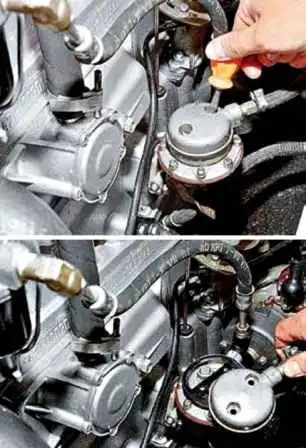
We take out the rubber gasket and the strainer.
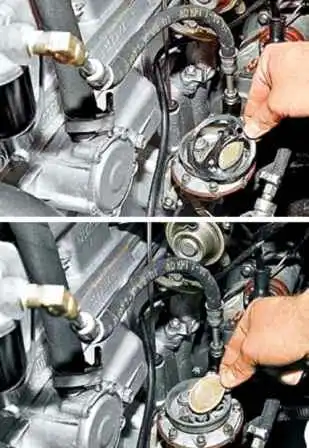
We wash the strainer in solvent, refit it and reassemble the pump in the reverse order.
Removing and dismantling the fuel pump
Using a 7 mm spanner, we slacken the clip and pull the inlet hose off the pump union.
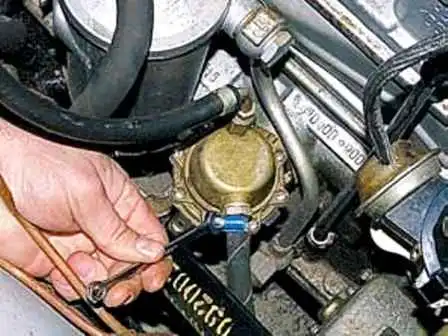
Using a 14 mm spanner, we undo the outlet hose union and disconnect it from the pump.
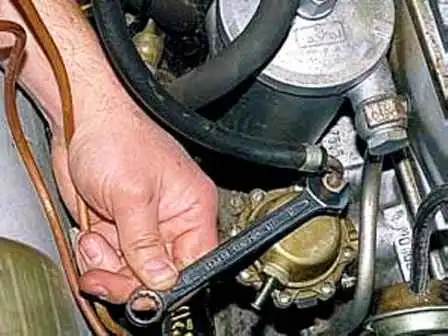
Using a 12 mm socket, we undo the two bolts securing the pump to the cylinder block.
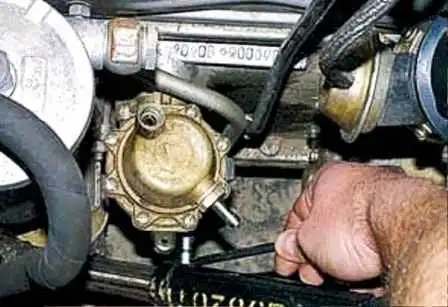
We remove the pump.
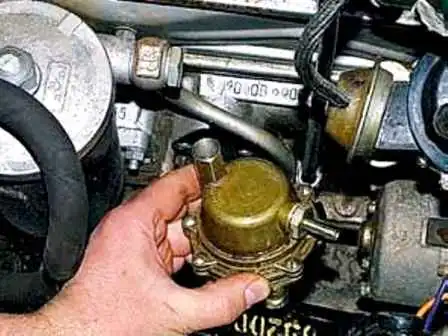
We take out the gasket.
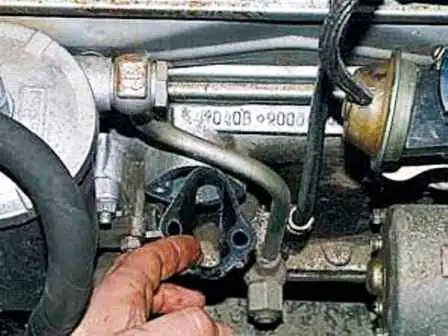
We mark the position of the cover and the pump body.
Using a screwdriver, we undo the eight screws and remove the cover.
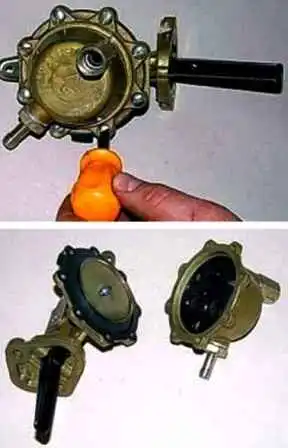
Using a screwdriver, we undo the three screws securing the valve block to the cover.
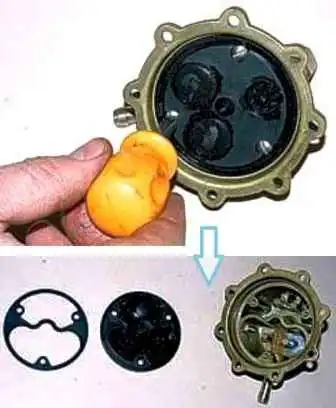
We take out the valve block and the sealing gasket.
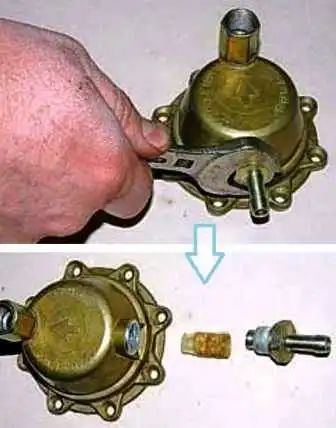
Using a 19 mm spanner, we undo the union and remove the strainer from it.
We press on the centre of the diaphragm and, having turned it through 90°, take out the diaphragm together with the rod and spring.
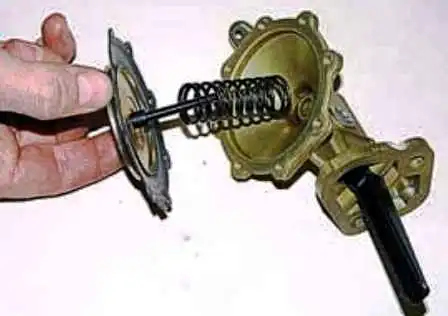
We wash all the metal parts of the pump in solvent, blow them with compressed air, assemble and fit the pump in the reverse order, aligning the valve block with the pump body so that the two inlet valves face the inlet union and the one (delivery) valve faces the outlet union.
When fitting the cover, we align the marks on it and on the body made earlier.
Materials and design features
The fuel pump is a diaphragm pump with mechanical drive from the camshaft. The body and cover are of aluminium or zinc alloy, the diaphragm is of oil- and petrol-resistant rubber on a textile base, the rod is steel, the spring is steel. The valves are steel, with rubber sealing seats. The strainer is a brass mesh in a steel body. The gaskets are paronite or oil- and petrol-resistant rubber. The fasteners are metric-thread screws and bolts. Solvent (white spirit, paraffin) is used to wash the parts, and compressed air to blow them. During assembly it is important to orient the valve block correctly: two inlet valves towards the inlet union, the delivery valve towards the outlet union.