


Removal
- To avoid damaging the painted surfaces of the body, cover the front wings of the vehicle with protective covers.
- The cylinder head is removed when the coolant temperature corresponds to the ambient temperature (engine cold).
- Plug the disconnected pipes or hoses to prevent foreign particles from entering.
- Be careful when disconnecting hoses, do not spill oil or other fluid.
- Be careful when disconnecting the wiring harness connectors, hold them by the connector body.
Note: when disconnecting hoses, always apply installation marks beforehand so that, when reconnecting, the hoses are installed in their original position.
- 1. Disconnect the cable from the negative terminal of the battery.
- 2. Unscrew the fastening bolts and remove the decorative engine cover.
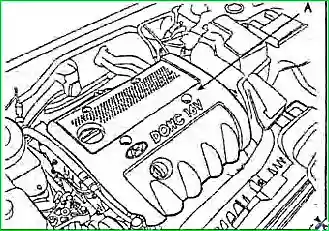
Models up to 2009.
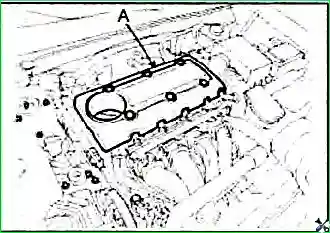
Models from 2009.
- 3. (Models up to 2009.) Remove the air filter.
- 4. (Models up to 2009.) Remove the intake air duct and the air filter housing.
- a) Remove the mass air flow sensor.
- b) Disconnect the breather hose from the air filter housing.
- c) Disconnect the engine control unit connector.
- d) Remove the intake air duct (B) and the air filter housing (A).
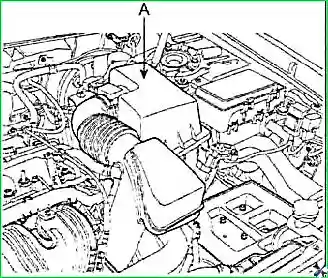
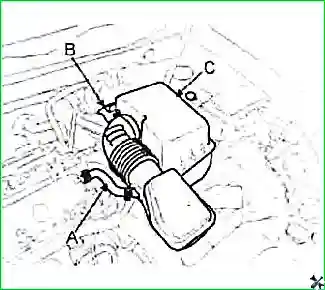
- 5. (Models from 2009.) Disconnect the breather hose (A), the engine ECU connector (B) and remove the air filter (C).
- 6. Remove the front wheels.
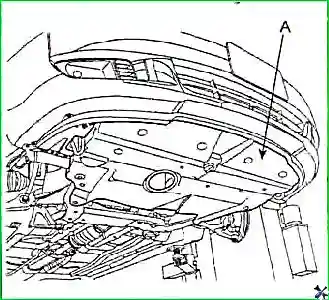
- 7. Remove the lower part of the engine guard (A).
- 8. Drain the coolant.
- 9. Remove the radiator hoses (A).
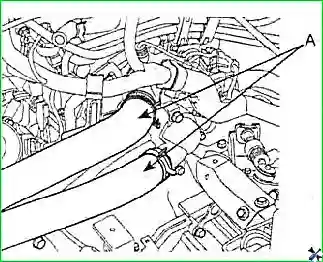
Models up to 2009.
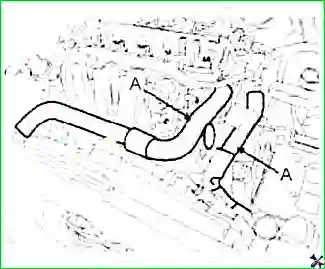
Models from 2009.
10. Remove the heater hoses (A).
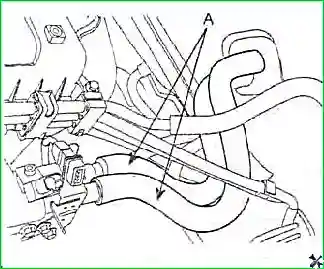
Models up to 2009.
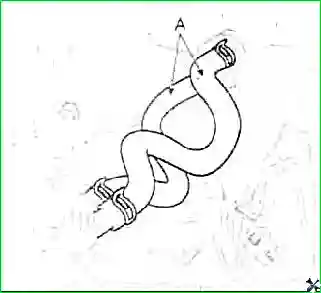
Models from 2009.
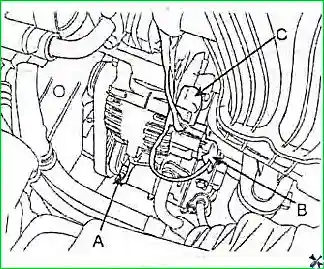
11. (Models up to 2009.) Disconnect the air conditioning compressor switch (A), the alternator connector (B) and the oil pressure warning sensor connector (C).
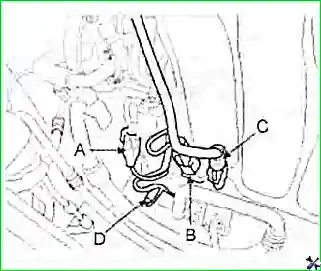
12. (Models from 2009.) Disconnect the solenoid valve connector of the intake manifold geometry change system (A), the oil pressure warning sensor connector (B), the knock sensor connector (C) and the air conditioning compressor switch (D).
13. (Models up to 2009.) Disconnect the CVVT system valve and oil temperature sensor connectors.
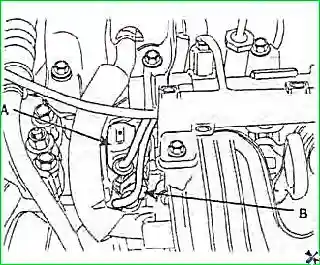
14. (Models from 2009.) Disconnect the CVVT system valve connector (inlet valves).
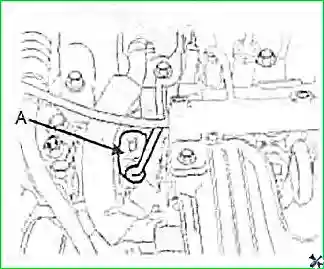
15. (Models up to 2009.) Disconnect the injector connectors (A).
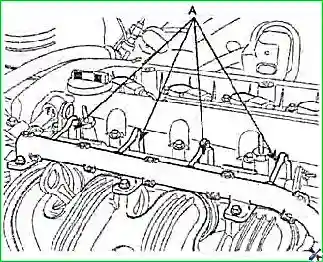
16. (Models from 2009.) Disconnect the injector connectors (A) and the ignition coil connectors (B).
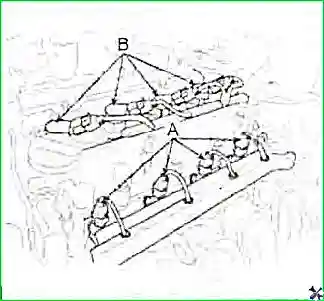
17. (Models up to 2009.) Disconnect the throttle actuator connector (A).
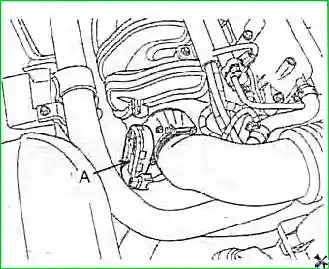
18. (2.4 l, models up to 2009.) Disconnect the throttle actuator connector (A) and the intake manifold absolute pressure sensor connector (B).
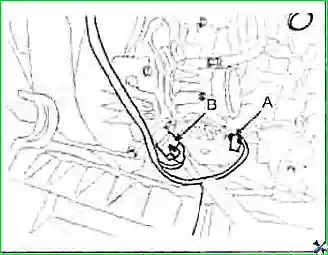
19. (2.0 l, models up to 2009.) Disconnect the idle speed control valve connectors (A), the throttle position sensor (B), the intake manifold absolute pressure sensor (C) and the throttle cable (D).
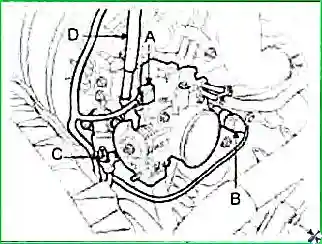
20. (Models up to 2009.) Disconnect the knock sensor (B) and camshaft position sensor (A) connectors.
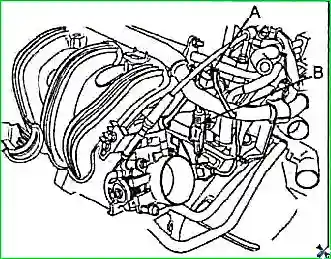
21. (Models from 2009.) Disconnect the camshaft position sensor connector (A), the fuel hose (B), the brake servo vacuum hose (C) and the crankcase forced ventilation hose (D).
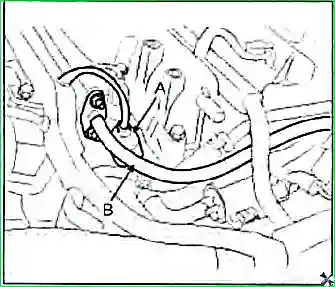
22. (Models up to 2009.) Disconnect the ignition coil connectors (A).
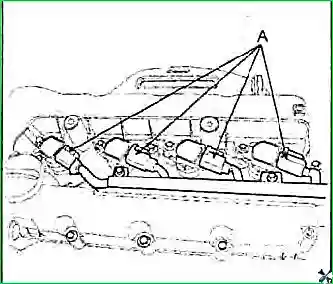
23. (Models up to 2009.) Disconnect the crankcase forced ventilation valve connector (A), the coolant temperature sensor connector (B), the capacitor connector (C), the crankshaft position sensor connector (D).
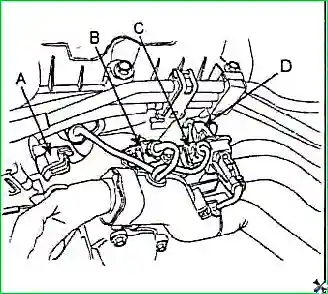
24. (Models up to 2009.) Remove the fuel rail (A), the brake servo vacuum hose (B) and the crankcase forced ventilation hose (C).
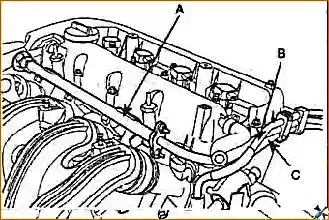
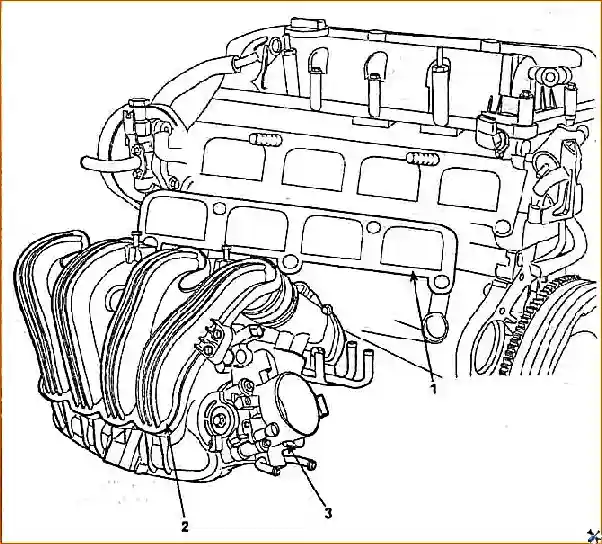
25. (Models from 2009.) Disconnect the crankcase forced ventilation valve connector (A), the coolant temperature sensor connector (B), the capacitor connector (C), the crankshaft position sensor connector (D), the camshaft position sensor connector (E) and the brake servo vacuum hose (F).
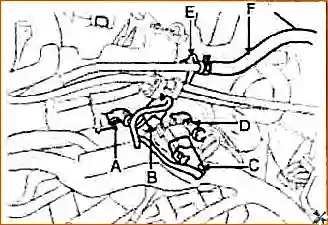
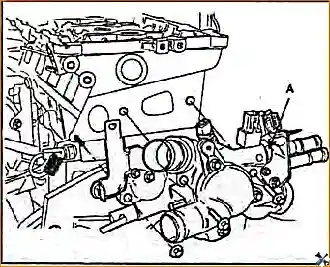
26. Remove the coolant inlet stub.
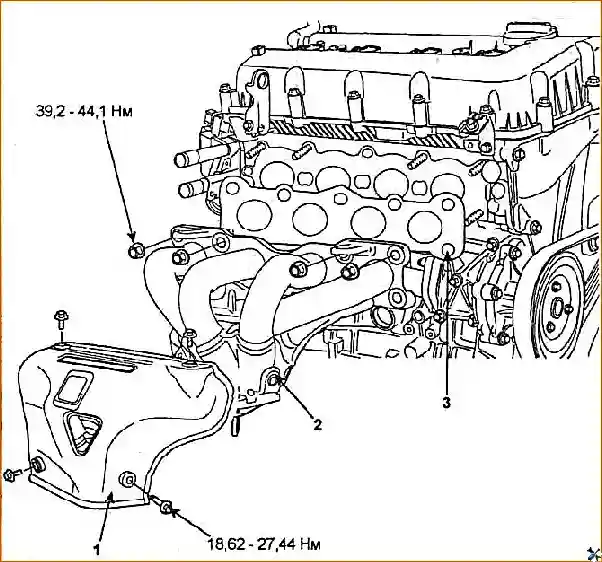
27. Remove the intake manifold.
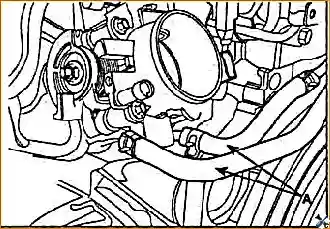
a) Disconnect the coolant hoses (A) from the throttle body.
b) (Models up to 2009.) Remove the oil pressure warning sensor connector (A) from the bracket.
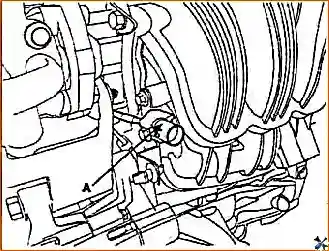
c) (Models up to 2009.) Remove the knock sensor connector (A) from the bracket.
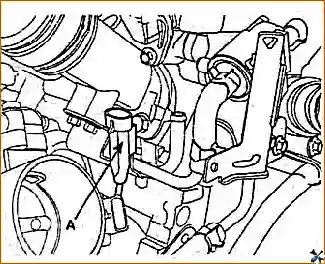
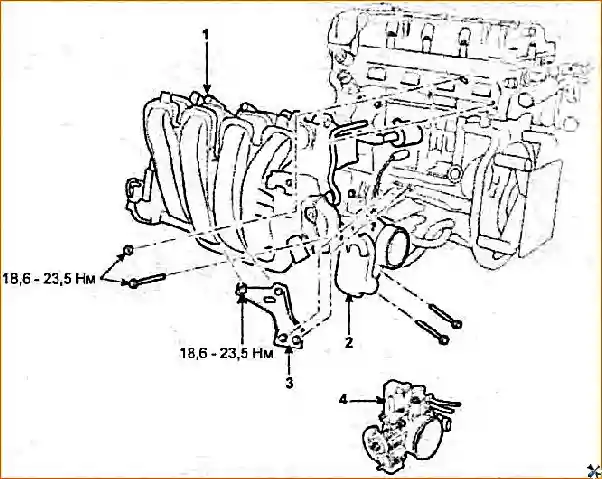
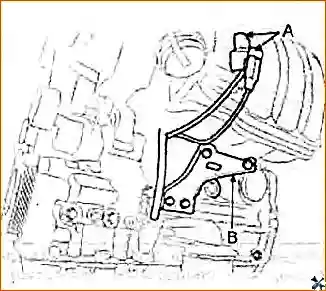
d) (Models from 2009.) Disconnect the sensor connectors (A) and remove the intake manifold support (B).
Tightening torque: 19–24 N·m.
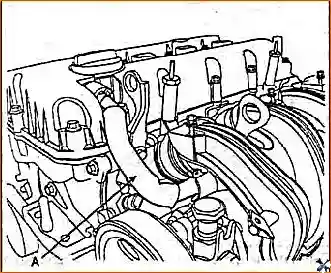
e) Remove the crankcase forced ventilation hose (A).
f) Remove the oil dipstick guide.
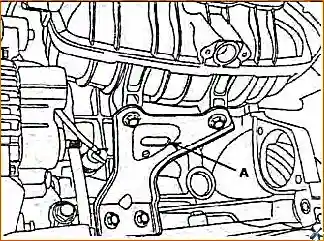
g) (Models up to 2009.) Remove the intake manifold support (A).
Tightening torque: 19–27 N·m.
h) (Models up to 2009.) Remove the intake manifold (A) together with the gasket (B).
Tightening torque: 19–27 N·m.
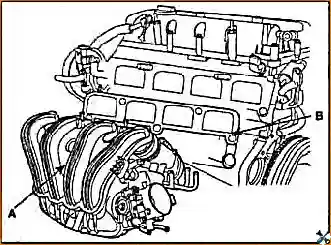
i) (Models from 2009.) Remove the intake manifold (A).
Tightening torque: 19–23 N·m.
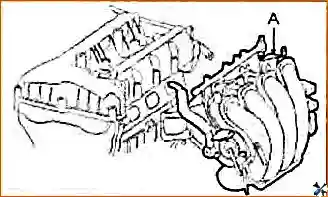
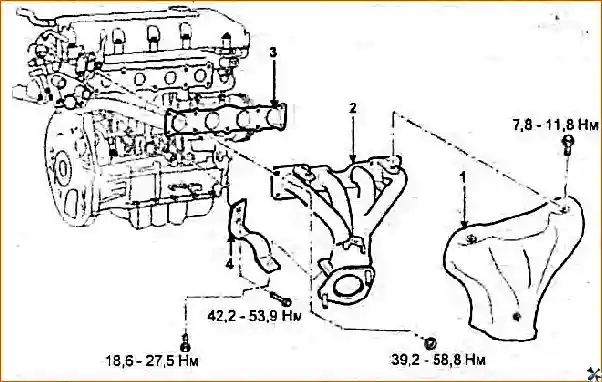
28. Remove the exhaust manifold.
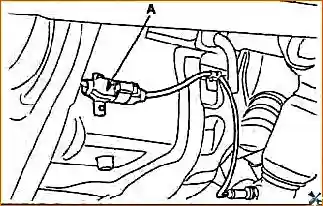
- a) (Models up to 2009.) Disconnect the oxygen sensor connector (A).
- b) (Models up to 2009.) Disconnect the front exhaust pipe.
Tightening torque: 40–58 N·m. - c) (Models from 2009.) Disconnect the oxygen sensor connector (A), remove the front exhaust pipe (B) and unscrew the exhaust manifold support bolt (C).
Tightening torque:- nut: 40–58 N·m;
- bolt: 42–53 N·m.
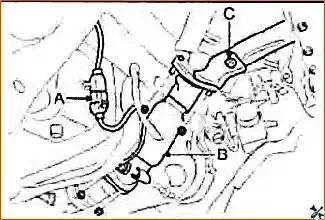
d) Remove the exhaust manifold heat shield (A).
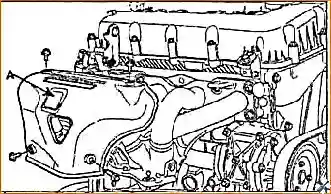
Tightening torque:
- models up to 2009: 19–27 N·m;
- models from 2009: 9–11 N·m.
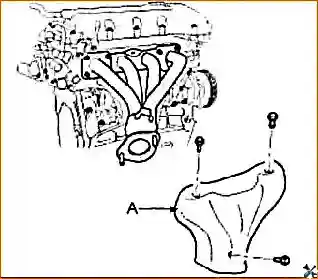
e) (Models up to 2009.) Remove the exhaust manifold support.
Tightening torque: 52–57 N·m.
f) Remove the exhaust manifold (A) together with the gasket (B).
Tightening torque: 40–44 N·m.
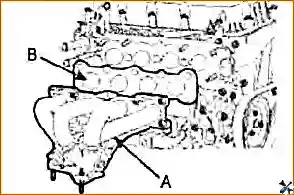
Models up to 2009.
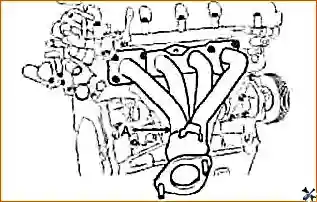
Models from 2009.
- 29. Remove the timing chain (see “Timing chain”).
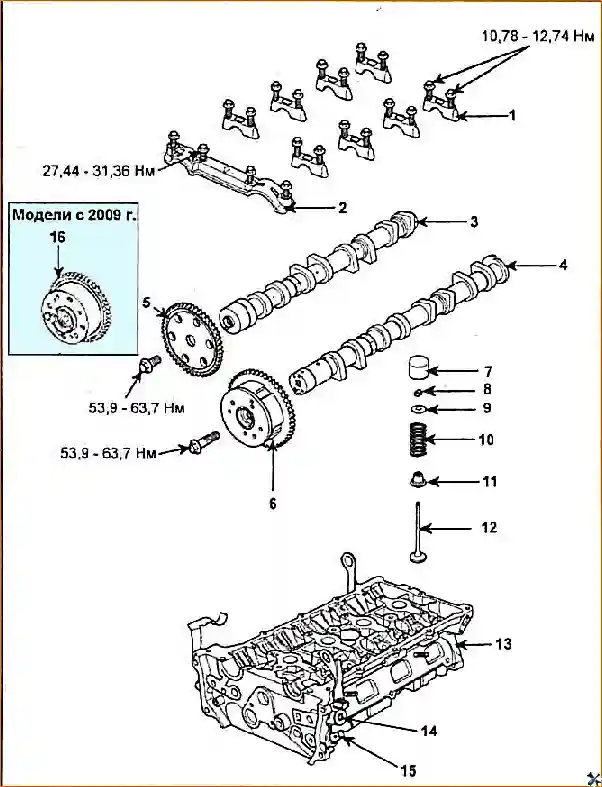
- 30. Remove the camshaft sprockets (A).
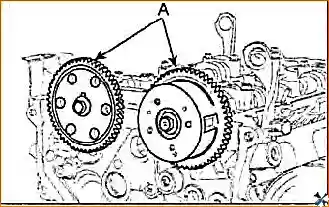
Models up to 2009.
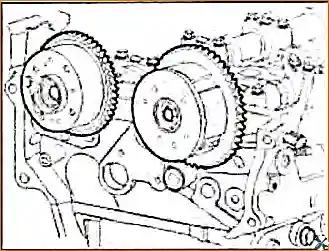
Models from 2009.
- 31. Remove the camshafts (see “Checking and adjusting the valve train clearances”).
- 32. (Models up to 2009.) Remove the CVVT system valve (A) and the oil temperature sensor (B).
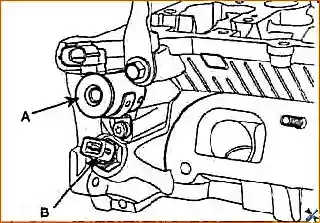
33. (Models from 2009.) Remove the CVVT system valves (A).
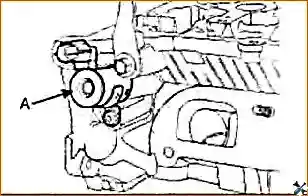
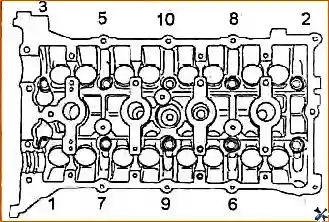
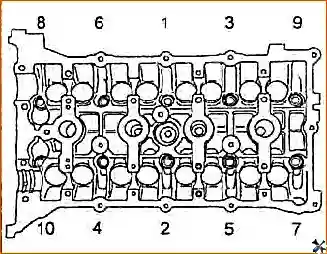
34. Evenly, in several passes, loosen and then unscrew the 10 cylinder head fastening bolts in the sequence shown in the figure. Remove the washers.
Note:
- Unscrew the fastening bolts strictly in the specified sequence; failure to comply with this condition may lead to warping of the cylinder head or the appearance of cracks.
- To avoid damaging the gasket surface, place the assembled cylinder head on wooden blocks after removal from the engine.
Dismantling, checking, repair and assembly
Checking the CVVT actuator
- 1. Check that the CVVT actuator does not rotate.
- 2. Cover with insulating tape the openings on the camshaft, except the one indicated by the arrow in the figure.
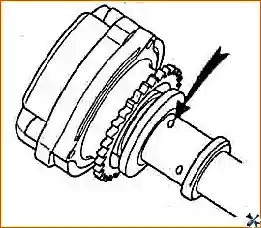
3. Supply compressed air to the CVVT actuator through the opening on the camshaft at a pressure of 147–150 kPa.
Caution:
- Be careful, when supplying air, oil may splash.
- In case of splashing, remove the oil with a cloth.
Note: when supplying air under pressure, the locking pin will be released when the actuator body is in the position corresponding to the latest opening and closing of the inlet valves (maximum retard angle).
4. Under the conditions specified in point 3, make sure that the CVVT actuator body rotates by hand in the direction corresponding to earlier opening (and closing) of the inlet valves.
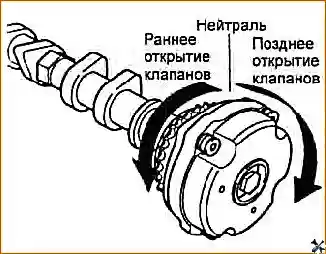
- 5. Depending on the applied pressure, the rotation of the CVVT actuator body is carried out without applying additional force (without turning it by hand) or, conversely, with excessive force due to air leaks, which results in incomplete release of the locking pin.
- 6. Except for the position where the locking pin is not released and, accordingly, the maximum retard angle of the inlet valve opening is set, check the range of movement of the actuator. The actuator is considered serviceable if its body rotates forward and backward without jamming from the neutral position by approximately 25°.
- 7. After completing the check, turn the CVVT actuator body to the position corresponding to the latest opening and closing of the inlet valves (maximum retard angle), then stop supplying compressed air to eliminate the release of the locking pin.
Installation
Note:
- Always install a new cylinder head gasket.
- The cylinder head gasket is metal, be careful, do not bend the gasket.
- Clean all parts.
- Set the piston of cylinder 1 to TDC of the compression stroke.
1. Install the CVVT system filter.
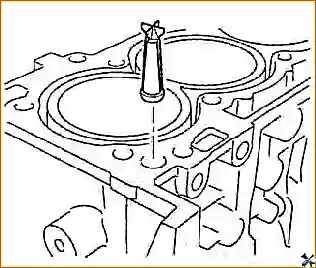
2. Install a new gasket (A).
Caution: be careful, do not allow gasket material or other foreign particles to enter the cylinders, cooling system passages and lubrication system passages.
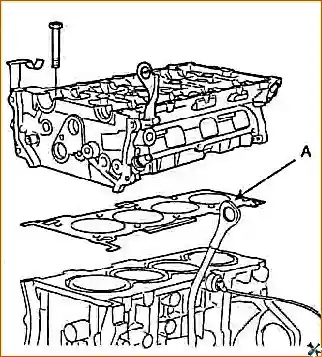
3. Install the cylinder head.
Caution: always install new cylinder head fastening bolts.
- a) Carefully install the cylinder head on the engine so as not to damage the gasket.
- b) Apply a small amount of clean engine oil to the thread and under the heads of the cylinder head fastening bolts.
- c) Install the cylinder head fastening bolt washers with the chamfered side up.
- d) Gradually, in three stages, tighten the cylinder head fastening bolts in the sequence shown in the figure.
Tightening torque:
- Stage 1: 34.3 N·m;
- Stage 2: 90°;
- Stage 3: 90°.
Note: if the cylinder head fastening bolt is turned through a total angle of less than 180°, the bolt tightening will be insufficient (the reliability of the gas joint will not be ensured).
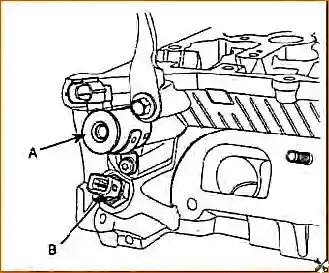
4. Install the oil temperature sensor (B) and the CVVT system valve (A).
Caution:
- Replace the solenoid valve if it has been accidentally dropped.
- Before installing the solenoid valve, clean it.
- To avoid damaging the solenoid valve during operations, do not hold it by the working part.
- After installing the solenoid valve in the opening on the cylinder head, do not apply force to the valve flange.
Tightening torques:
- valve: 10–12 N·m;
- sensor: 19–24 N·m.
5. Install the CVVT system sprocket on the inlet valve camshaft.
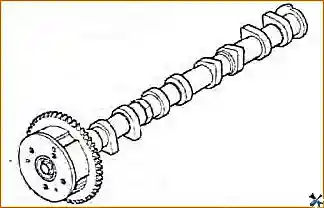
- 6. Install the camshafts (see “Checking and adjusting the valve train clearances”).
- 7. Install the coolant inlet stub (A).
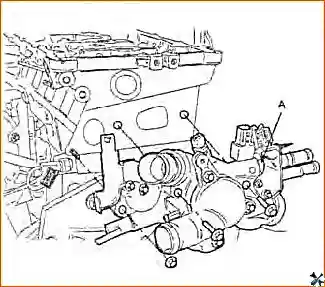
Tightening torques:
- bolt: 15–21 N·m;
- nut: 20–26 N·m.
8. Further installation is carried out in the reverse order of removal.


