


Fuel system components are removed for replacement, inspection, and adjustment.
The evaporative emission canister is removed for inspection or replacement if a persistent gasoline odor is detected due to a leak in the canister or if the canister purge valve fails.
Furthermore, a leak in the canister and a failed purge valve can cause the engine to run erratically at idle, even to the point of stalling.
Removing and Installing the Canister
The canister is installed in the right front wheel well.
You will need: a 13 mm wrench and a flat-blade screwdriver.
Disconnect the negative battery terminal.
Remove Right engine mudguard.
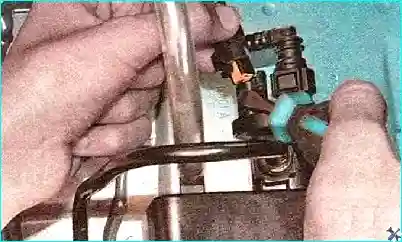
Disconnect the wiring harness connector from the Evaporative Canister purge valve...
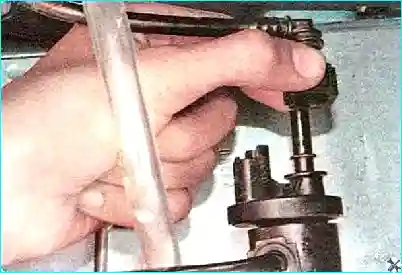
and the outlet line.
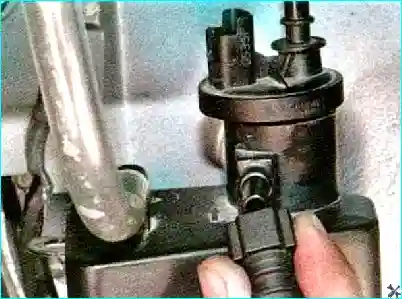
Disconnect the inlet line.
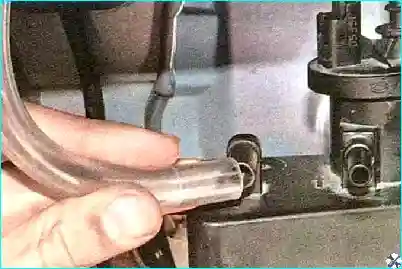
Disconnect the vent hose from the canister nipple.
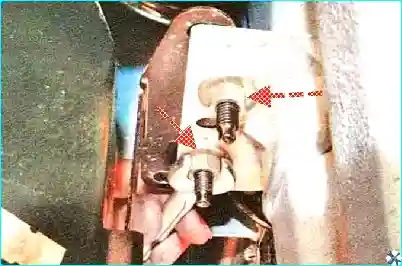
Remove the two nuts securing the canister bracket.
Remove the canister assembly with the bracket.
You can also remove the canister without the bracket.
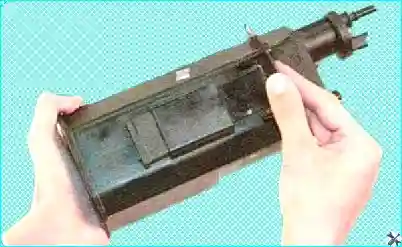
To do this, slide the canister up (shown with the canister removed for clarity) until the rubber retainer comes out of its eye.
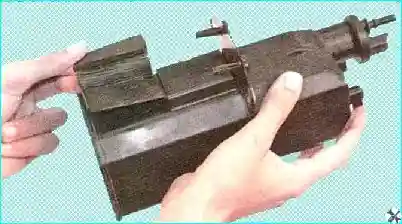
Remove the retainer and remove the canister from the bracket.
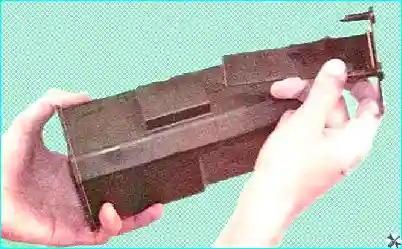
Install the parts in the reverse order of removal.
Adjusting the Throttle Actuator
Check the position of the throttle valve: when the accelerator pedal is fully depressed (an assistant should do this), it should be fully open, and when the accelerator pedal is released, it should be fully closed.
Otherwise, the actuator will need to be adjusted.
For a visual inspection, remove the air filter (see "Removing and installing the air filter").
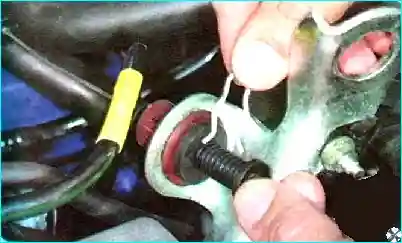
Remove the spring clip from the cable end slot and move the end forward in the rubber damper hole until the throttle is completely closed.
If the throttle does not open fully, move the cable end backward until the throttle is completely open.
Secure the cable end in its new position by inserting the clip into its corresponding slot.
If adjusting the drive If the throttle valve cannot be fully opened or closed, or the actuator is sticking, replace the throttle cable.
Reinstall the air filter.
Replacing the throttle cable
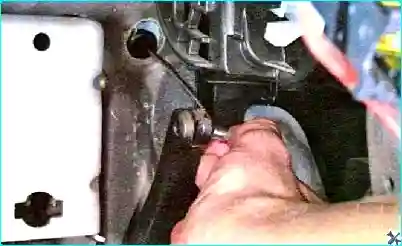
Disconnect the throttle cable from the accelerator pedal.
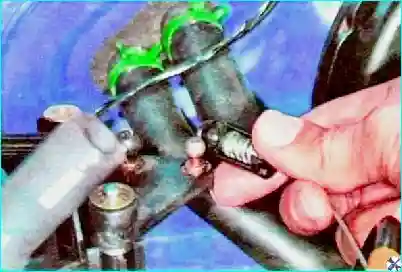
Remove the air filter.
Disconnect the cable end from the intermediate lever.
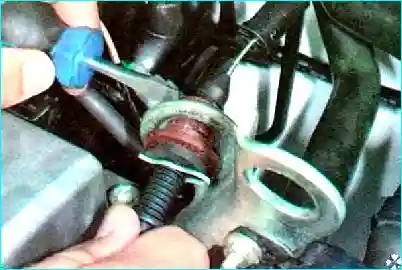
Squeeze the damper clips and remove the damper from the hole in the eye.
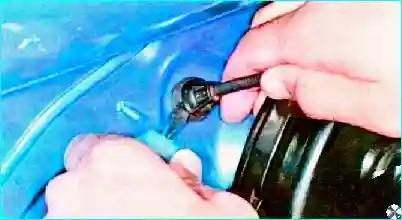
Using a screwdriver, pry the cable housing stop out of the engine compartment shield and remove the throttle cable by pulling it into the engine compartment.
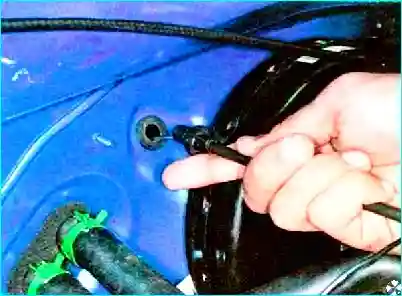
Install the new cable in the reverse order of removal.
Adjust the throttle drive if necessary.
Idle Air Control Valve
The idle air control valve maintains the set idle speed. Engine speed with the throttle fully closed during starting, warming up, and when changing load when auxiliary equipment is engaged.
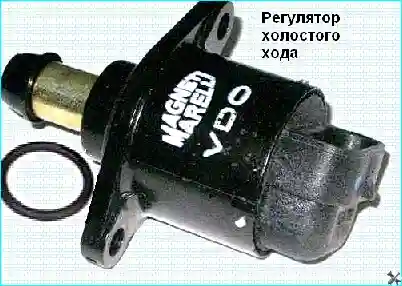
The IACV regulates the amount of additional air supplied to the intake system in addition to the throttle valve. It is an electromechanical valve attached with two bolts to the throttle body flange.
The valve seat and channels, machined into the throttle body flange, form a system for supplying additional air, bypassing the throttle valve.
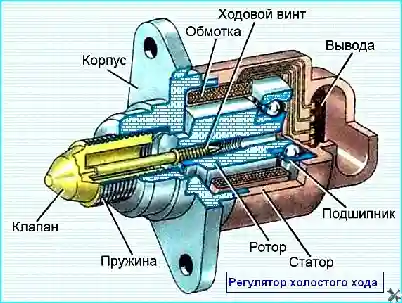
The engine control unit, having processed the signals from the sensors, determines the need to open the valve (Fig. 1) of the idle air control valve and transmits pulses to the plug terminal of the stator winding of the idle air control valve.
With each control pulse, the rotor rotates a certain angle, moving the valve relative to the seat using the lead screw.
Additional air enters the intake manifold through the channels in the throttle assembly.
By determining the vacuum in the engine intake manifold, the control unit strives to maintain it at a specified level by periodically opening and closing the idle air control valve idle speed.
This ensures that a constant amount of additional air is supplied to maintain a constant idle speed.
By varying the opening and closing of the idle speed control valve, the control unit compensates for significant increases or decreases in the amount of air supplied, caused by its suction through a leaky intake system or, conversely, a clogged air filter.
Activating auxiliary units causes an increase in engine load, accompanied by a decrease in idle speed and a change in the vacuum in the intake manifold, which is also compensated for by the control unit using the idle speed control valve.
Replacing the idle speed control valve
The idle speed control valve is located at the bottom of the throttle assembly. It consists of a bipolar stepper motor and a cone valve connected to it.
According to a signal from the ECU, the electric motor moves the valve, changing This will reduce the air duct cross-section.
You will need a T20 TORX wrench.
Remove the air filter (see "Removing and Installing the Air Filter").
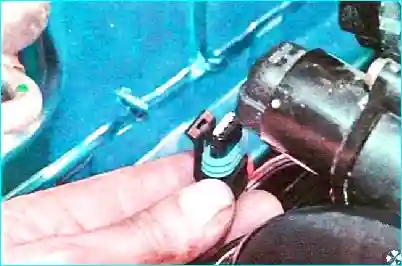
Disconnect the wiring harness connector from the IAC valve (with the ignition off).
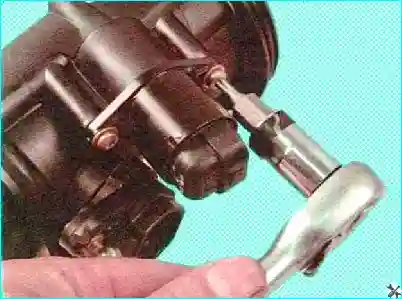
Remove the two screws securing the idle air control valve to the throttle body (shown with the throttle body removed for clarity)
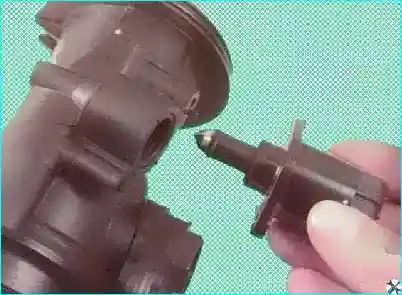
Remove the valve and its seal Ring.
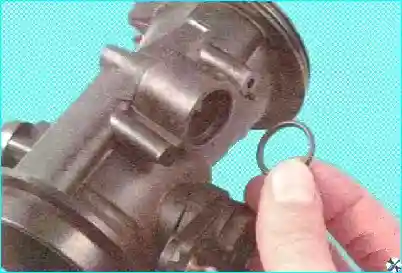
Replace a damaged or loose ring with a new one.
Install the valve in the reverse order of removal.
Throttle Assembly
The throttle assembly is a simple control device and is used to change the amount of primary air supplied to the intake system.
An air filter is attached to the inlet pipe of the throttle assembly; the connections between the throttle assembly, the intake manifold, and the air filter are sealed with rubber gaskets.
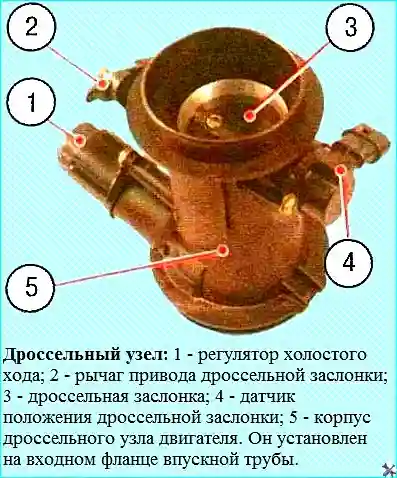
The throttle body has a hole for supplying additional air to the idle speed control valve.
Housing 5 (Fig. 1) houses a flap 3 rotating on an axis.
A position sensor 4 is installed at one end of the axis The engine management system's throttle valve is connected to the other lever, 2, to which the throttle actuator's intermediate linkage is attached.
Idle speed control valve 1, which regulates air flow when the throttle valve is closed, is mounted on housing 5.
During operation, the throttle assembly requires no maintenance or adjustment; simply monitor the condition of the rubber seals to prevent air leaks.
Removing and Installing the Throttle Assembly
You will need a flat-blade screwdriver.
Disconnect the negative battery terminal.
Remove the air filter (see "Removing and Installing the Air Filter").
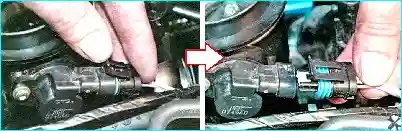
Press the latch and disconnect the wiring harness connector from the throttle position sensor.
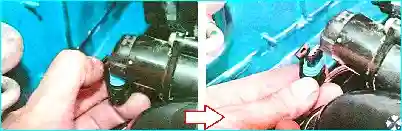
Press the latch and disconnect the wiring harness connector from the idle air control valve.
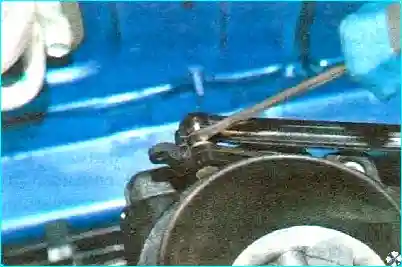
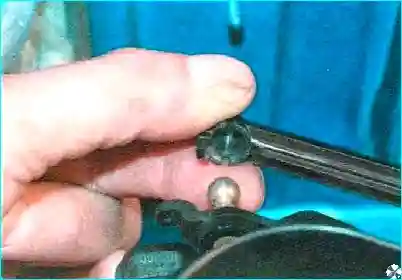
Using a screwdriver as a lever, disconnect the throttle actuator intermediate linkage from the throttle lever.
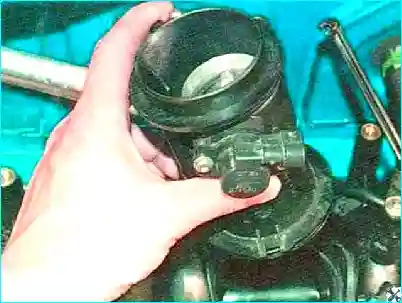
Remove the throttle assembly.
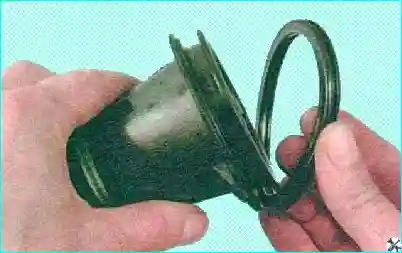
Remove the rubber seal from the throttle assembly and inspect it.
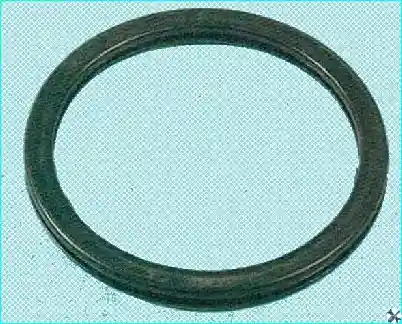
Replace a cracked or torn ring with a new one.
Reinstall the parts in the reverse order of removal.
Removing the Fuel Rail
Removing the fuel rail for cleaning and replacing the injectors.
You will need a T0RX-T30 wrench, a flat-blade screwdriver, and side cutters.
Relieve the pressure in the fuel system.
Remove the air filter.
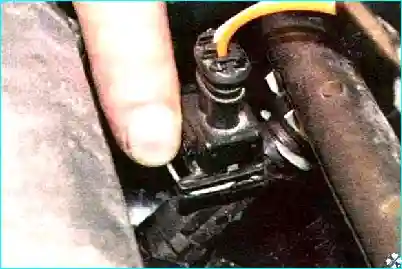
Squeeze the retainer and disconnect the wiring harness connector from the injector.
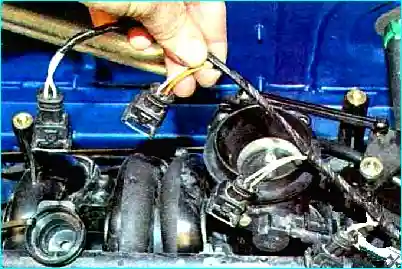
Similarly, disconnect the connectors from the remaining injectors and move the wiring harness to the side.
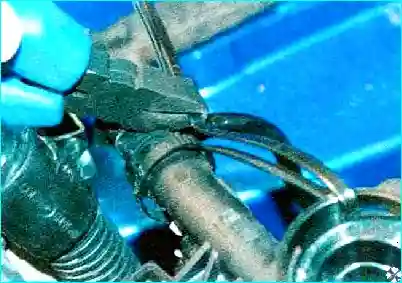
To disconnect the fuel line, cut the plastic safety clamp.
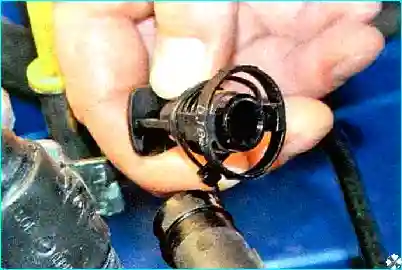
Squeeze the retaining ring and disconnect the line from the fuel rail.
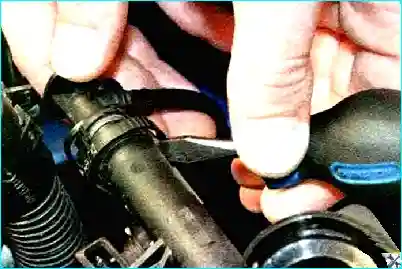
If necessary, press the fasteners with a screwdriver.
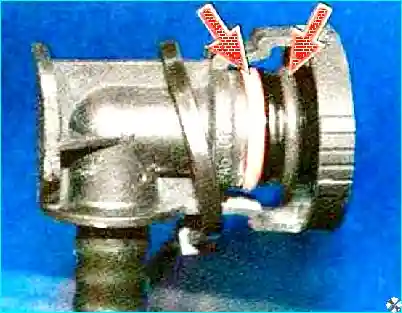
Replace the rubber O-rings on the fuel line with new ones each time the connection is disassembled.
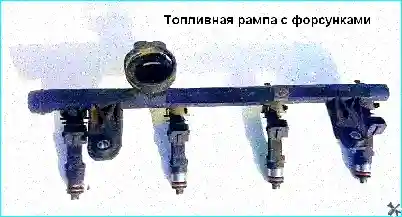
Remove the fuel rail assembly with the injectors.
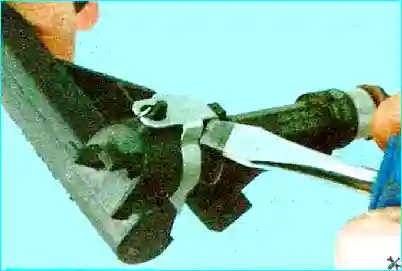
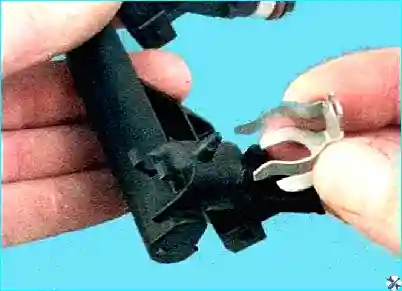
Use a screwdriver to pry off the injector retainer.
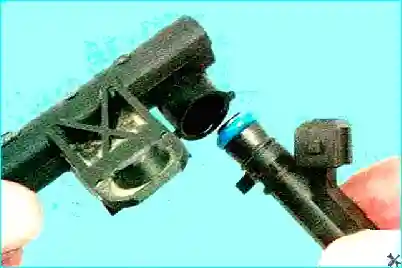
Remove the injector from the fuel rail.
Replace the rubber sealing rings with new ones each time the injectors are removed.
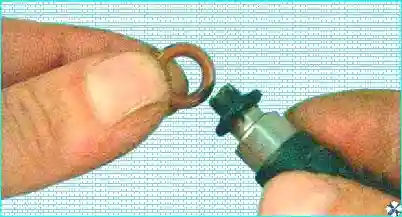
To replace the injector sealing rings, remove them from the nozzle and the injector body.
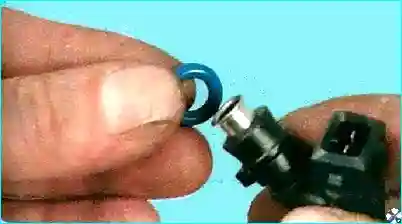
After installing the new rings, lubricate them with engine oil.
Reinstall the parts in the reverse order of removal. Secure the fuel line with a new clamp.
Start the engine and check the tightness of the pipe connections and injector seals.
Removing and installing fuel injectors.
Possible signs of injector failure:
- - difficult engine starting;
- - unstable engine operation;
- - engine stalling at idle;
- - increased crankshaft speed at idle;
- - the engine does not develop full power, insufficient engine responsiveness;
- - jerks and dips in engine operation while driving;
- - increased fuel consumption;
- - increased CO and HC content in the exhaust gases;
- - glow Ignition failure due to leaking injectors.
You will need: a TORX wrench, a flat-blade screwdriver.
Relieve the pressure in the fuel system (see "Reducing the Pressure in the Fuel System").
Remove the air filter (see "Removing and Installing the Air Filter").
Squeeze the retainer and disconnect the wiring harness connector from the injector.
Disconnect the connectors from the remaining injectors in the same manner and move the wiring harness aside.
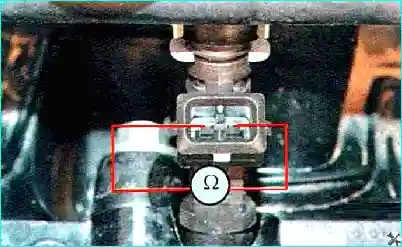
Use an automotive tester in ohmmeter mode to measure the resistance of the injector winding.
At 20°C, it should be 12 ohms.
If the injector winding resistance is not within specifications, replace the injector, as it cannot be repaired.
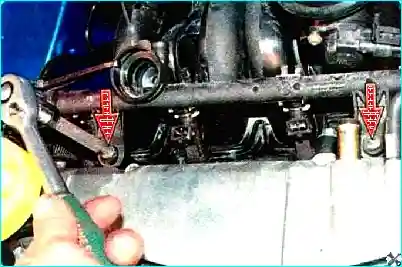
Remove the two fuel rail mounting bolts.
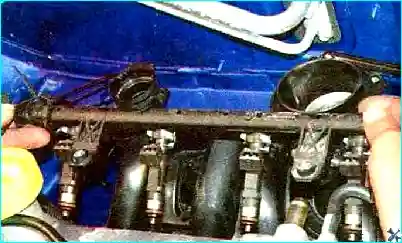
Remove the rail by removing the injectors from the holes in the intake manifold without disconnecting the pipeline from the rail.
If any of the injectors remain in the intake manifold when removing the rail, be sure to replace the retainer for this Injectors.
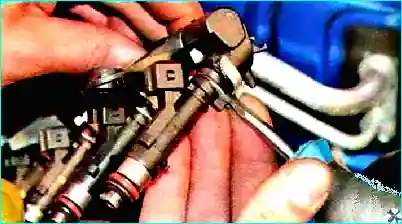
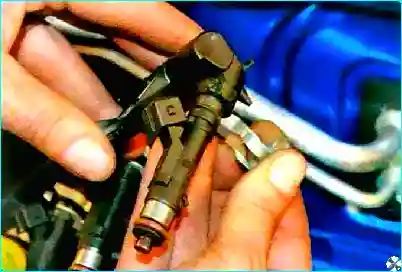
Pry off the retainer with a screwdriver and remove it.
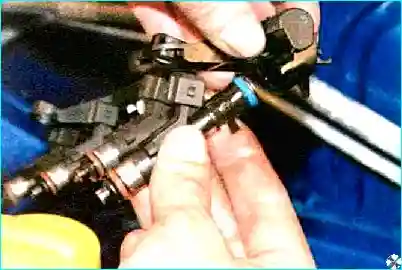
Remove the injector from the fuel rail.
Replace the rubber seals with new ones each time the injectors are removed.
To replace the injector O-rings, remove them from the nozzle and the injector body.
After installing the new O-rings, lubricate them with engine oil.
Reinstall the parts in the reverse order of removal.


