


The brake fluid should be replaced every 90,000 km or after six years of vehicle operation.
Of course, if the brake fluid has changed colour significantly or become dirty, it should be replaced regardless of the time interval.
To replace and bleed the brakes, you will need an 11 mm spanner, brake fluid, a transparent or rubber hose, a transparent container, a syringe and a wheel brace.
Use DOT-4 brake fluid.
The order of replacement and bleeding is as follows:
- right rear;
- left front;
- left rear;
- right front.
Place the vehicle on a lift and remove the wheels.
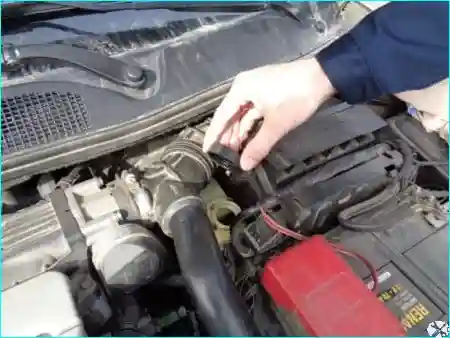
Fig. 1. Remove the cap from the master cylinder reservoir
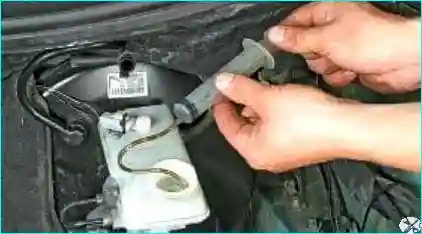
Fig. 2. Using a syringe or a bulb, draw the brake fluid out of the master cylinder reservoir
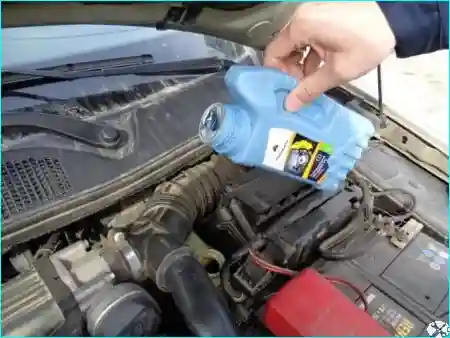
Fig. 3. Add clean brake fluid to the reservoir up to the lower edge of the filler neck
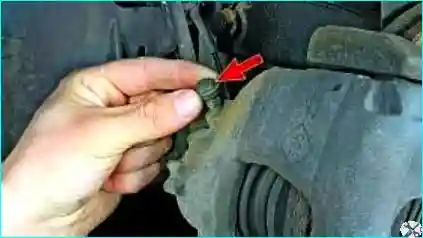
Fig. 4. Clean the dirt from the bleed valves
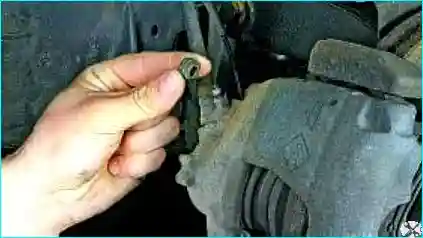
Fig. 5. Remove the protective caps from the bleed valves of the front brake calipers
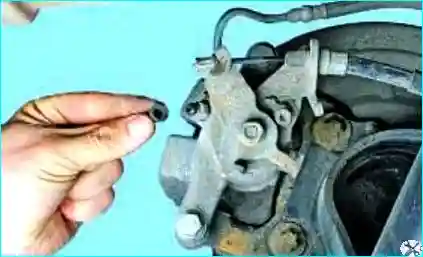
Fig. 6. Remove the protective caps from the bleed valves of the rear brakes
Fit the hose over the bleed valve of the right rear brake and place the end of the hose in a container filled with brake fluid (Fig. 7).
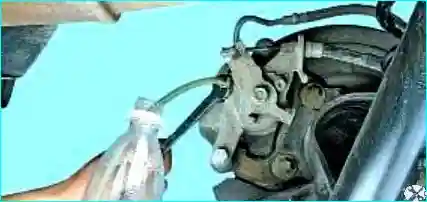
Fig. 7. Fit the hose over the bleed valve of the right rear brake
An assistant should press the brake pedal sharply 5–6 times, then hold the pedal down.
Open the bleed valve slightly.
Old brake fluid will start to flow out of the hose.
The brake pedal should then travel smoothly to the floor.
As soon as the fluid stops flowing, close the bleed valve.
Monitor the fluid level in the master cylinder reservoir and top it up constantly.
This ensures gradual replacement of the old fluid.
Perform this operation in accordance with the replacement order given above.
Bleeding the pressure regulation circuit
This operation is performed after removing or replacing one of the following components:
- master cylinder;
- hydraulic block;
- brake fluid;
- brake hydraulic circuit reservoir.
Place the vehicle on a two-post lift.
Connect:
- the bleeding tool to the vehicle's brake fluid reservoir;
- the diagnostic tool.
Position containers to collect the brake fluid.
Open the bleed screw on the right rear wheel.
Activate the pressure regulation solenoid valve for the right rear brake (command AS156).
With the solenoid valve activated, slowly depress the brake pedal to the floor and slowly release it.
This pedal operation creates a pressure in the brake system of 15 bar or more.
Close the corresponding bleed screw.
Perform these operations on the next brake caliper.
Strictly observe the following order:
- left rear wheel (command AS155);
- left front wheel (command AS153);
- right front wheel (command AS154).
Disconnect the bleeding tool.
Restore the brake fluid level in the reservoir.
Check the tightness of the bleed screws and the presence of the protective caps.
During the road test, ensure the ABS is activated to verify correct brake pedal travel.
If the pedal travel increases, repeat the brake system bleeding, excluding the pressure regulation circuit, and the pressure regulation circuit bleeding, until the pedal travel returns to normal.
It is possible to use more brake fluid than the system capacity.


