


Check the condition of the steering regularly, as driving safety depends on it.
When inspecting the steering, pay special attention to the condition of the protective boots and threaded connections.
Replace any torn, cracked, or elastic rubber boots; otherwise, water, dust, and dirt getting into the components will quickly cause them to fail.
Check the alignment of the steering wheel spokes; when the front wheels are straight ahead, they should be symmetrical relative to the vertical axis.
If not, determine the cause of the malfunction and correct it.
Turn the steering wheel from lock to lock, visually and audibly check:
- — secure fastening of the steering gear and steering wheel;
- — absence of play in the tie rod joints and ball joints of the steering rod ends Tie rods;
- — absence of binding or interference preventing the steering wheel from turning.
If you detect knocking or binding, disconnect the tie rods from the steering knuckle arms and repeat the check.
If the knocking or binding does not stop, remove the steering gear from the vehicle and have it repaired.
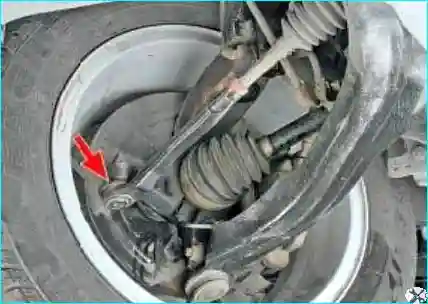
Check the condition of the tie rod end boots.
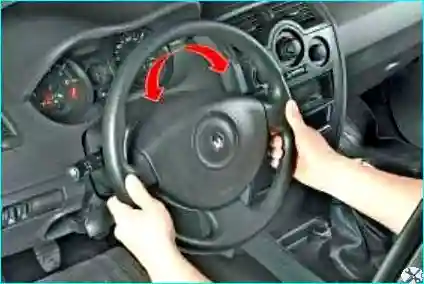
By turning the steering wheel sharply in both directions (with an assistant), visually and audibly check the steering gear for proper mounting.
No movement or knocking is allowed.
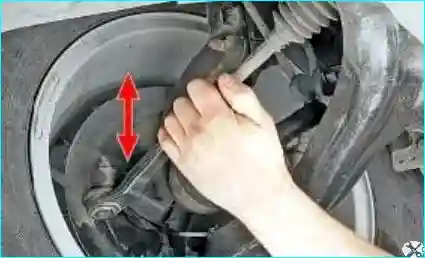
Check the tie rod end joints for play.
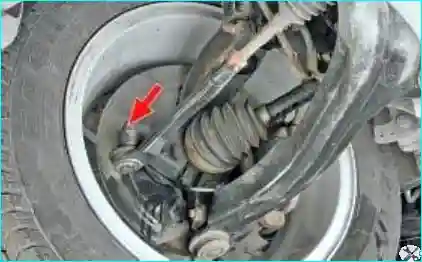
Replace any tie rod ends that have noticeable play.
Check the tightness of the tie rod end pivot nuts.
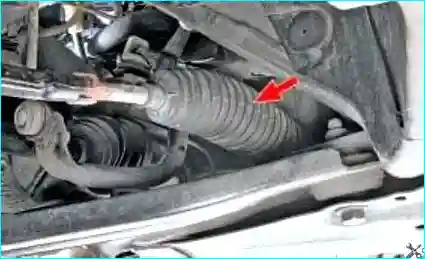
Check the condition of the steering rod covers.
Replace any damaged covers.
Checking the Steering Wheel Free Play (Play)
Excessive steering wheel play makes it difficult to control the car because it responds slowly to driver input.
Furthermore, increased play that cannot be corrected by adjusting the steering gear indicates a steering malfunction (looseness of the steering gear or steering rods, or wear on them). parts).
The play should not exceed 5°.
The play can also be determined in linear units (mm) using the formula:
L = (5˚/360˚)pD
- where L is the steering wheel play, mm; p = 3.14; D — outer diameter of the steering wheel, mm.
You will need: a ruler, calipers, chalk (or wire) for making marks.
Check the steering wheel play with the car parked on a flat, non-slip surface.
Set the front wheels to a position consistent with straight-ahead vehicle movement.
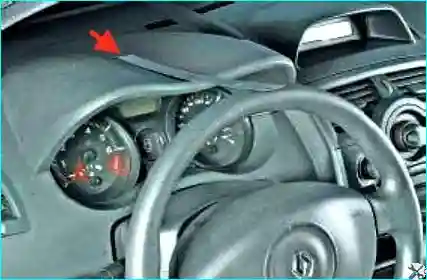
Attach the ruler to the dashboard so that its end touches the outer surface of the steering wheel rim.
Without changing the position of the ruler, turn the steering wheel to the right until the front wheels begin to turn.
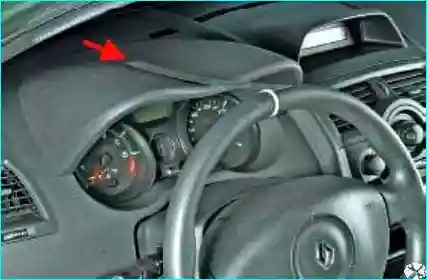
In this position, mark the steering wheel rim (attach the wire).
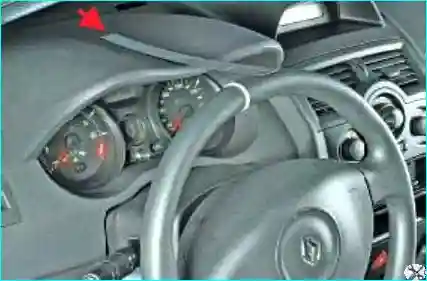
Without moving the ruler, turn the steering wheel to the left until the front wheels begin to turn.
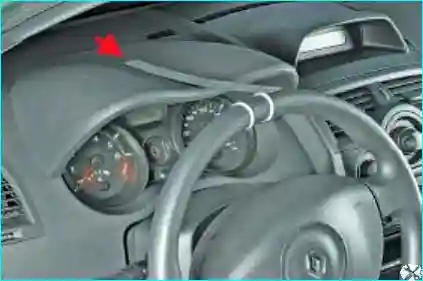
In this position, make a second mark on the steering wheel rim (attach the wire).
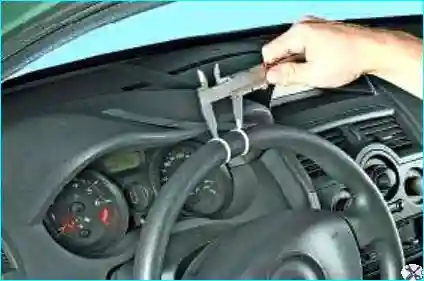
Measure the distance between the marks on the rim. It should not exceed the calculated value.
If the distance (steering wheel free play) is greater, the cause must be found and corrected.
Steering wheel free play 0–30 mm.
Steering Column Check
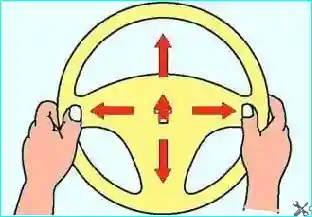
Fig. Steering Column Check
Moving the steering wheel as shown in Figure 1, check for wear on the steering column bearing, free play in the steering shaft joint, and secure fastening of the steering wheel and steering column.
Repair or replace parts as necessary.
Checking the Steering Wheel Force
Check the following:
- – Tire size and pressure;
- – Power steering fluid level;
- – Power steering pump drive belt tension.
Place the vehicle on a firm, level surface with the wheels in a straight-ahead position.
Remove the airbag module.
Operate carefully when removing the module.
Start the engine and warm up the power steering fluid Steering wheel temperature up to 50–60 °C.
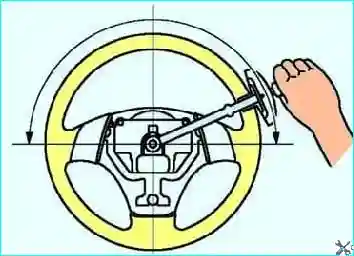
Fig. Measuring Steering Wheel Force
Measure the steering wheel force using a torque wrench (Fig. 2).
If the force is not within specifications, check the following:
- – Air in the power steering hydraulic system;
- – Leaks through hoses and their connections;
- – Operation of the power steering pump and steering gear. Steering wheel effort is 7.8 Nm.
To check the steering wheel effort, compare it with the steering wheel effort of another vehicle of the same model under the same conditions.
Steering wheel effort depends on the following conditions:
- – road surface condition (dry or wet, asphalt or concrete);
- – tire condition (manufacturer, degree of wear, tire pressure).
Checking the power steering circuit pressure
Place the vehicle on a two-post lift.
Remove the engine oil pan guard.
Clamp the power steering pump inlet line to reduce the amount of fluid leaking.
Take measures to prevent oil from coming into contact with the alternator from the system. Power steering.
Disconnect the wiring harness from the pressure sensor.
Remove the pressure sensor.
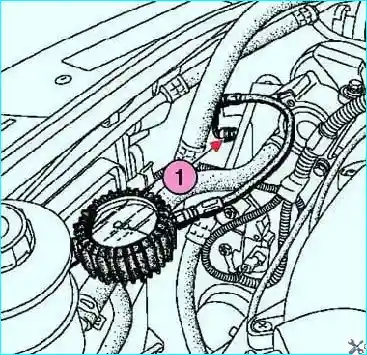
Fig. Connecting the high-pressure gauge to the pressure sensor fitting: 1 - fitting
Install the pressure gauge fitting in place of the pressure sensor (Fig. 3).
Remove the clamp.
Lower the vehicle.
Fill the power steering system with oil (ELF Renault Matic D2)
Bleed the system by turning the steering wheel from one extreme position to the other with the engine off.
When bleeding the system, do not hold the steering wheel in the extreme position: this may damage the power steering.
Set the wheels to the straight-ahead position.
Bleed the system by turning the steering wheel from one extreme position to the other with the engine running.
Top up the oil level in tank.
Remove the right front fender liner and the right th front wheel.
Check the pressure developed by the power steering pump with the steering wheel in the center position and no pressure applied to it; the pressure value is 5–7 bar.
Check the pressure developed by the power steering pump with the steering wheel turned to the extreme position; the value is 79–86 bar.
Stop the engine.
Raise the vehicle.
Clamp the power steering pump inlet line to reduce the amount of fluid escaping.
Remove the pressure gauge and fitting.
If you removed the O-rings on the power steering line fittings, replace them.
Install the pressure sensor.
Tighten the relay to the specified torque of 12 Nm pressure.
Connect its connector.
Remove the clamp.
Fill the power steering system with oil (ELF Renault Matic D2)
Bleed the system by turning the steering wheel from one lock position to the other with the engine off.
Set the wheels to the straight-ahead position.
Bleed the system by turning the steering wheel from one lock position to the other with the engine running.
Fill the oil level in the reservoir to the correct level.
Checking the pressure in the electric power steering pump
Place the vehicle on a two-post lift.
Remove the left front wheel and front bumper.
Remove the left front Fender liner.
Remove the power steering pump mounting bolts.
Install the clamp on the power steering pump hose.
Remove the high-pressure fuel line fitting bolt on the power steering pump.
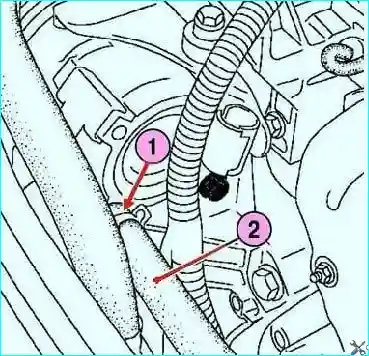
Fig. Disconnecting the high-pressure fuel line from the electric power steering pump: 1 - clamp, 2 - fuel line
Disconnect the high-pressure fuel line from the electric power steering pump (Fig. 4).
Connect the hose (Dir1798) to the hole of the electric power steering pump and the hole of the high-pressure line of the electric power steering pump.
Install the bolt securing the high-pressure line fitting and hose (Dir1798) to the electric power steering pump.
Tighten the bolt securing the high-pressure line fitting to the electric power steering pump to the specified torque of 21 Nm.
Connect the pressure gauge (Mot836-05) to the hose (Dir1798) using fitting "C".
Remove clamp.
Lower the vehicle.
Fill the power steering system with oil (ELF Renault Matic D2)
Bleed the system by turning the steering wheel from one lock position to the other with the engine off.
Bleed the system by turning the steering wheel from one lock position to the other with the engine running.
Top up the oil level in the reservoir if necessary.
Check the pressure developed by the electric power steering pump with the steering wheel turned to the lock position; the maximum value is 90 bar.
Stop the engine.
Raise the vehicle.
Install a clamp on the electric power steering pump hose.
Remove the pressure gauge (Mot836-05) and Fitting "C".
Remove the hose (Dir1798) and high-pressure line fitting bolt on the electric power steering pump.
Connect the high-pressure fuel line fitting to the electric power steering pump.
Install the high-pressure line fitting bolt on the electric power steering pump.
Tighten the high-pressure line fitting bolt on the electric power steering pump to the specified torque of 21 Nm.
Remove the clamp.
Fill the power steering system with oil (ELF Renault Matic D2)
Bleed the system by turning the steering wheel from one extreme position to the other with the engine off.
Bleed the system by turning the steering wheel from one extreme position to other with the engine running.
Top up the oil level in the reservoir if necessary.
Check for leaks.
Install:
- – Power steering pump mounting bolts;
- – Left front fender liner;
- – Front bumper;
- – Left front wheel.
Measuring vehicle pull on the road
The diagram for checking vehicle pull on the road is shown in Fig. 5.
Measurement method
Wrap plastic bag "A" around the steering wheel, securing it to the spoke on the side opposite the direction of pull.
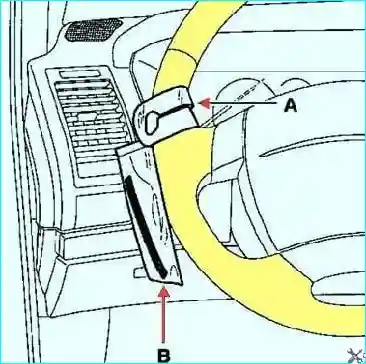
Fig. Measuring the Vehicle Pull Force
Place as many weights "B" in the bag as needed to compensate for the pull force (Fig. 6).
The pull force corresponds to the mass of the weights placed in the plastic bag.


