


General structure of the water distribution unit
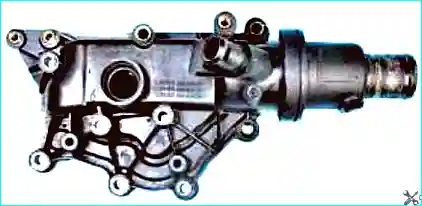
Some vehicle engines are equipped with a water distribution unit with an integrated thermostat. If the thermostat fails, the water distribution unit must be replaced.
Construction and operating principle: a thermostat with a solid heat-sensitive filler is installed in the water distribution unit; it maintains the operating temperature of the coolant and reduces the engine warm-up time. The water distribution unit is installed on the rear end face of the cylinder head.
Thermostat operating temperature ranges:
- At a coolant temperature up to 88 °C the thermostat is fully closed and the fluid circulates through the small circuit, bypassing the radiator, which speeds up engine warm-up.
- At a temperature of 89 °C the thermostat begins to open.
- At a temperature of 99 °C ± 2 °C it opens fully, ensuring circulation of the fluid through the radiator.
Fault diagnosis
Checking the thermostat on the vehicle:
- We start the cold engine and touch the lower radiator outlet hose — it must be cold.
- After the coolant temperature reaches 90–95 °C, the hose must begin to heat up quickly, which indicates the start of fluid circulation through the large circuit of the cooling system.
- If this does not happen, the water distribution unit must be replaced.
Replacing the water distribution unit
Necessary tools
- 10 mm spanner;
- pliers;
- flat-blade screwdriver;
- container for draining the coolant.
Preliminary operation: we drain the coolant (see the article «Replacing the coolant on a Renault Megane 2»).
Removal procedure
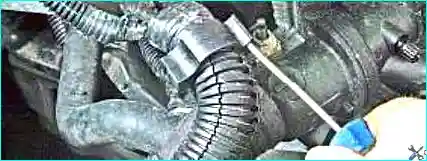
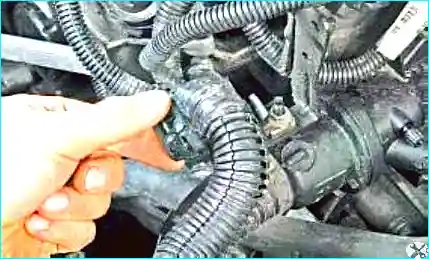
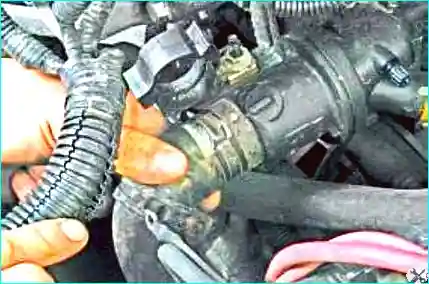
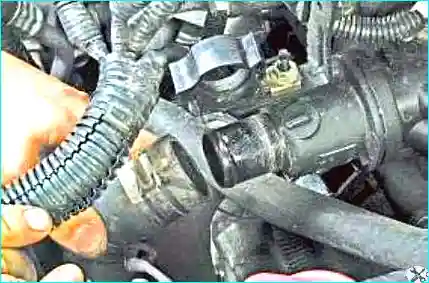
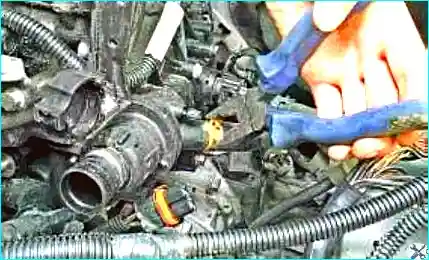
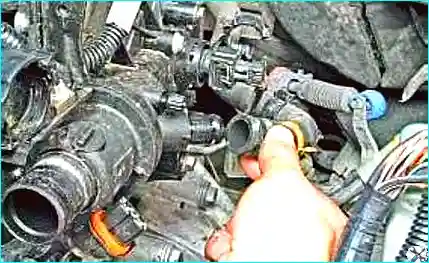
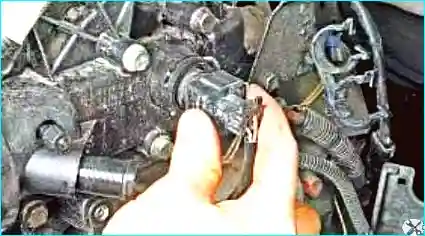
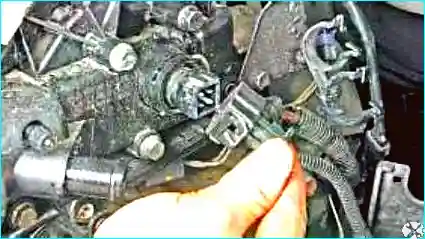
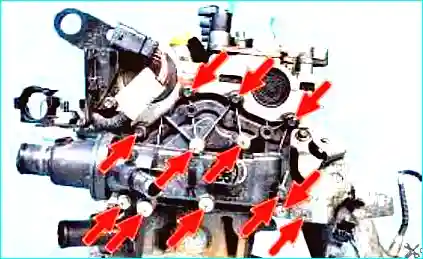
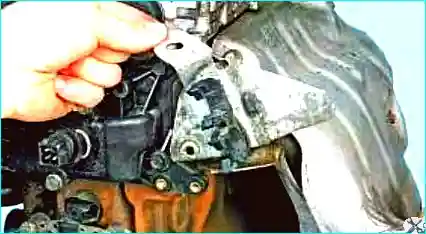
Refitting
Refitting: we refit the water distribution unit and all parts in the reverse order.
Important! After refitting we fill the coolant and remove air locks from the engine cooling system.
Check after replacement: start the engine and warm it up to operating temperature. Make sure the lower radiator hose becomes hot, which indicates the normal operation of the new thermostat. After cooling, check the coolant level and top up if necessary.


