


General information about compression
In the event of unstable engine operation, poor starting, high oil consumption in the engine, it is necessary to check the compression in the engine cylinders.
What is compression? Compression in the cylinders is the highest pressure of the gases in the cylinders when the piston compresses the air at the end of the compression stroke. A low compression pressure or its absence indicates wear of the piston rings, burn-through of the piston or a valve.
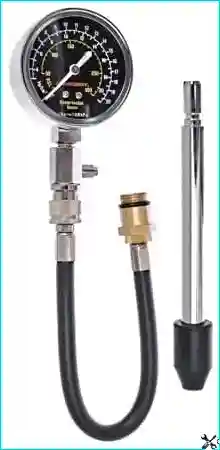
Design of the compression tester: the compression in the engine cylinders is checked with a compression tester, which is inserted into the spark plug opening in the cylinder head. The tip of the compression tester is rubber, it must be pressed firmly into the spark plug opening when measuring compression.
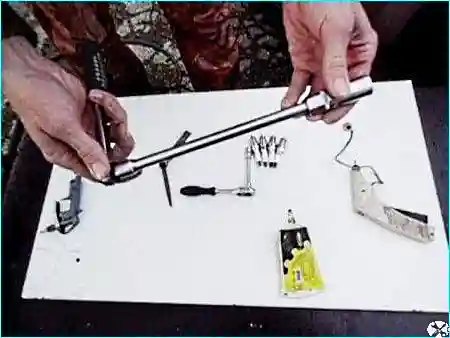
Preparation for checking compression
Preparatory operations:
- Start the engine and warm it up to operating temperature.
- Switch off the fuel pump and relieve the fuel pressure. The best way to do this is to disconnect the connector from the fuel module.
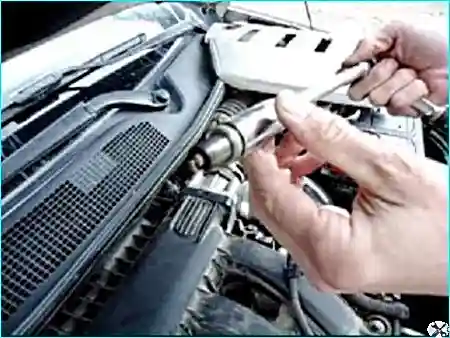
Removing the spark plugs: we withdraw the engine ignition coils and unscrew the spark plugs with the spark plug wrench. On replacing the spark plugs you can see the article How to replace the spark plugs on a Renault Megane 2.
Checking compression
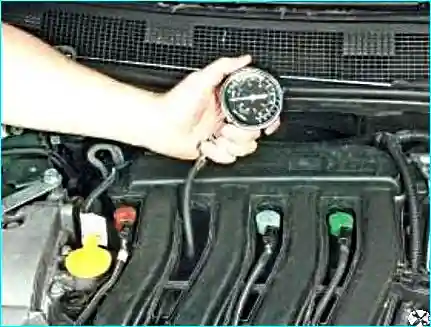
Measurement procedure:
- An assistant presses the accelerator pedal (throttle drive) to the floor in order to open the throttle fully.
- We switch on the starter and turn the engine crankshaft until the pressure in the cylinder stops increasing.
- We record the compression tester readings and relieve the compression tester pressure by pressing the air release valve.
- We check the pressure in the other cylinders.
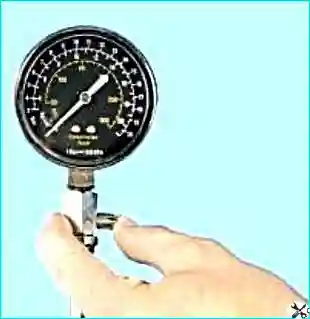
Standard compression values:
- The normal pressure in the cylinders must be not lower than 10 kgf/cm².
- The pressure must not differ between the different cylinders by more than 1 kgf/cm².
Diagnosing the causes of low compression
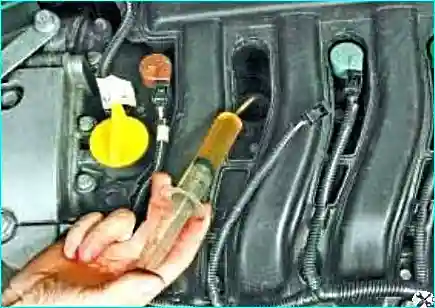
Diagnosis using oil: the cause of insufficient compression can be determined by pouring 20 ml of clean engine oil through the spark plug opening and measuring the compression again.
- If the compression tester readings have increased — major wear or breakage of the piston rings.
- If the compression values have remained unchanged — insufficient seating of the valve heads on their seats or damage to the cylinder head gasket.
Diagnosis using compressed air
Compressed air supply method: the cause of insufficient compression can also be determined by supplying compressed air to the cylinder in which the piston has previously been set to TDC of the compression stroke.
Procedure:
- Remove the tip from the compression tester and connect the compressor hose to it.
- Insert the tip into the spark plug opening and supply air to the cylinder at a pressure of 2–3 kgf/cm².
- In order that the engine crankshaft does not turn, engage the highest gear and brake the vehicle with the parking brake.
Determining the leakage point:
- Air escaping (leaking) through the throttle body — leakage of the inlet valve.
- Air escaping through the silencer — leakage of the exhaust valve.
- Air escaping through the expansion tank neck in the form of bubbles — damage to the cylinder head gasket.
- Air escaping into the adjacent cylinder (by the characteristic hissing sound) — damage to the cylinder head gasket.
Recommendation: after carrying out the diagnosis and rectifying the faults, always repeat the compression check to confirm the quality of the repair.


