Before starting to strip the gearbox, prepare your workplace. You will need: a set of ring and socket spanners (10, 12, 13, 22 mm), screwdrivers (flat and cross-head), a copper or polyurethane mallet, circlip pliers, mandrels for pressing in oil seals. Be sure to use clean rags and a container for collecting oil residues.
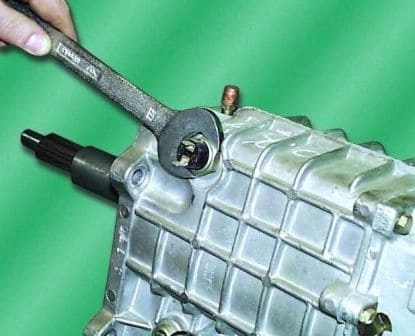
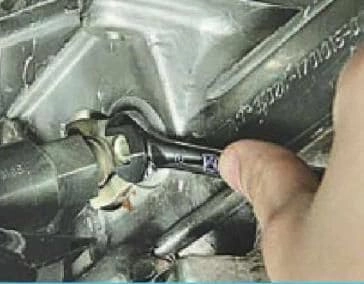
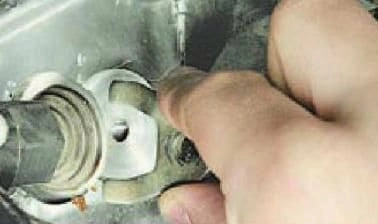
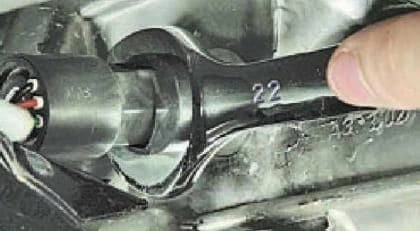
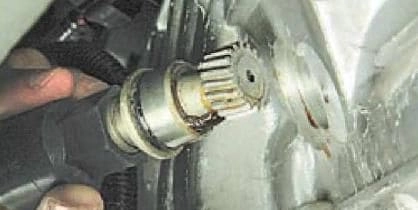
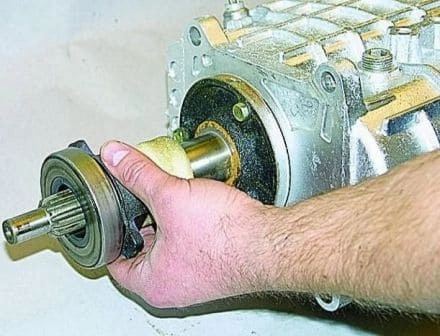
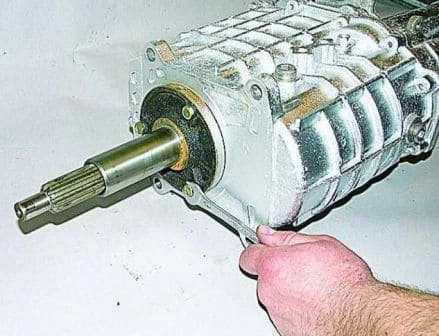
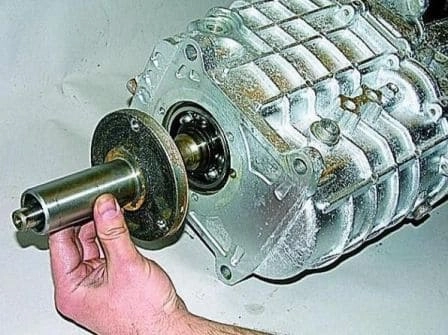
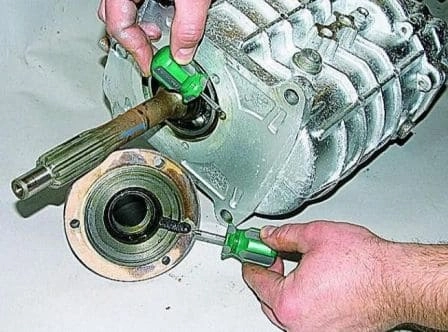
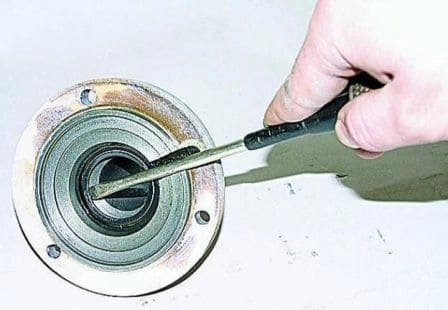
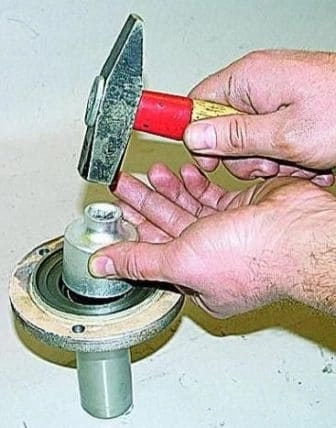
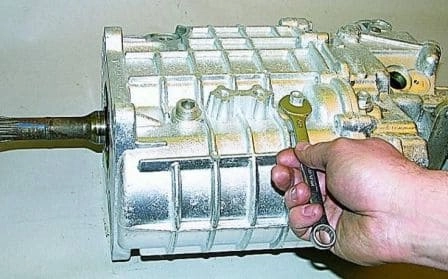
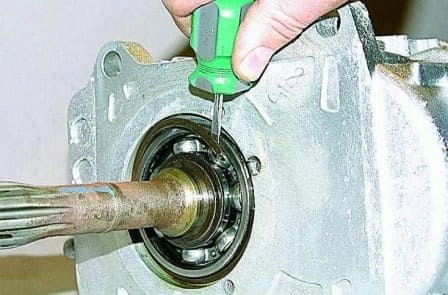
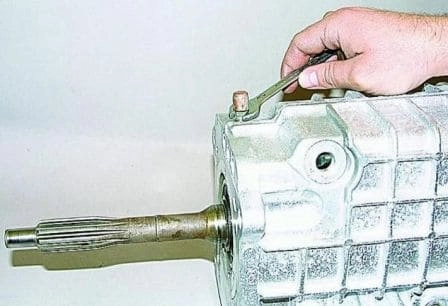
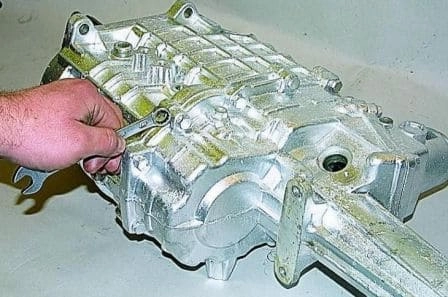
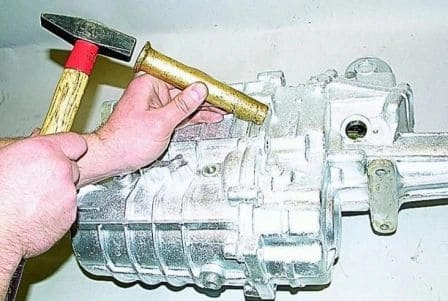
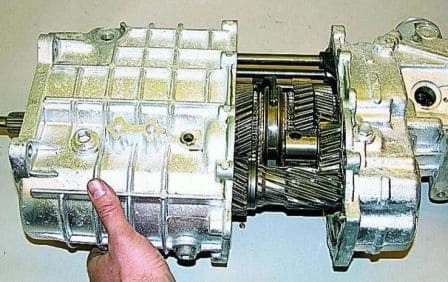
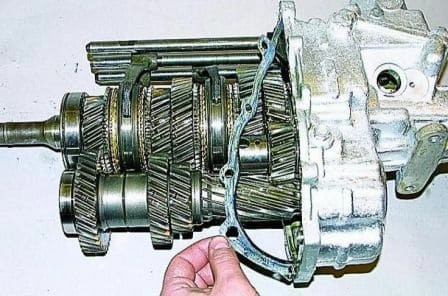
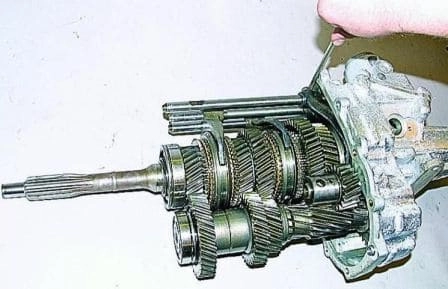
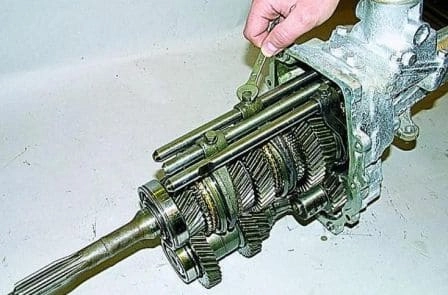
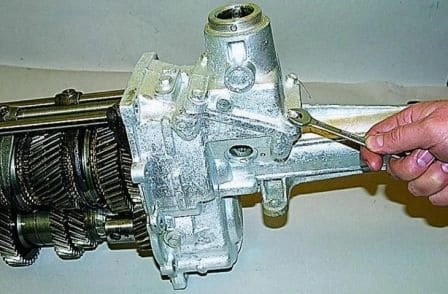
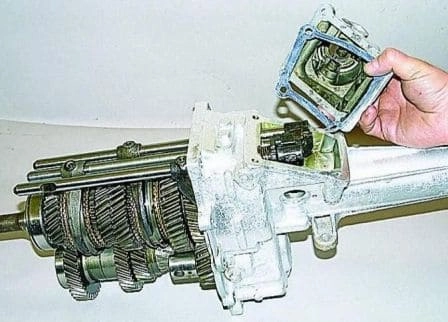
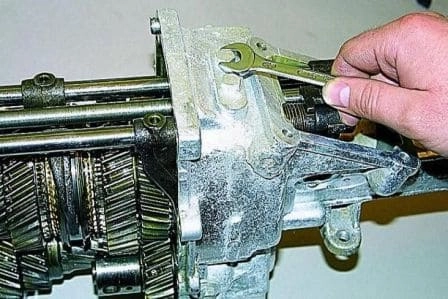
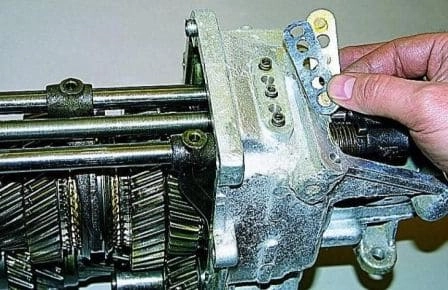
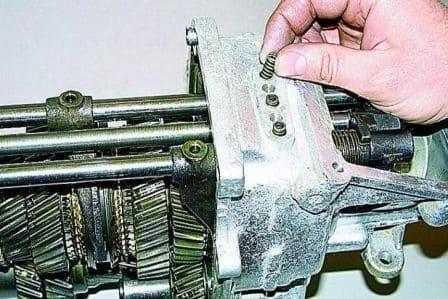
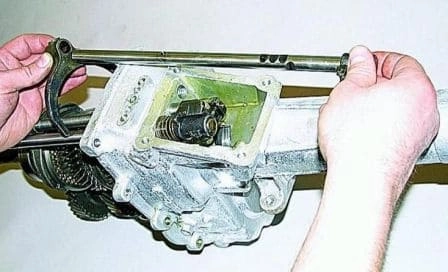
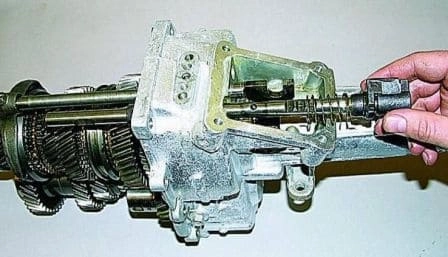
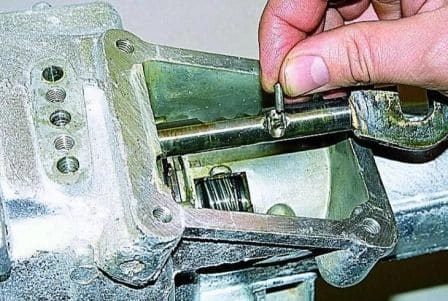
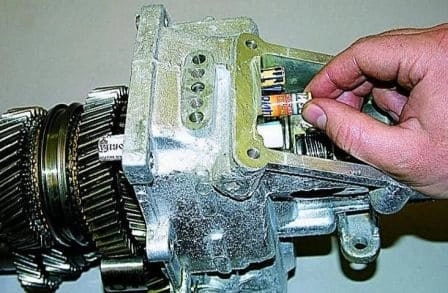
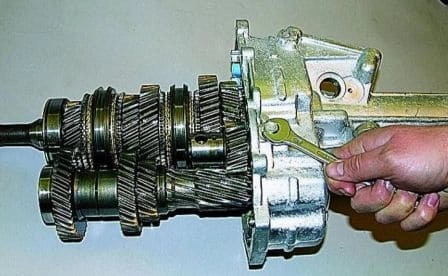
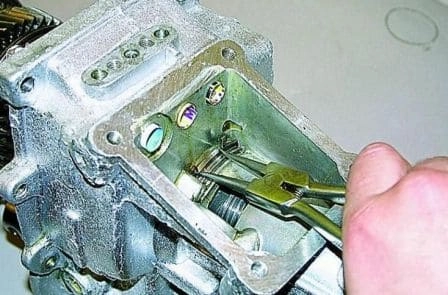
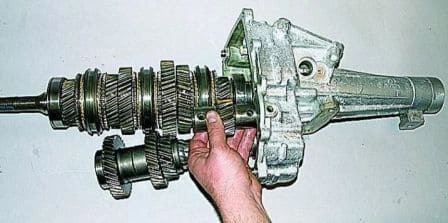
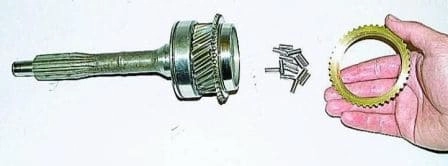
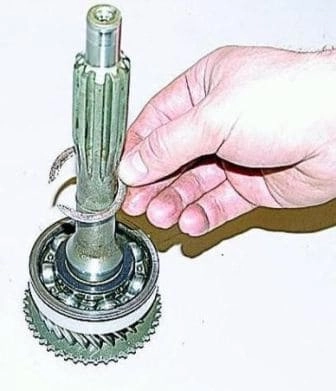
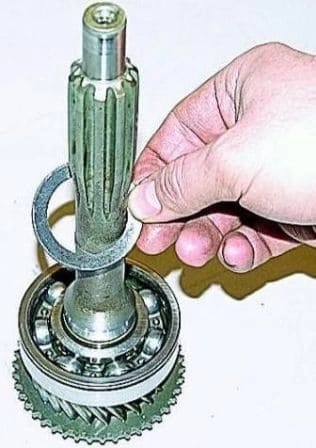
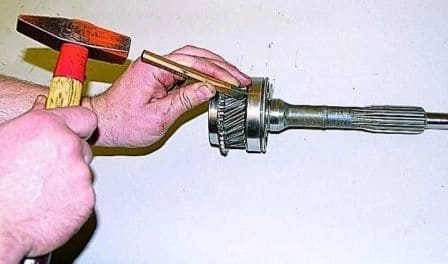
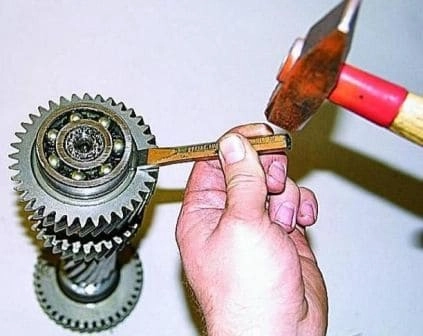
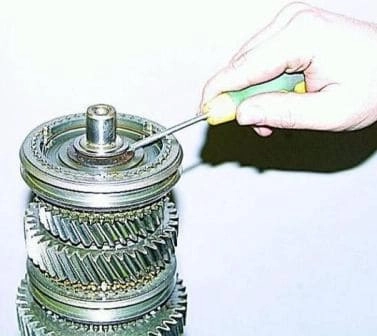
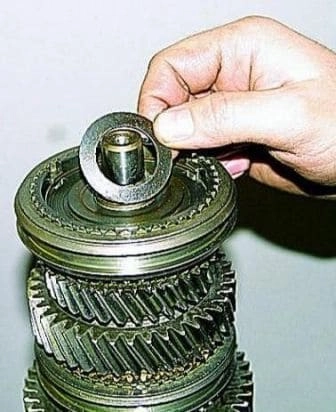
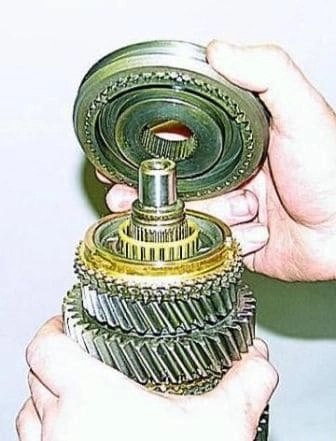
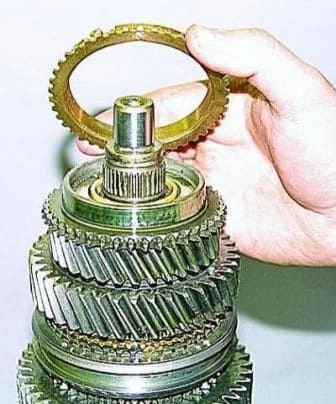
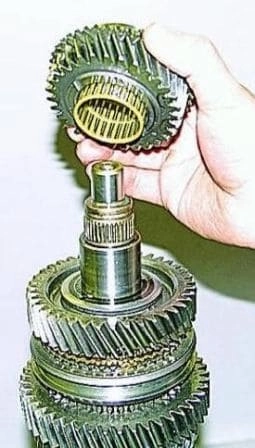
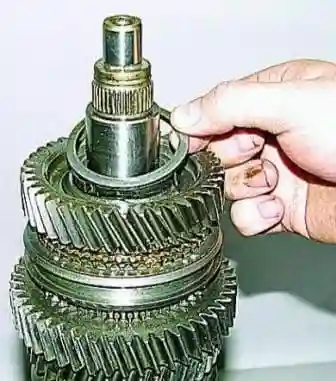
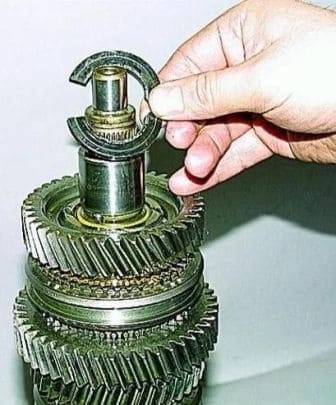
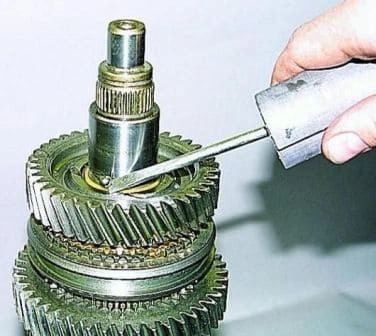
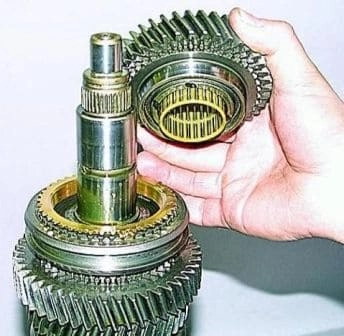
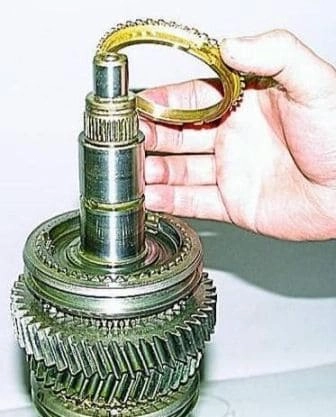
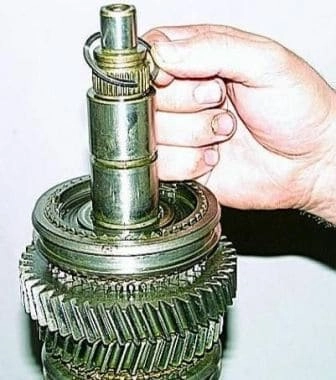
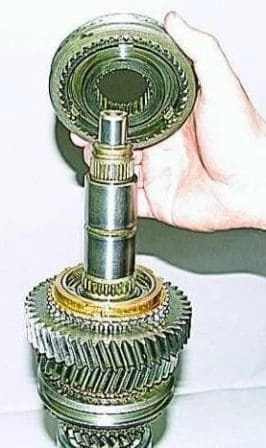
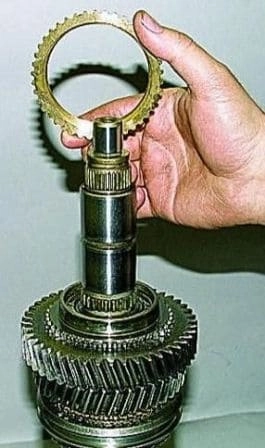
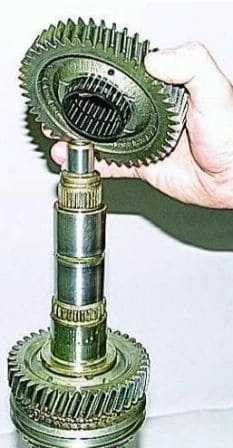
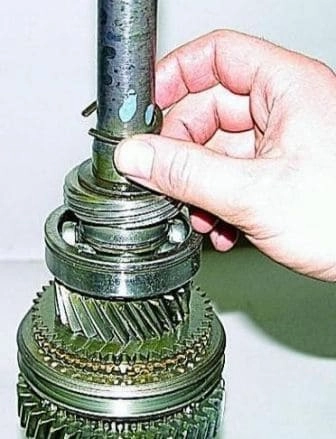
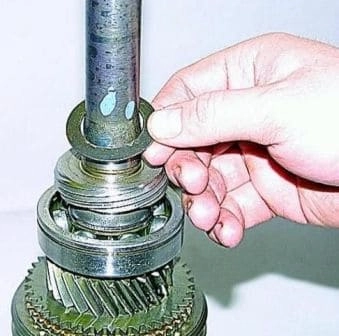
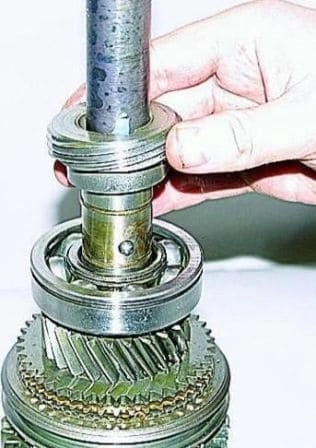
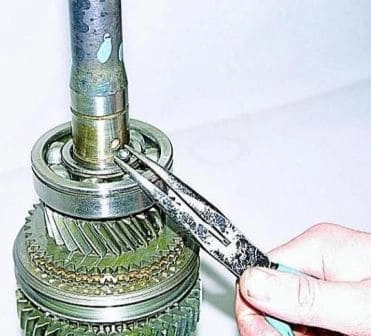
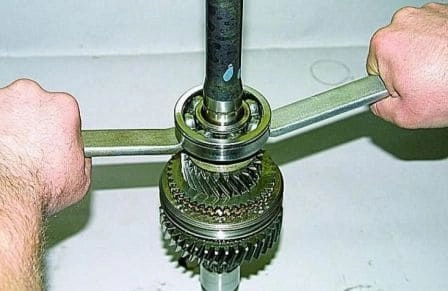
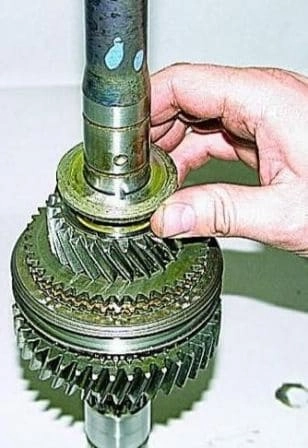
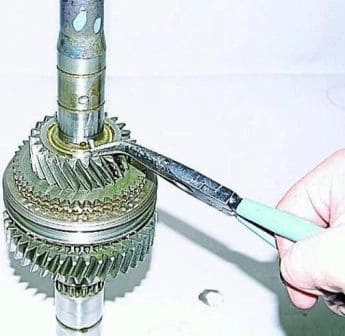
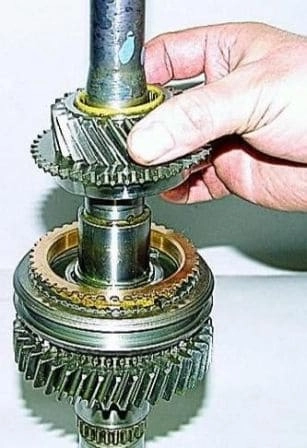
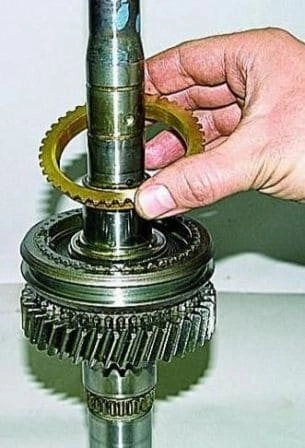
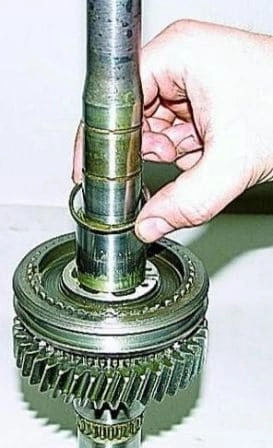
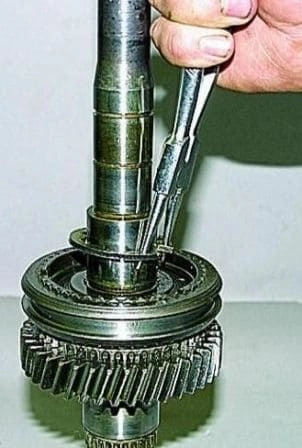
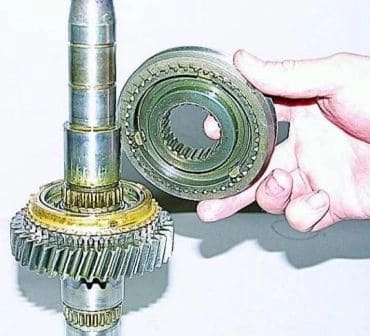
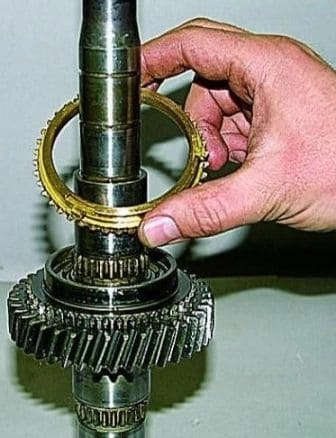
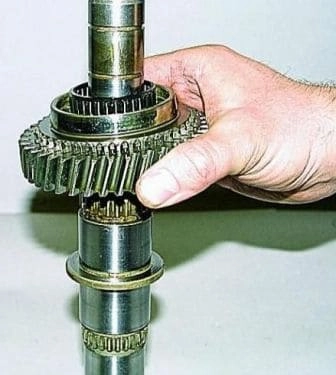
We clean the gearbox of dirt and wash it on the outside before starting work.We unscrew the reverse light switch together with its sealing gasket.Using a 10 mm spanner, we unscrew the bolt securing the clamp plate of the speed sensor.We remove the retaining plate of the speedometer drive.Turning with a 22 mm spanner on the body, we begin to extract the drive from the crankcase.We fully extract the speedometer drive from the gearbox crankcase.We remove the sleeve with the release bearing and the foam sealing rings from the front cover.Using a “12” spanner, we unscrew the three bolts securing the bearing cover (they are fitted with sealant).We carefully remove the cover together with the old gasket.During subsequent installation, pay attention to the alignment of the oil drain channel in the cover and the hole in the crankcase.Prising with a screwdriver, we extract the input shaft oil seal from the cover (during repair, all oil seals are replaced with new ones regardless of their condition).Using a mandrel or a suitable diameter socket, we carefully press in the new oil seal until it is fully seated.Using a “13” spanner, we unscrew and remove the bolt securing the axle sleeve of the reverse gear to the front crankcase.Using a thin screwdriver or circlip pliers, we prise off and remove the circlip of the input shaft bearing.Using a 12 mm spanner, we unscrew and remove the gearbox breather.Using a “12” spanner, we unscrew the ten bolts connecting the front and rear crankcases (two bolts passing through the locating sleeves are longer than the others).Gently tapping with a mallet via a brass mandrel, we separate the crankcases. It is forbidden to strike the end face of the input shaft so as not to damage the synchronisers.We separate the crankcases and carefully, trying not to damage it, remove the inter-crankcase sealing gasket.We remove the adjusting shims from the bore under the intermediate shaft bearing (if any). The axial clearance is also adjusted by the inter-crankcase gasket.Turning the input shaft, we engage reverse gear (we push forward the 5th and reverse gear shift rod) to lock the shafts during stripping.Using a “10” spanner, we unscrew the locking bolts securing the three gearshift forks to the shift rods.Using a “12” spanner, we unscrew the four bolts securing the gearshift lever housing.We remove the gearshift lever housing together with the sealing gasket.Using a “12” spanner, we unscrew the two bolts securing the shift rod detent plate.We remove the detent plate together with the gasket.We remove three springs and three balls of the gear engagement detents (it is convenient to use a magnetised screwdriver or turn the gearbox over).We remove the I–II gear rod (we immediately fit the fork onto it and secure it with a bolt so as not to mix it up during assembly). Then we remove the 5th and reverse gear rod with the corresponding fork.We remove the III–IV gear rod.From the rod we extract the interlock pin.So that the interlock plungers do not fall out, we insert tubes rolled from thick paper into the holes of the rods.Using a “13” spanner, we unscrew the bolt securing the reverse gear axle to the rear crankcase.With pliers we spread the lugs of the circlip of the rear bearing of the output shaft.Tapping with a copper mallet on the rear end of the output shaft, we remove the shaft assembly together with the axle and reverse gear, after which we separate the input and output shafts.We remove the IV gear synchroniser and extract the 14 rollers of the front support of the output shaft. Lay out the parts in the order of removal to facilitate subsequent assembly.With two thin screwdrivers or special pliers, we spread and remove the circlip from the input shaft.We remove the spring ring.With a drift, two mounting levers or a special puller, we press off the input shaft bearing.In a similar way, we remove both bearings from the intermediate shaft.Having installed the output shaft vertically in the vice through soft pads, we remove the lower circlip.We remove the spring ring of the hub of the III–IV gear engagement sleeve.We remove the sleeve together with the sliders and springs of the synchroniser. It is better not to dismantle this assembly, but if necessary, mark the relative position of the parts. The sleeves are not symmetrical and are installed in only one position.We remove the synchroniser blocking ring.We remove the III gear together with the plastic cage and rollers.With a screwdriver we prise off and remove the next circlip.We remove the two thrust half-rings of the output shaft.With a magnetised screwdriver we extract the small locking ball of the half-rings.We remove the II gear together with the needle bearing.We remove the blocking ring of the II gear synchroniser.We remove the circlip.We remove the I–II gear engagement sleeve.We remove the blocking ring of the I gear synchroniser.We remove the I gear together with the needle bearing. We carry out further dismantling from the other end of the shaft.Prising with a thin screwdriver, we remove the circlip from the rear end of the output shaft.We remove the spring ring.We remove the speedometer drive gear and extract its locking ball.Preparation for removing the rear bearing of the output shaft.With two mounting levers or a special puller, we remove the rear bearing of the output shaft.We remove the thrust washer.With pliers we extract the securing pin.We remove the V gear together with the bearing and synchroniser.We remove the spacer adjusting ring.Preparation for removing the V and reverse gear sleeve.With special pliers and screwdrivers we remove the spring ring.We remove the V and reverse gear engagement sleeve.We remove the synchroniser blocking ring.We remove the reverse gear together with the needle bearing.
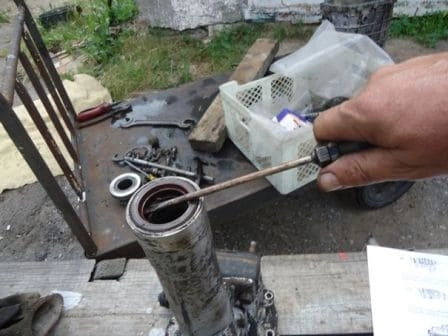
We extract two oil seals from the rear crankcase extension.