


The cooling system ensures the correct operating temperature of the engine.
It consists of several components such as the radiator and thermostat, water pipes, and a network of small, precisely fitted channels in the engine block and cylinder head.
The coolant circulates through these channels.
This creates the water jacket, which dissipates combustion heat to the radiator through the cooling system hoses.
The path the coolant takes in the cooling system depends on the engine temperature.
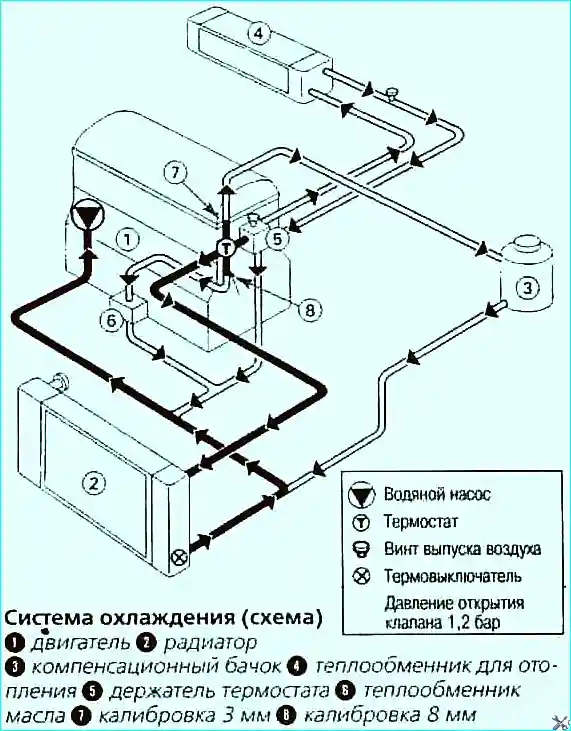
Coolant circulation in the small circuit
After starting the cold engine, the coolant initially circulates only through the engine and heater.
In this so-called coolant small circuit, the thermostat keeps the flow to the radiator closed.
The coolant returns directly to the engine.
This allows the coolant to heat up faster, and the engine warms up more quickly.
The radiator only comes into operation when the coolant reaches a certain temperature.
The thermostat opens the flow, and cold water from the radiator mixes with the already heated water from the small circuit.
This gradual addition of cold water prevents what is known as thermal shock to the engine.
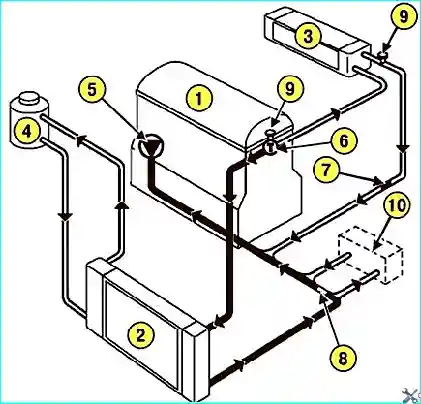
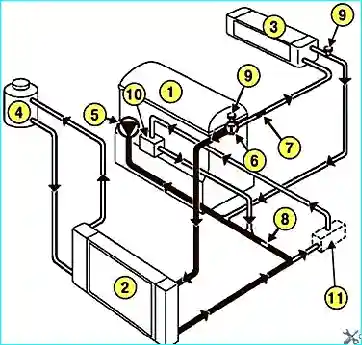
Cooling at operating temperature
While the water temperature rises, the thermostat keeps the cold water inlet open and simultaneously closes the small circuit.
At operating temperature, the coolant circulates from the lower hose of the right-hand tank (in the direction of travel) to the water pump, which forces it under pressure into the engine block and cylinder head.
Most of the fluid is then directed through the open thermostat and the upper hose back to the radiator, while the remainder flows to the heater heat exchanger.
If the water temperature drops below the prescribed operating level during driving, the thermostat closes the flow to the radiator again until the coolant has warmed up sufficiently.
Overpressure and cooling system fan
The cooling system is under an overpressure of approximately 1.2 bar. This raises the boiling point of the coolant from 100 °C to approximately 120 °C.
The higher temperature allows for more economical and therefore more efficient engine operation.
If, when the engine is hot, the coolant pressure exceeds 1.2 bar, the pressure relief valve on the expansion tank comes into operation.
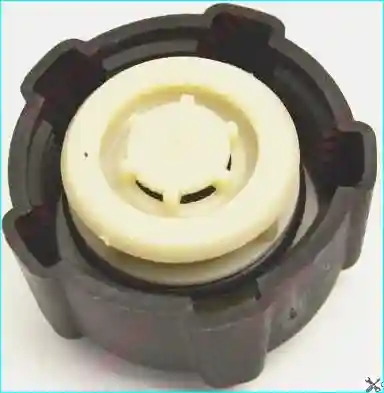
It will open and release some water vapour to equalise the pressure.
Nevertheless, during city driving, for example, the coolant in the system may overheat.
In this case, the cooling system fan must provide additional cooling to the radiator.
All Megane engines are equipped with electrically driven cooling fans.
This small unit is activated by a thermoswitch in the radiator water tank as soon as the coolant flowing past exceeds a certain temperature.
It switches the fan off again when the coolant temperature drops below a specific value.
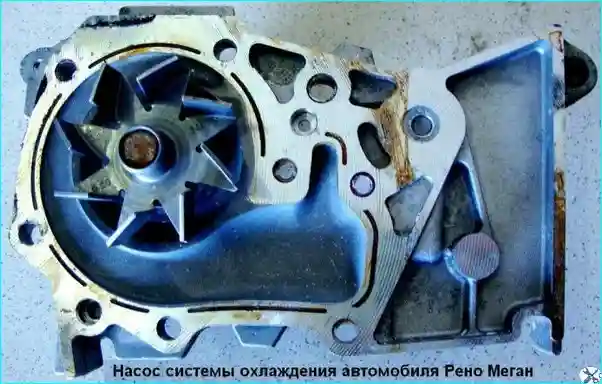
Water pump
The centrifugal pump, which ensures constant coolant circulation.
Radiator
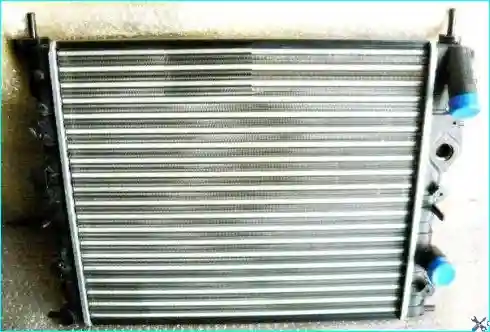
It consists of two plastic tanks, one on the right and one on the left.
Between them are many thin-walled tubes, connected to each other by a framework of fins.
This increases the surface area exposed to the airflow to many square metres.
The radiator is mounted on the body crossmember with two mounting points (upper and lower).
Thermostat
Maintains a constant temperature.
It opens the flow at approximately 90 °C and allows water to flow to the radiator and back to the engine.
Inside the thermostat, there is a container filled with special wax and the valve disc.
The more the coolant heats up, the more the wax liquefies.
It expands more and more and opens the valve, which controls the flow of cold water from the radiator, wider and wider.
At operating temperature, the valve is fully open, and the path to the small circuit is completely closed.
If the water cools down, a spring presses on the valve disc and closes the flow through the radiator until the coolant has warmed up sufficiently again.
Expansion tank
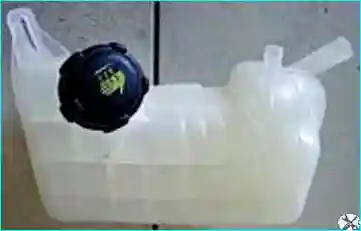
When the pressure is too high, it releases water vapour through the safety valve in the cap.
It is located in the engine compartment, on the left-hand side (in the direction of travel).
The replacement of the vehicle's coolant is covered in the article — Renault Megane 2 coolant replacement method.


