


For your vehicle's engine, a multigrade oil is sufficient.
Renault recommends in the owner's manual the branded «Elf» engine oil for your Mégane. However, you are not obliged to follow this recommendation.
Whether an oil is suitable or not is determined by its specifications and the correct viscosity grade.
If you are topping up, you can generally mix oils from different manufacturers without any problems.
But you should be aware that this may slightly impair the properties of the engine oil.
Each brand has a specific combination of additives which, when mixed with another oil, may lose their effectiveness.
For this reason, mixing mineral and synthetic oils is not advisable.
Be careful: diesel lubricating oils, intended exclusively for diesel engines, must not be mixed with oils for petrol engines.
Otherwise, you risk damaging the engine.
Engine oil for Mégane engines must bear one of the following designations:
Petrol engine: API SG; API SH; CCMC-G4 or G5; ACEA A2 96; ACEA A3 96.
Diesel engine: ACEA B2 96; ACEA B3 96; API CD; CCMC PD2.
Renault viscosity recommendations:
In Central European latitudes, an oil with a viscosity rating of 15W40 or 10W40 is sufficient all year round.
Only in very high or very low, prolonged temperatures does the oil need to be changed.
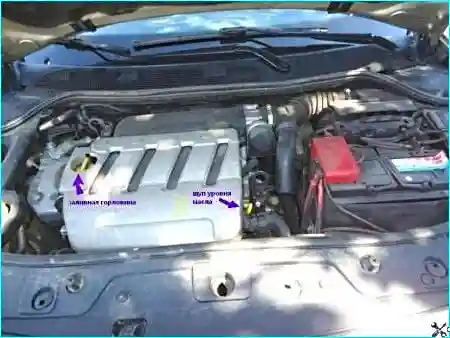
Fig. 1. Checking the oil level
The amount of oil between the lower and upper marks is 1 litre, and approximately 0.6 litres for 16V engines.
Half a litre is sufficient if the oil level is not below the lower mark.
Top up with oil so that the level is below the upper mark.
Excess oil may, under certain circumstances, be drawn in through the crankcase ventilation system, leading to contamination of the air filter.
A conventional oil change, involving draining the oil and replacing the filter, takes time as you need to raise the vehicle with a jack.
An oil change is quicker at self-service filling stations with suction equipment.
However, this method has disadvantages: sediment remains in the sump, and without a filter change, the oil change is only half the job.
An oil change at a garage is the most expensive option, as they typically use only high-grade oils.
If you decide to have the work done at a filling station, you should buy the oil in advance.
In engines, oil is used to lubricate and cool moving parts; during use, topping up between changes may be necessary.
If, after the running-in period, oil consumption exceeds 0.5 L per 1000 km, consult a Renault service centre.
Check the engine oil level regularly, at least before every long journey, to avoid engine damage.
When changing the oil, take care as the oil is hot and can cause burns.
You will need an 8 mm square drive socket, a special filter wrench, and a container for draining the oil.
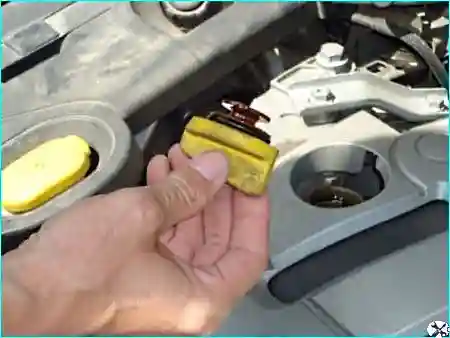
Fig. 2. Warm up the engine to operating temperature and switch it off. Place a drain pan underneath
Remove the oil filler cap and unscrew the drain plug from the oil pan.
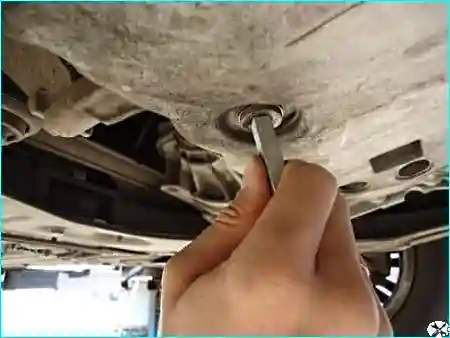
Fig. 3. Wait until all the oil has drained from the sump
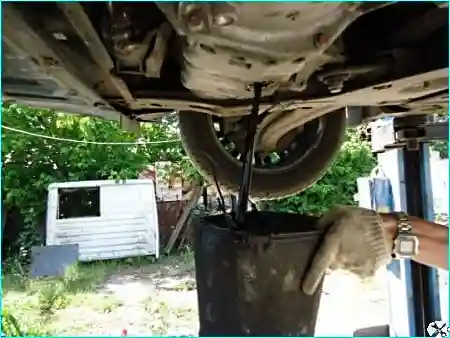
Fig. 4. Fit the drain plug with a new sealing washer
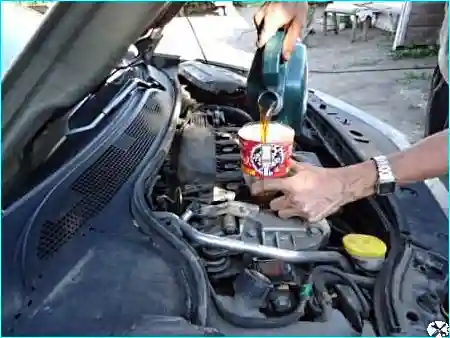
Fig. 5. Tightening torque: 29–41 N·m
Pour the required amount of the recommended engine oil into the engine.
Start the engine and check for any oil leaks.
Check the oil level and, if necessary, top up to the correct level.
Refit the oil filler cap.
Changing the oil filter
The procedure for changing the oil filter is the same for F4R, K4J and K4M engines. The only difference is that on the F4R, the air conditioning compressor brace must be removed.
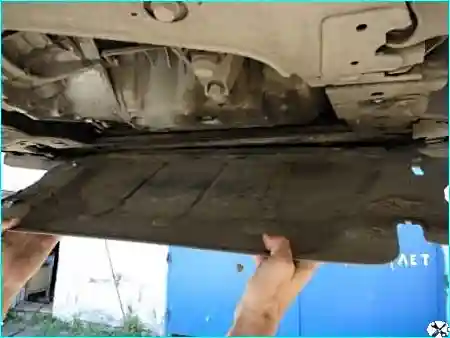
Fig. 6. Raise the vehicle and remove the engine under-tray
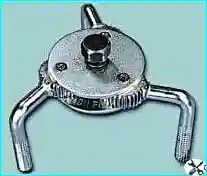
Fig. 7. Using the special tool, unscrew the oil filter
If the rubber sealing ring has remained on the cylinder block, remove it. (Without this special tool, the filter is very difficult to remove due to restricted access).
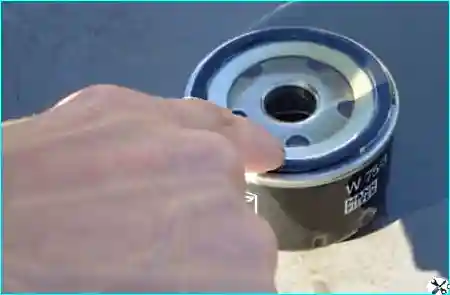
Fig. 8. Apply a thin film of clean engine oil to the rubber sealing ring of the new oil filter

Fig. 9. Before fitting, fill the filter with oil
Screw the oil filter on until the sealing ring contacts the cylinder block.
Tighten the filter by a further 1 and 1/6 turns.
Start the engine and check for leaks.
Switch off the engine and wait 5 minutes for the oil to drain back into the sump.

Fig. 10. Check the engine oil level
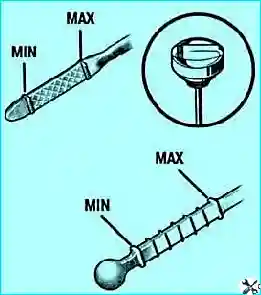
Fig. 11. If necessary, top up to the correct level
Determining the oil level
For an accurate oil level reading, park the vehicle on a level surface and switch off the engine for an extended period.
Oil level monitoring:
- on the instrument panel;
- using the dipstick.
Oil level monitoring via the instrument panel display.
When the ignition is switched on, and for approximately 30 seconds:
- if the oil level is correct, the display shows: «Oil level correct».
To obtain a more precise reading, press the trip odometer reset button or the onboard computer information display button.
The rectangles displayed indicate the oil level. As it decreases, the rectangles are gradually replaced by dashes (message 2).
To return to the normal onboard computer display, press the button again.
When the oil level reaches the minimum, the rectangles are completely replaced by dashes (message 3) and the «SERVICE» warning light illuminates.
After receiving this signal, top up the oil to the normal level.


