


This article covers the inspection and replacement of parts and assemblies of the Cummins ISF3.8 engine lubrication system.
Oil pressure check
- Unscrew the plug from the service port for measuring oil pressure, located in the oil filter cap.
- Install the pressure gauge.
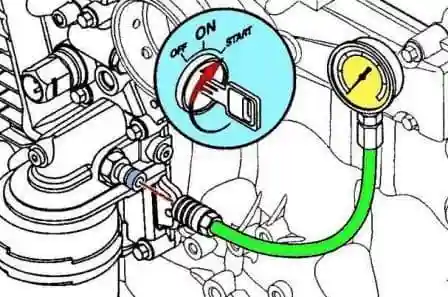
- Warm the engine up to operating temperature.
- Check the oil pressure at minimum speed. At minimum speed: 69 kPa.
- Increase the engine speed to rated speed and let it run in this mode for 30 seconds. Check the oil pressure. At rated speed: 207 kPa.
- Remove the pressure gauge and adapter and install the plug after applying sealant to 2–3 threads.
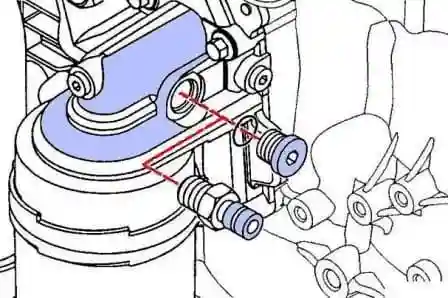
Fig. 2. Installing the plug with sealant. - Start the engine and make sure there are no oil leaks.
- Check the oil level.
Note: maximum oil temperature: 133 °C.
Removal and installation of the oil sump
- Disconnect the lead from the battery negative terminal.
- Drain the coolant.
- Drain the oil from the lubrication system.
- Remove the accessory drive belt (article — Replacement of the accessory drive belt).
- Unscrew the bolt and remove the accessory drive belt tensioner.
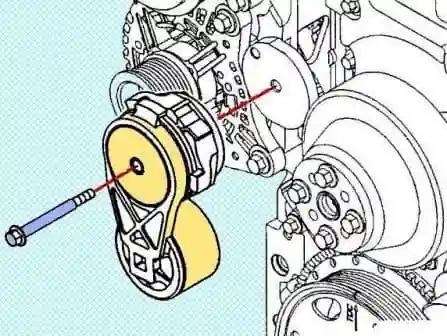
Fig. 3. Removal of the belt tensioner. - Unscrew the six mounting bolts and remove the crankshaft speed sensor rotor.
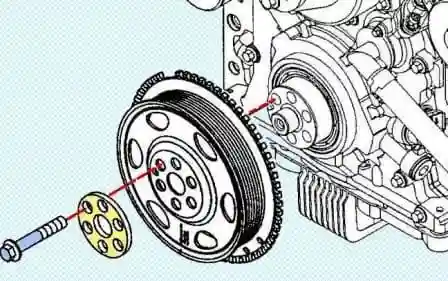
Fig. 4. Removal of the crankshaft speed sensor rotor. - Unscrew the four mounting bolts and remove the fan and fan pulley.
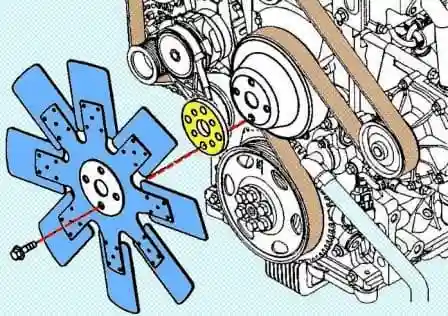
Fig. 5. Removal of the fan and fan pulley. - Loosen the clamp and remove the crankcase breather hose (if an open crankcase ventilation system is used).
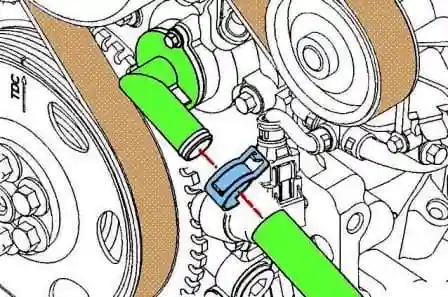
Fig. 6. Removal of the crankcase breather hose (open system). - Loosen the clamps and disconnect the inlet and outlet breather hoses (if a closed crankcase ventilation system is used).
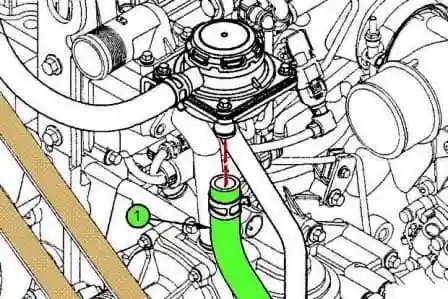
Fig. 7. Disconnecting the breather hoses. 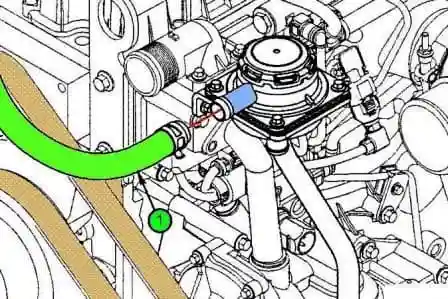
Fig. 8. Removal of the inlet hose. 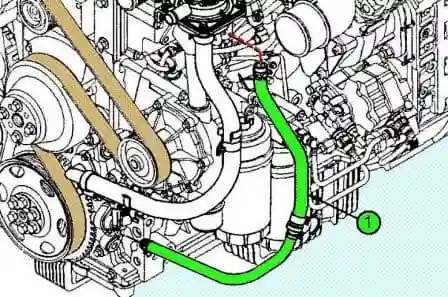
Fig. 9. Removal of the outlet hose. - Loosen the clamp and disconnect the drain hose (if a closed crankcase ventilation system is used).
- Unscrew the two bolts and remove the camshaft cover plate.
- Remove the crankshaft front oil seal.
- Disconnect the connector, unscrew the bolt and remove the camshaft position sensor.
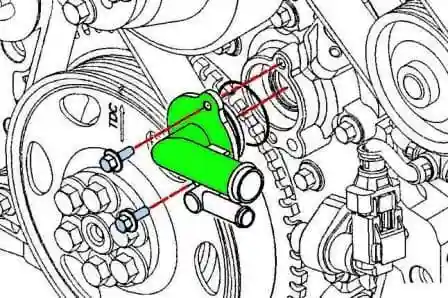
Fig. 10. Removal of the camshaft position sensor. - Disconnect the connector, unscrew the bolt and remove the crankshaft position sensor.
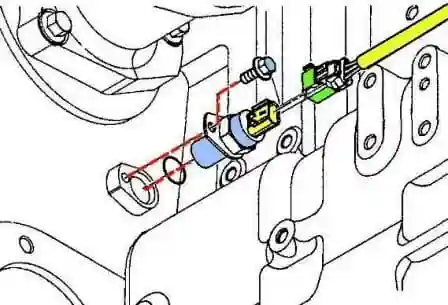
Fig. 11. Removal of the crankshaft position sensor. - Remove the oil dipstick guide.
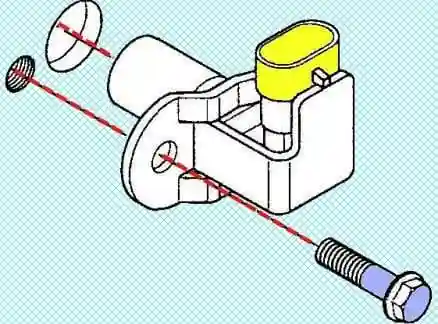
Fig. 12. Removal of the oil dipstick guide. - Clean the surface around the oil dipstick guide.
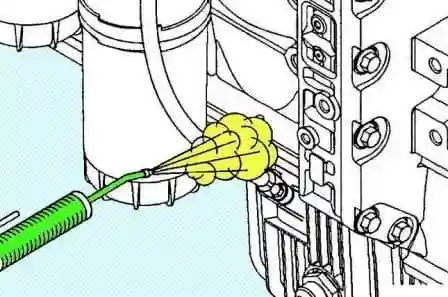
Fig. 13. Cleaning the surface around the oil dipstick guide. - Pull out the oil dipstick, unscrew the mounting bolts and remove the oil dipstick guide.
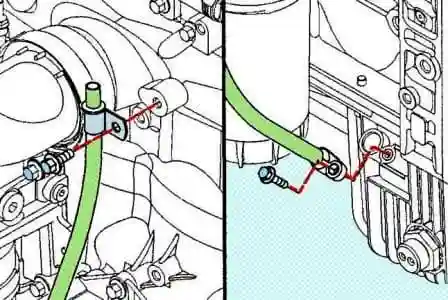
Fig. 14. Removal of the oil dipstick guide. - Disconnect the connector and remove the oil heater.
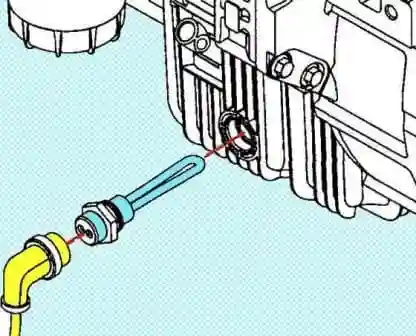
Fig. 15. Removal of the oil heater. - Unscrew the mounting bolts and remove the oil sump and gasket.
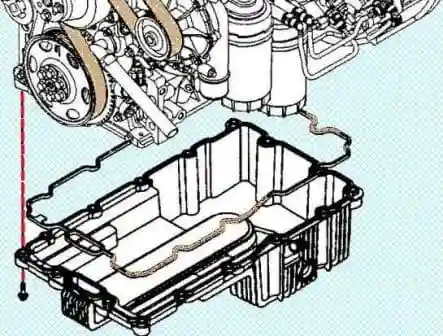
Fig. 16. Removal of the oil sump. - Remove the front timing gear cover.
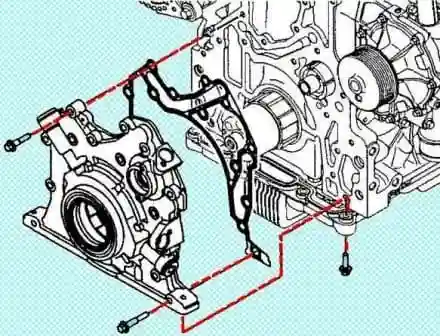
Fig. 17. Removal of the front timing gear cover. - Unscrew the 14 mounting bolts and remove the front timing gear cover.
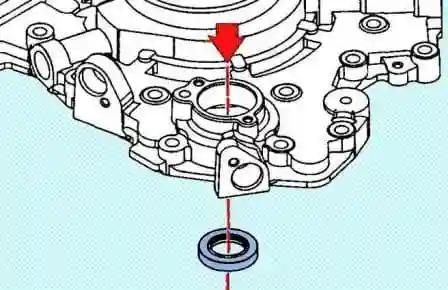
Fig. 18. Removal of the front timing gear cover. - Using a wooden spacer and a hammer, drive out the camshaft oil seal.
Installation of the front timing gear cover
- Clean the cylinder block of the old sealant.
- Lubricate the camshaft oil seal seat on the front timing gear cover.
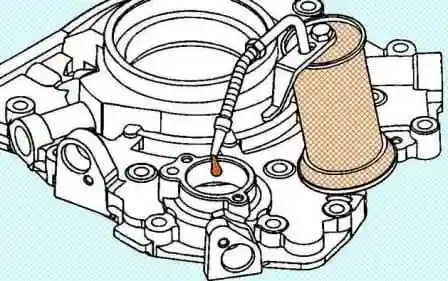
Fig. 19. Preparation for installing the oil seal. - Install the oil seal into the front timing gear cover using a drift, tapping the drift with a hammer at points 90° apart. Approximate seal installation depth: 12 mm.
- Lubricate the camshaft nose with engine oil.
- Coat the seal with sealant adhesive before installing the cover. Sealant: 3164070 or equivalent.
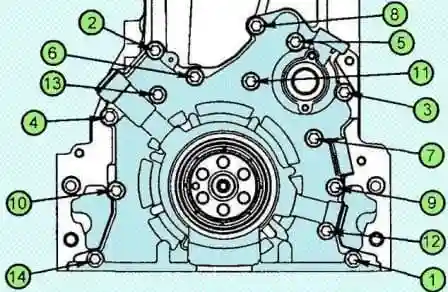
Fig. 20. Timing gear cover bolt tightening sequence. - Install the front timing gear cover and tighten the 14 bolts in the order shown in the figure. Tightening torque: 24 N·m.
Installation of the oil sump
- Install a new gasket on the oil sump.
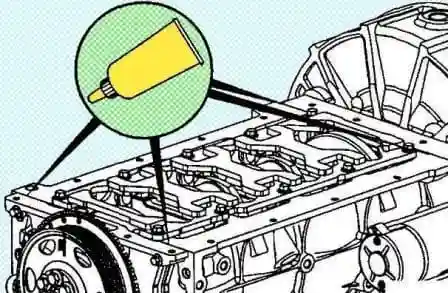
Fig. 21. Installation of the oil sump gasket. - Apply a thin layer of sealant at the points shown in the figure.
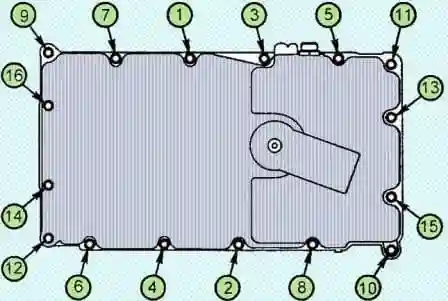
Fig. 22. Oil sump bolt tightening sequence. - Install the oil sump and tighten the 16 bolts in the sequence shown in the figure. Tightening torque: 24 N·m.
- Install the oil heater and connect the connector. Tightening torque: 24 N·m.
- Install the oil dipstick guide and tighten the mounting bolts. Tightening torque: 5 N·m.
- Install and tighten the drain plug. Tightening torque: 24 N·m.
- Install the crankshaft position sensor:
- install a new O-ring on the sensor, lubricated with engine oil;
- install the sensor and tighten the mounting bolt. Tightening torque: 25 N·m;
- connect the connector.
- Install the camshaft position sensor:
- install a new O-ring on the sensor, lubricated with engine oil;
- install the sensor and tighten the mounting bolt. Tightening torque: 10 N·m;
- connect the connector.
- Install the crankshaft front oil seal (article — Replacement of the crankshaft front oil seal).
- Install the camshaft cover plate:
- install a new O-ring and coat it with sealant adhesive. Sealant: 3164070 or equivalent;
- install the camshaft cover plate and tighten the 2 mounting bolts. Tightening torque: 7.5 N·m.
- Connect the drain hose and tighten the clamp (if a closed crankcase ventilation system is used). Tightening torque: 7.5 N·m.
- Install the inlet and outlet breather hoses and tighten the clamps (if a closed crankcase ventilation system is used). Tightening torque: 7.5 N·m.
- Install the oil sump breather hose and tighten the clamp (if an open crankcase ventilation system is used).
- Install the fan pulley, fan and tighten the mounting bolts. Tightening torques:
- M6 — 10 N·m;
- M10 — 43 N·m;
- M12 — 77 N·m.
- Install a new crankshaft speed sensor and tighten the six mounting bolts in a cross pattern. Tightening torque: 55 N·m.
- Install the accessory drive belt tensioner and tighten the bolt. Tightening torque: 43 N·m.
- Install the accessory drive belt (article — Replacement of the accessory drive belt).
- Fill the lubrication system with oil.
- Fill with coolant.
- Connect the lead to the battery negative terminal.
- Start the engine and make sure there are no leaks.
Disassembly and assembly of the oil pump
- Place the front timing gear cover on a flat surface, front end down.
- Unscrew the 8 oil pump cover mounting bolts and remove the cover.
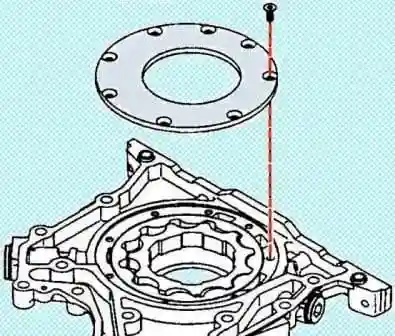
Fig. 23. Removal of the oil pump cover. - Remove the drive and driven rotors.
Assembly of the oil pump
- Install the driven rotor with the chamfer facing the front timing gear cover.
- Install the drive rotor, aligning the lug on the rotor with the lug in the front timing gear cover.
- If both rotors sit flush against a common plane, the rotors are installed correctly.
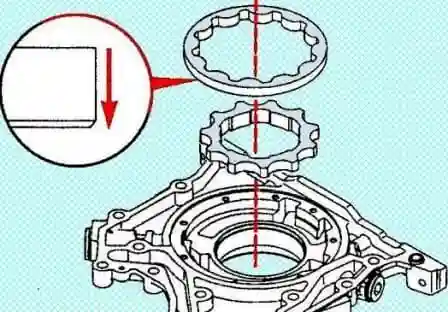
Fig. 24. Installing the oil pump rotors. - Install the oil pump cover, apply sealant adhesive to the bolt threads and tighten the 8 mounting bolts. Sealant: Loctite 243 or equivalent. Tightening torque: 8.5 N·m.
Cleaning and checks
Checking the front timing gear cover
- Remove the oil with solvent and dry the crankshaft pulley with compressed air.
- Make sure there is no damage or cracking.
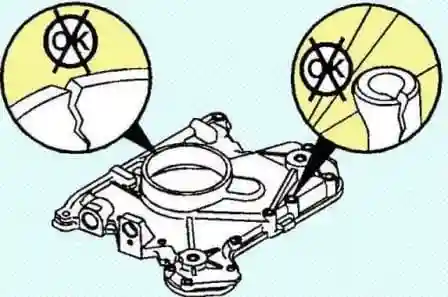
Checking the crankshaft front oil seal seat
- Remove oil and sealant residue from the crankshaft surface with solvent. Dry with compressed air.
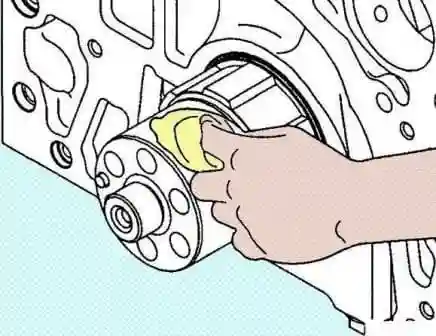
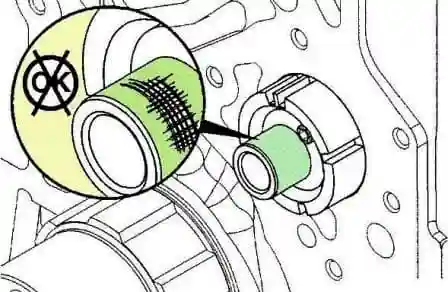
Fig. 26. Checking the crankshaft front oil seal seat. - Make sure there is no damage on the crankshaft nose and remove minor damage with fine-grit abrasive paper.
Note: if the contact surface of the crankshaft nose is damaged, a repair sleeve must not be fitted to it.
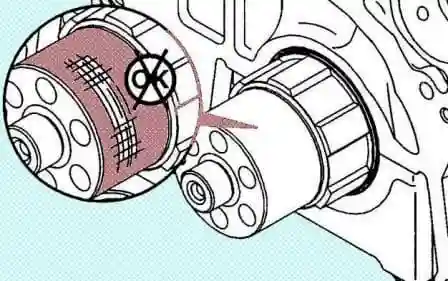
Checking the camshaft front oil seal seat
- Remove oil and sealant residue from the camshaft surface with solvent. Dry with compressed air.
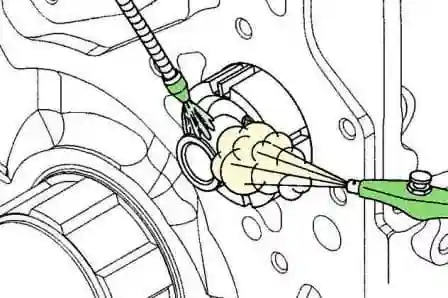
Fig. 28. Checking the camshaft front oil seal seat. - Make sure there is no damage on the camshaft nose and remove minor damage with fine-grit abrasive paper.
Note: if the contact surface of the camshaft nose is damaged, a repair sleeve must not be fitted to it.
Checking the oil heater
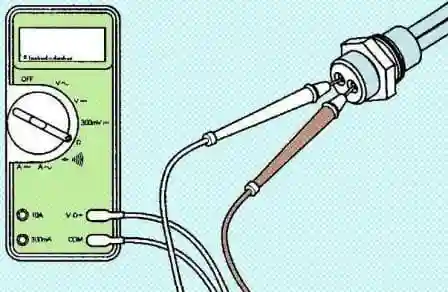
- Clean the heating element with a dry cloth.
- Make sure there is no damage on the heating element.
- Check the resistance of the heating element. Nominal resistance: 91–101 Ω.
Checking the oil pump
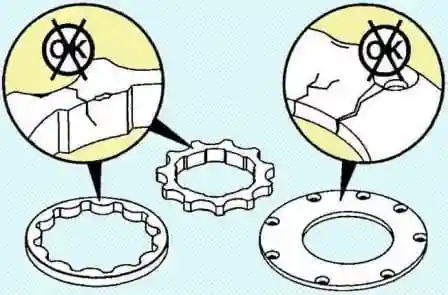
- Clean the oil pump with solvent and dry it with compressed air.
- Make sure there is no damage on the rotors or the cover. If damaged, replace the front timing gear cover.
Removal and installation of the oil cooler
- Drain the coolant.
- Remove the accessory drive belt (article — Replacement of the accessory drive belt).
- Disconnect the radiator hose from the coolant pump.
- Disconnect the cooling system bypass line.
- Remove the oil cooler:
- unscrew the mounting bolts, remove the coolant pump housing with the oil cooler and the seal.
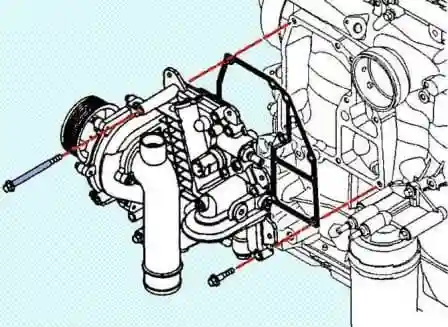
Fig. 32. Removal of the coolant pump housing with the oil cooler. - Unscrew the four mounting bolts and remove the oil cooler.
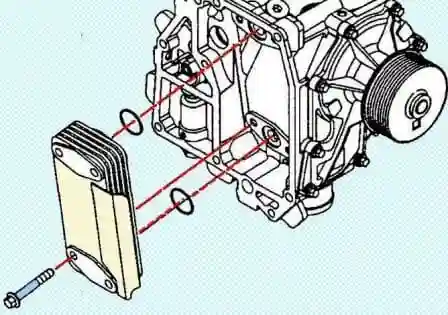
Fig. 33. Removal of the oil cooler. - Remove the lubrication system relief valve:
- remove dirt around the relief valve spring seat;
- remove the relief valve by removing the spring seat, O-ring, spring and plunger.
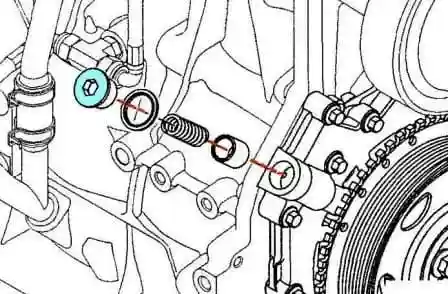
Fig. 34. Removal of the lubrication system relief valve.
Installation of the oil cooler
- Install the relief valve:
- install a new O-ring on the spring seat and lubricate the parts with engine oil;
- install the relief valve, fitting the plunger, spring and spring seat. Tightening torque: 80 N·m.
- Install the oil cooler and tighten the 4 bolts. Tightening torque: 15 N·m.
- Install the coolant pump housing, gasket and tighten the mounting bolts in the order shown in the figure. Tightening torque: 27 N·m.
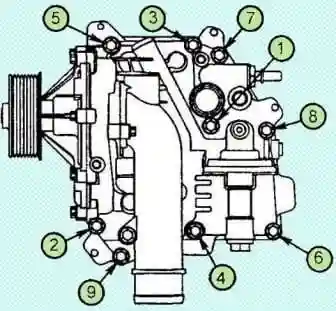
Fig. 35. Coolant pump housing bolt tightening order. - Connect the cooling system bypass line.
- Connect the radiator hose to the coolant pump.
- Install the accessory drive belt.
- Fill with coolant.
- Start the engine and make sure there are no leaks.
Cleaning and checks of the oil cooler
Checking the relief valve
- Clean the plunger, spring and spring seat with solvent and dry the parts with compressed air.
- Make sure there is no damage on the plunger.
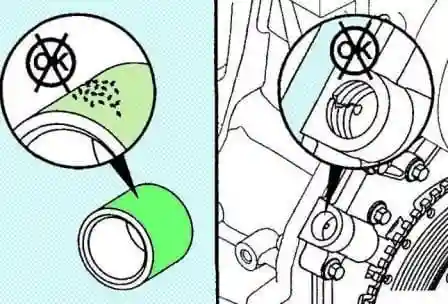
Fig. 36. Checking the relief valve plunger. - Make sure the plunger moves freely in the relief valve housing.
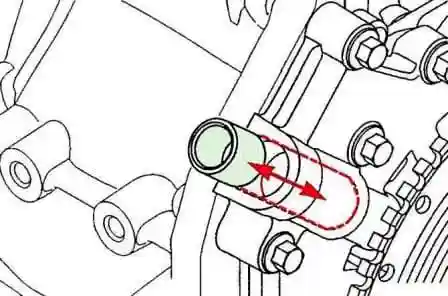
Fig. 37. Checking free movement of the plunger. - Using a valve spring tester, measure the relief valve spring force at the following heights:
- height 42.6 mm — force: 155–165 N·m;
- height 30.7 mm — force: 311–339 N·m.
Checking the oil cooler
- Using solvent, clean the oil cooler housing and cover and dry them with compressed air.
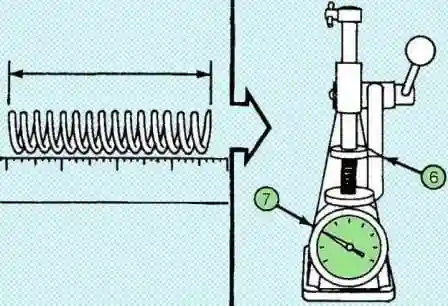
Fig. 38. Cleaning the oil cooler. - Clean the seal surfaces.
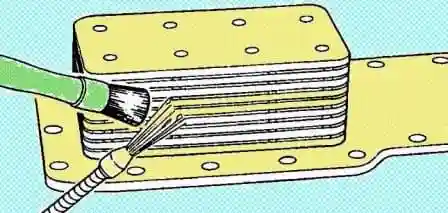
Fig. 39. Cleaning the seal surfaces. - Check the oil cooler for leaks using a pressure test kit.
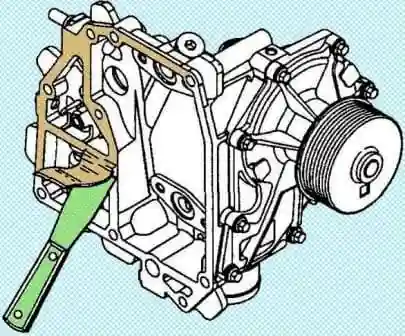
Fig. 40. Preparation for the oil cooler pressure test. 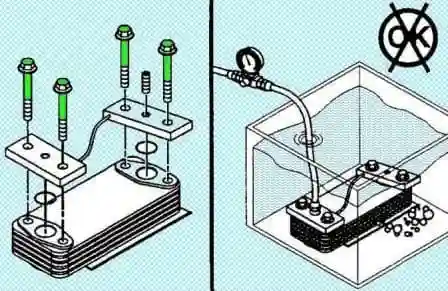
Fig. 41. Oil cooler pressure test with kit No. 4918868.
Air pressure test:
- minimum pressure: 449 kPa;
- maximum pressure: 518 kPa.
The above materials cover the inspection and replacement of parts and assemblies of the Cummins ISF3.8 engine lubrication system: oil pressure check, removal and installation of the oil sump, disassembly and assembly of the oil pump, cleaning and checks, removal and installation of the oil cooler. The material is intended for diagnostics, fault-finding and repair of the lubrication system.
м


