


We prepare the vehicle for the work. We disconnect the negative battery terminal.
We remove the transmission.
On a vehicle with a manual gearbox, we remove the flywheel.
On vehicles with an automatic gearbox, we unscrew the bolts and remove the torque converter drive plate.
We remove the rear crankshaft seal.
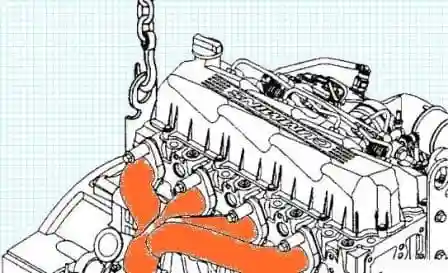
We suspend the rear part of the engine.
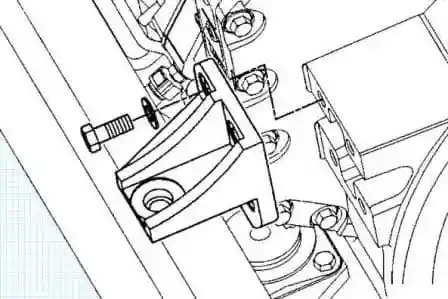
We remove the brackets of the rear engine mounts.
We loosen, but do not unscrew, the flywheel housing mounting bolts.
With a rubber-headed hammer we tap the flywheel housing so as to break the seal between the housing and the rear timing gear cover.
Holding the flywheel housing, we unscrew the bolts and remove the flywheel housing.
Note: the flywheel housing mounting bolts must be remembered or marked. Some bolts differ in length. During assembly, the bolts must be installed in their original places.
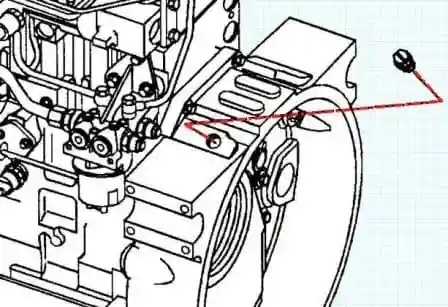
We unscrew and remember the location of the flywheel housing plugs.
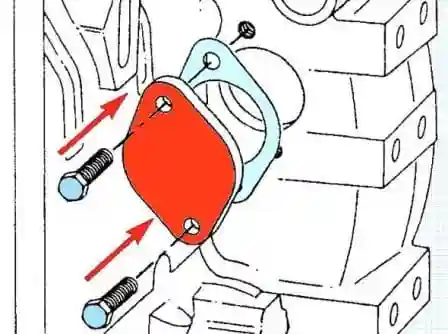
We unscrew the bolts of the technology plug and remove it together with the gasket.
We remove the high-pressure pump (injection pump).
We remove the compressor (if fitted).
We remove the camshaft gear, for this:
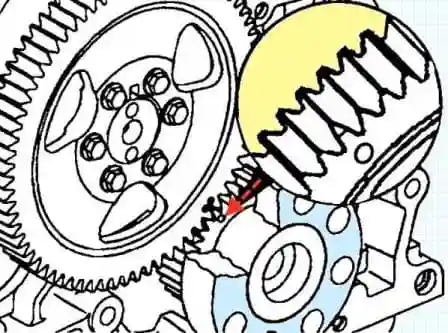
- We turn the crankshaft until the timing marks align. The timing mark may be on the camshaft gear or on a chamfered tooth.
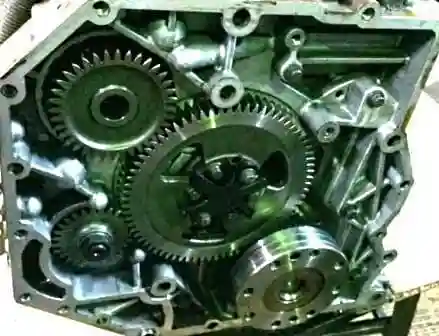
- On engines with an air compressor, synchronisation of the air compressor and camshaft gear positions may be required. To make sure that the air compressor is correctly synchronised with the camshaft gear during installation, mark the gears before removing the camshaft gear.
- Models with an air compressor: to remove the camshaft gear, the air compressor mountings must be loosened. The air compressor does not need to be removed completely.
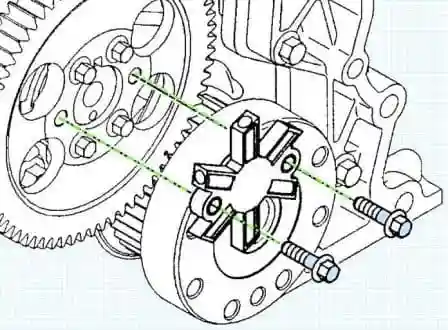
- We unscrew two bolts and remove the crankcase ventilation disc from the camshaft gear.
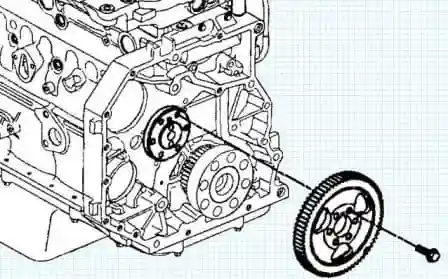
- We unscrew the camshaft gear mounting bolts and remove the camshaft gear.
We remove the camshaft, for this:
- We remove the cylinder head cover.
- We remove the rocker arms.
- We remove the pushrods.
- We lift the tappets.
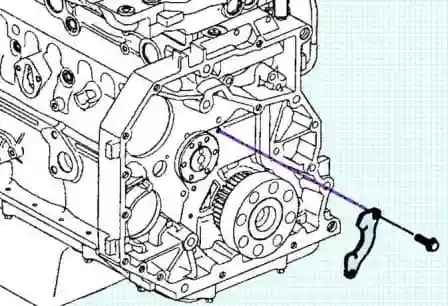
- We unscrew the thrust plate mounting bolts and remove the thrust plate.
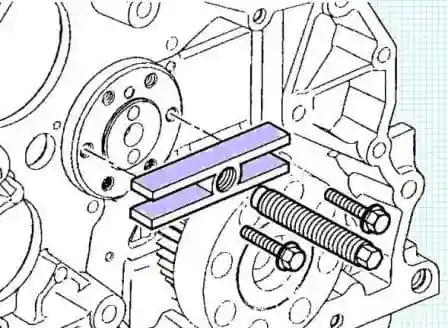
- We install a gear puller on the camshaft end. This provides the necessary leverage and makes camshaft removal easier.
- When removing the camshaft it must be supported so as not to damage its journal as it leaves the last bush.
- We withdraw the camshaft.
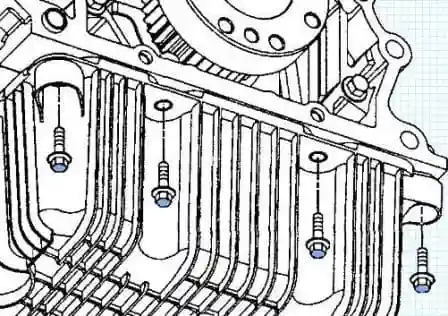
We unscrew the four bolts securing the oil sump to the rear timing gear housing.
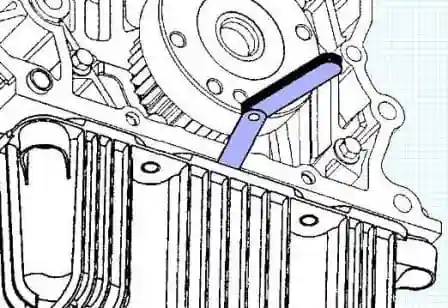
Using a feeler gauge, we separate the oil sump from the rear timing gear housing.
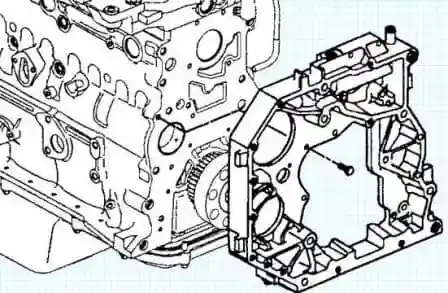
We remove the rear timing gear housing by unscrewing the bolts.
Note: the rear timing gear housing is secured by three bolts of different length and diameter. These bolts must be remembered or marked with tags.
Installation of the valve train
- We apply a bead of sealant Ø 1.5–2 mm to the gear housing on the cylinder block side, as shown in the figure.
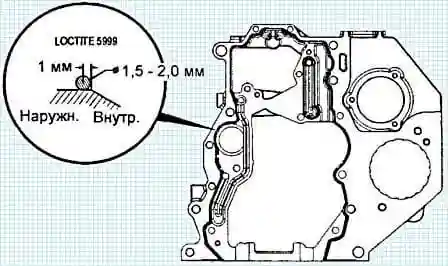
- We install the housing and tighten the mounting bolts.
- We make sure that the sealant bead is present at the intersection of the joints of the cylinder block, oil sump and gearbox housing.
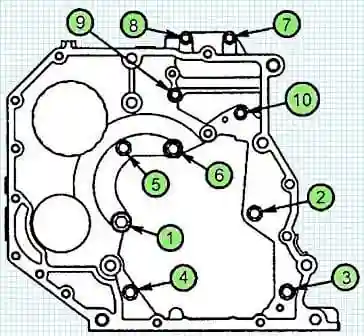
- We tighten the bolts in the order shown in the figure. Tightening torques: M12 bolts – 77 N·m; M10 bolts – 47 N·m; M8 – 24 N·m.
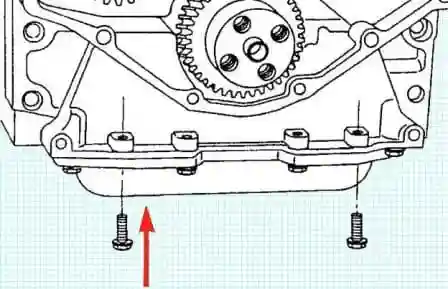
- We tighten the four bolts securing the rear timing gear housing to the oil sump. Tightening torque – 24 N·m.
We replace the rear camshaft seal, for this:
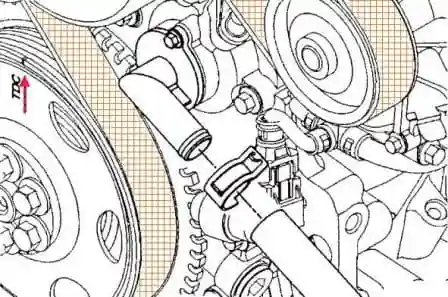
- we remove and remember the location of the breather hose clamp;
- we disconnect the hose;
- we unscrew the bolts and remove the crankcase breather tube;
- we replace the rear seal;
- we install the crankcase breather tube;
- we connect the hose and install the clamp.
We install the camshaft, for this:
- we apply assembly grease to the rear bore for the camshaft;
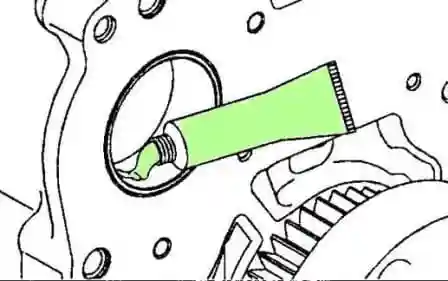
- we lubricate the cams, journals and thrust washer with assembly grease;
- we install a puller on the camshaft end;
- pressing lightly and turning the shaft, we carefully insert it through the camshaft bores.
As each shaft journal passes through the bores, the shaft will drop slightly and the cams will touch the bushes.
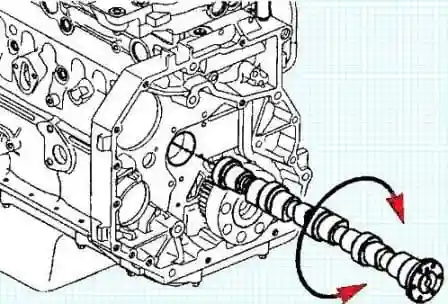
Turning the camshaft will bring the cams out of contact with the bush and allow installation of the camshaft to continue.
We install the thrust plate. Tightening torque of the thrust plate mounting bolts – 24 N·m.
After this we must make sure that the camshaft turns freely.
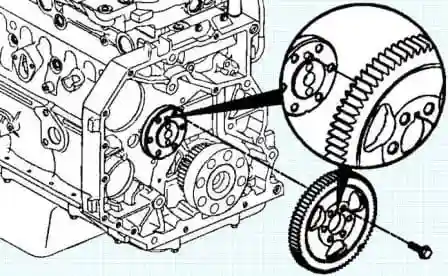
We turn the camshaft until its pin aligns with the gear slot. We install the gear.
We align the timing marks of the crankshaft and camshaft gears.
We tighten the camshaft mounting bolts.
If an air compressor is installed on the engine, we must make sure that the marks made on the camshaft and compressor gears were aligned during installation.
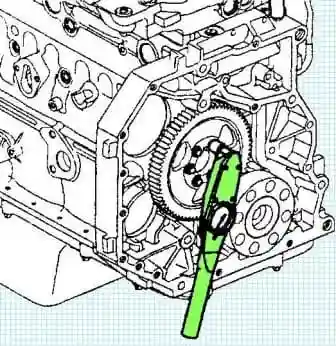
We tighten the camshaft gear mounting bolts. Tightening torque – 36 N·m.
We install the crankcase ventilation disc, for this:
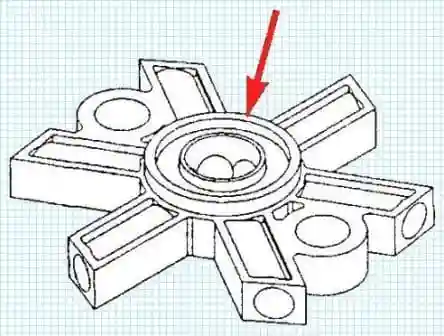
- we must make sure that the seal is installed in the disc;
- we install the crankcase ventilation disc on the camshaft gear and tighten its mounting bolts. Tightening torque – 28 N·m.
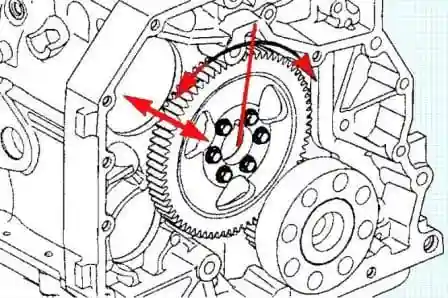
We check the axial and radial clearances of the camshaft gear:
- axial clearance – 0.100–0.360 mm;
- radial clearance – 0.076–0.280 mm.
After this:
- we tighten the air compressor mounting (if fitted);
- we lower the tappets;
- we install the pushrods;
- we install the rocker arms;
- we install the cylinder head cover;
- we install the flywheel housing;
- we install the flywheel or the torque converter drive plate (depending on the gearbox);
- we install the transmission;
- we connect the battery and start the engine. We inspect for leaks.