


The engine flywheel is removed during a major engine overhaul or to replace the ring gear. Removing and installing the flywheel requires care: correct bolt tightening and the condition of the contact surfaces affect clutch operation and engine starting.
We prepare the vehicle for the task. We disconnect the negative battery terminal.
We remove the transmission assemblies.
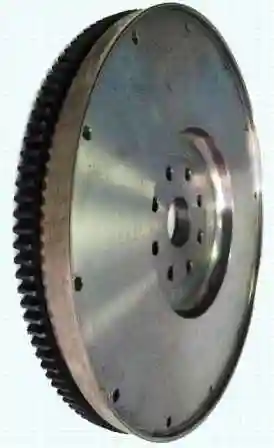
We remove the flywheel, for this:
- Models with a “wet” clutch: we drain the oil from the clutch housing by unscrewing the plug from its lower part.
- Using retainer No. 3824591, we lock the flywheel against rotation.
- We unscrew two bolts located opposite each other.
- We install two guide pins M12×1.25×90 mm.
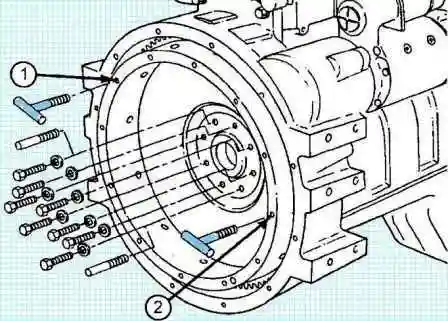
- We determine the type and size of the bolts and install two T-handles in the flywheel holes (1) and (2).
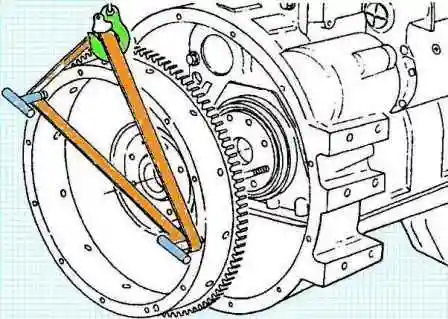
Note: if the design includes a clutch, the pressure plate mounting bolt holes may be metric or imperial threaded. Do not make a mistake when selecting the bolts.
- We unscrew the remaining six flywheel mounting bolts.
- We remove the flywheel from the guide pins.
Dismantling, inspection and repair of the flywheel
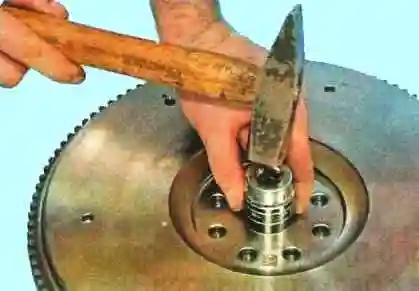
- We inspect the condition of the gearbox input shaft pilot bearing pressed into the flywheel bore. If there is excessive play or seizing of the rolling elements, the bearing must be replaced.
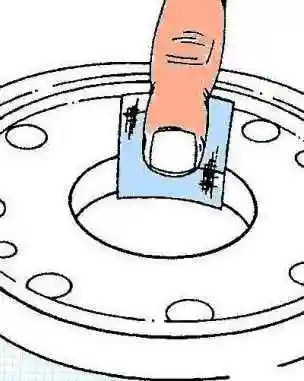
- We remove the pilot bearing using a drift and a hammer.
- We clean the bearing seat with fine abrasive paper.
- We check the flywheel surface for scores and burrs.
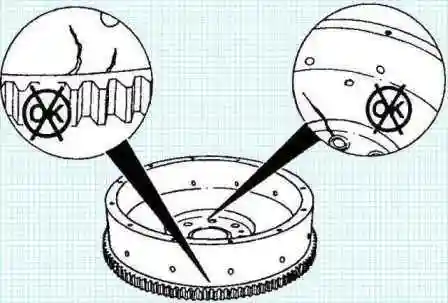
- Minor defects can be removed with abrasive paper.
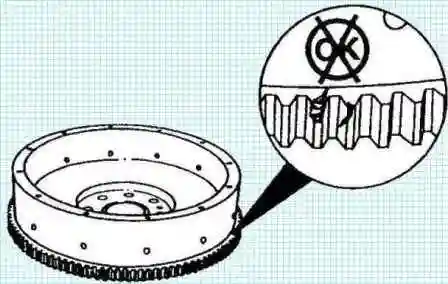
- We check the flywheel ring gear for wear and damaged teeth. If necessary, we replace the flywheel ring gear, for this:
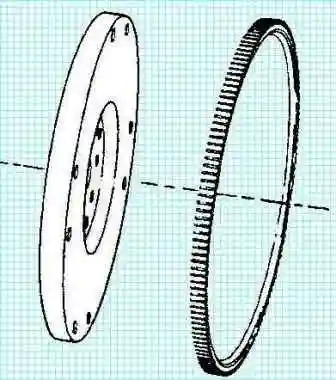
- using a copper bar, we knock off the ring gear;
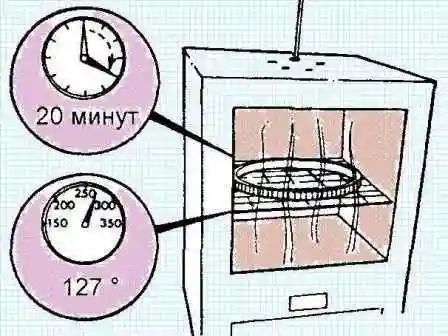
- we heat the new ring gear for 20 minutes in an oven preheated to 127°C;
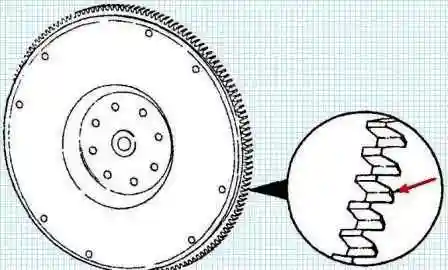
- we install the ring gear on the flywheel with the chamfered side of the teeth towards the crankshaft.
Flywheel assembly
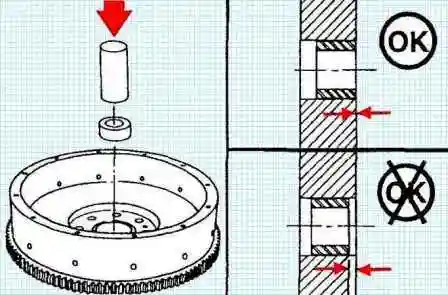
- We install the new pilot bearing using a hammer and a drift.
Flywheel installation
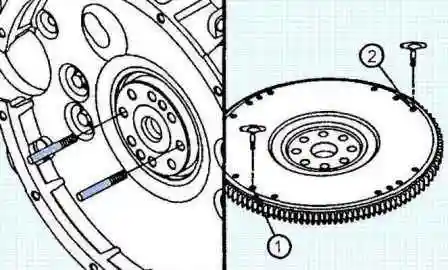
- We install two guide pins M12×1.25×90 mm in the crankshaft flange holes opposite each other.
- We determine the type and size of the bolts and install two T-handles in the flywheel holes (1) and (2).
Note: if the design includes a clutch, the pressure plate mounting bolt holes may be metric or imperial threaded. Do not make a mistake when selecting the bolts.
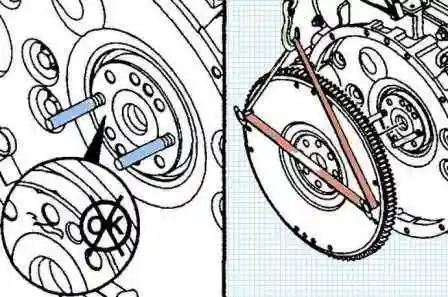
- We check the rear end of the crankshaft and the flange under the flywheel for dirt and protruding scores and burrs.
- We install the flywheel on the guide pins.
- We lubricate the bolt threads and washers with clean engine oil.
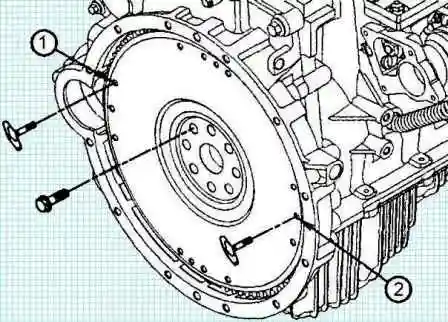
- We install six bolts.
- We remove the T-handles and guide pins (1) and (2).
- We install the remaining bolts in the holes from which the guide pins were removed.
- We lock the crankshaft against rotation using tool No. 3824591 for holding the flywheel stationary.
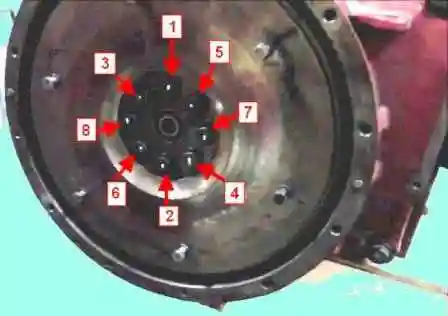
- We tighten the bolts in the sequence shown in the figure. Tightening torque: first stage – 30 N·m; second stage – turn a further 90°.
Checking flywheel runout
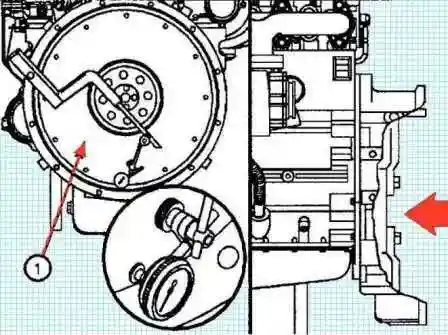
We determine the flywheel (4) face runout using a dial indicator (1) and a dial indicator holder (2):
- we install the holder on the flywheel housing;
- we secure the gauge on the holder;
- we place the indicator plunger on the flywheel face at the radius specified in the table, as close as possible to its outer diameter, to measure the flywheel face (1) runout;
- we push the flywheel forward to take up the crankshaft end play. We set the indicator to zero;
- we turn the crankshaft one revolution. We measure and record the flywheel runout at four equally spaced points around its circumference.
Always push the flywheel forward for each measurement to take up the crankshaft end play.
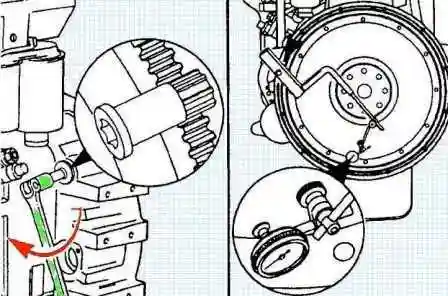
- we determine the total runout. Total runout is defined as the difference between the maximum and minimum indicator readings at the four measurement points.
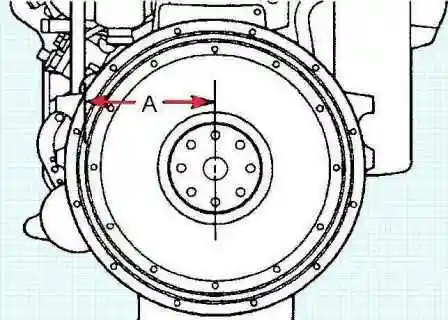
- we measure the distance from the flywheel centre to the indicator plunger (A).
Maximum total flywheel runout
| Flywheel radius, mm | Maximum total flywheel runout, mm |
|---|---|
| 101.6 | 0.140 |
| 127 | 0.130 |
| 152.4 | 0.156 |
| 177.8 | 0.182 |
| 203.2 | 0.208 |
| 228.6 | 0.234 |
| 254 | 0.260 |
If the flywheel runout exceeds the maximum, the flywheel must be removed.
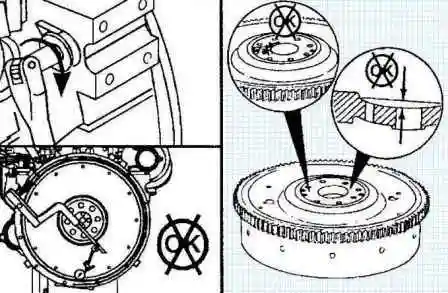
Check the contact surfaces of the flywheel and crankshaft for scores, burrs and dirt.
We replace the flywheel if the runout exceeds the maximum.
After assembly, we install the transmission and all parts.


