


For stable operation of the injection engine across all operating conditions, a constant fuel pressure in the fuel rail is required.
If the fuel pressure in the rail is insufficient, the engine will run unevenly at idle, throttle response will be poor, and there will be jerking and hesitation during driving.
Disconnect the fuel supply line from the fuel rail.
Connect the pipe with the pressure gauge from the test kit (Mot1311-01) to the «tee» of the tool (Mot. 1311-08), and the fuel supply line to the «tee» of the rail connection (Fig. 1).
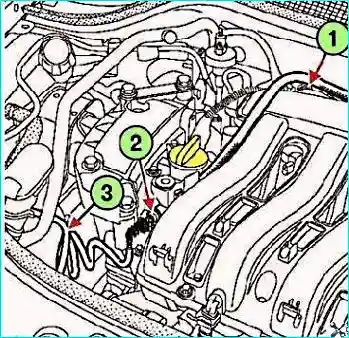
Fig. 1. Connection diagram for testing the electric fuel pump: 1 - pipe with pressure gauge; 2 - tool «tee» (Mot1311-08); 3 - fuel supply line
Perform the test procedure with the engine stopped.
Remove the cover of the protection and switching unit (fusebox/relay box).
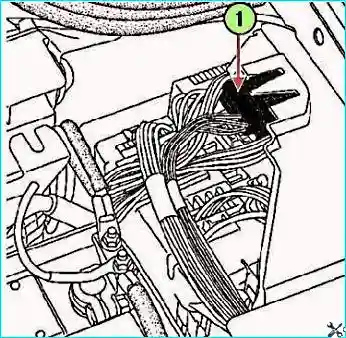
Fig. 2. Removing the connector: 1 - connector
Disconnect the brown connector of the protection and switching unit (see Fig. 2).
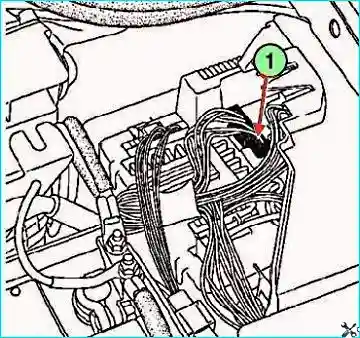
Fig. 3. Disconnecting the switching unit connector: 1 - connector
Connect the contact of the brown connector to the battery «+» terminal to activate the fuel pump (see Fig. 3).
Measure the pump flow rate, which should be 80–120 l/h.
Next, we will check the fuel pressure in the fuel rail.
Checking the fuel pressure
To check the fuel pressure in the rail, you will need a pressure gauge with a set of adapters for connection to the fuel line.
If the electric fuel pump is not heard when the ignition is switched on, it may have failed.
However, it should be noted that the electric fuel pump only operates when the pressure in the rail is insufficient.
If the pressure is within specification, the electric pump will not run.
Before checking the fuel pressure, first relieve the fuel pressure.
The fuel pressure can be relieved in several ways.
You can disconnect the fuel pump relay or disconnect the connector from the fuel module, then start the engine and wait for it to stall.
Also, if the engine has not been started for 2–3 hours, there should be no pressure in the fuel rail.
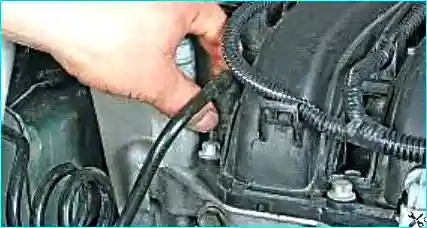
Fig. 4. Compress the clip of the fuel rail hose connector
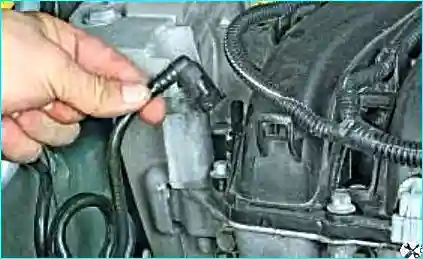
Fig. 5. Disconnect the hose from the fuel rail
Connect the pressure gauge adapter between the supply hose and the fuel rail.
Start the engine and read the pressure gauge.
The fuel pressure at idle must be at least 3 kgf/cm².
If the pressure is insufficient, the possible causes of low fuel pressure are:
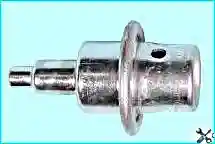
- faulty fuel pressure regulator;
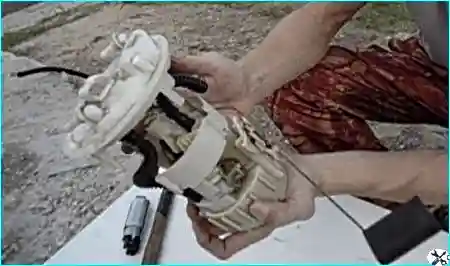
- faulty fuel pump or clogged fuel fine filter, integrated in the fuel module.


