


We remove the master brake cylinder for repair, as well as for replacing the vacuum servo.
As practice shows, repair of the master brake cylinder does not give the desired result, so it is better to replace it.
Defects of the master brake cylinder for which its repair or replacement is required:
- contamination of the master cylinder or great wear of its bore;
- wear or damage of the piston seal of the master cylinder;
- swelling of the seals;
- clogging of the compensation holes (spontaneous braking of the car occurs).
Having raised the retainer, we disconnect the wiring connector from the brake fluid level sensor.
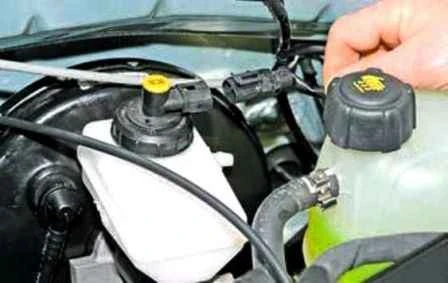
Having unscrewed the reservoir cap, we remove it together with the fluid level sensor.
With a rubber bulb we extract the fluid from the reservoir and screw the cap back on.
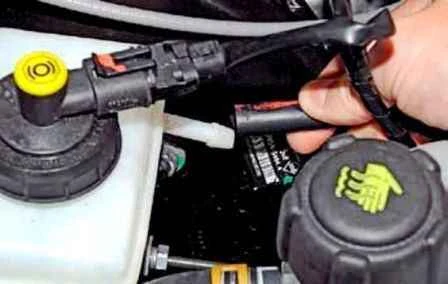
We disconnect the clutch master cylinder hose from the reservoir union.
We secure the hose so that it is in the upper position.
Brake fluid will remain in the hose and after installation it will not be necessary to bleed the clutch release hydraulic drive.
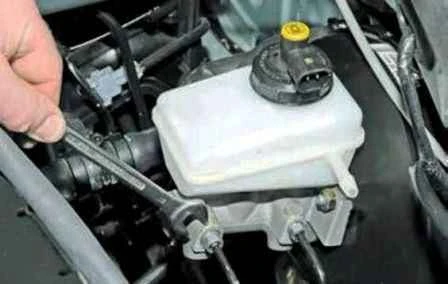
With an 11 mm open-end spanner or a special spanner for brake pipe unions, we unscrew the unions of two brake pipes.
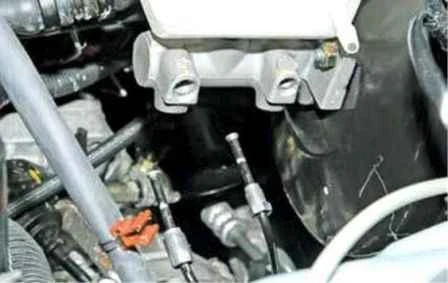
We bring the pipe end pieces out of the openings of the master brake cylinder.
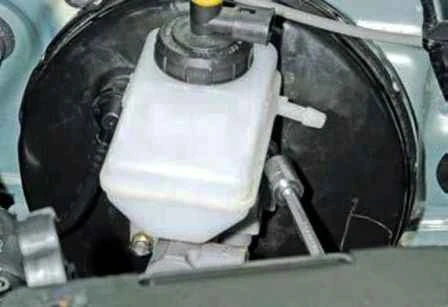
With a 13 mm socket we unscrew two nuts securing the cylinder to the vacuum brake servo.
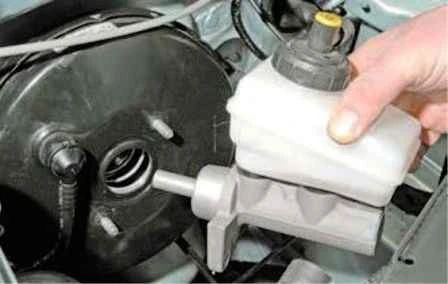
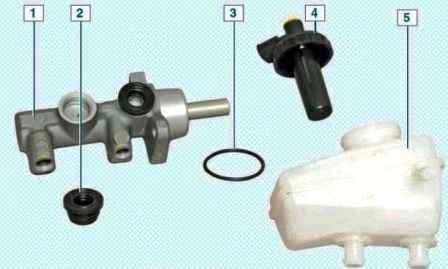
We remove the master brake cylinder complete with the hydraulic drive reservoir.
The connection of the master brake cylinder with the vacuum brake servo is sealed with a rubber ring located in the groove of the cylinder flange.
We take the ring out of the groove of the flange.
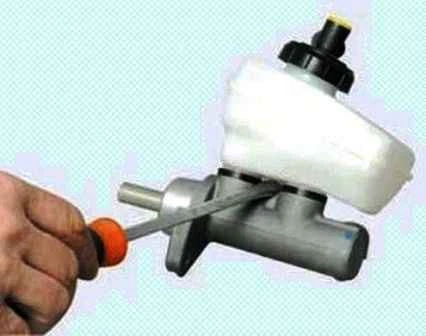
If it is necessary to remove the hydraulic drive reservoir, we insert a screwdriver between the bodies of the reservoir and the cylinder.
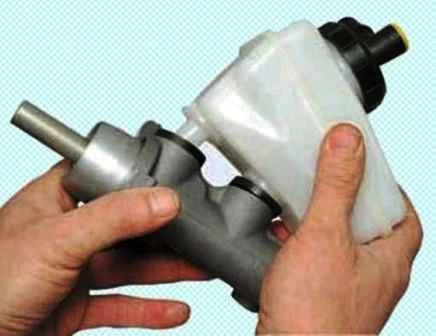
Overcoming the resistance of the rubber sealing bushes, we bring the reservoir unions out of the cylinder openings and remove the reservoir.
We take the sealing bushes of the reservoir unions out of the openings of the master brake cylinder.
We check the condition of the rubber sealing bushes and the ring.
If they are damaged (tears, cracks) or have lost their elasticity, we replace them with new ones.
We assemble the master brake cylinder with the reservoir in the reverse order.
We bleed the hydraulic drives of the brakes and clutch (article — Replacement and bleeding of the brake and clutch hydraulic drive Renault Duster).


