


We replace the thermostat in the event of a disturbance of the engine's thermal regime, when the engine either overheats (the thermostat valve has jammed in the closed position) or does not warm up sufficiently (the thermostat valve has stuck in the open position).
When checking the thermostat on the vehicle, after starting a cold engine, the lower hose leading from the radiator must remain cold for some time, and then (after the coolant temperature reaches 89 °C) warm up quickly, which indicates the beginning of the circulation of the coolant through the large circuit.
To remove the thermostat, we drain the coolant (article – Checking and replacement of the engine coolant Renault Duster).
We demonstrate the removal of the thermostat on the F4R engine; on the K4M engine the thermostat is removed in a similar way.
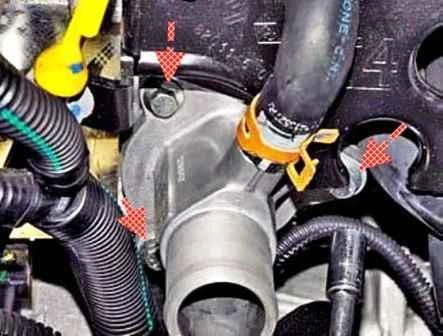
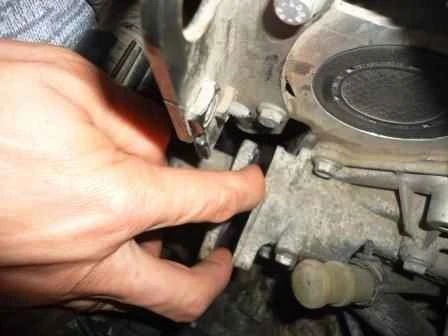
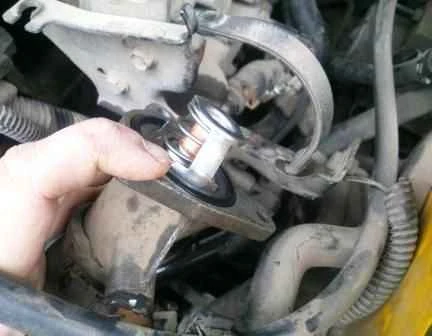
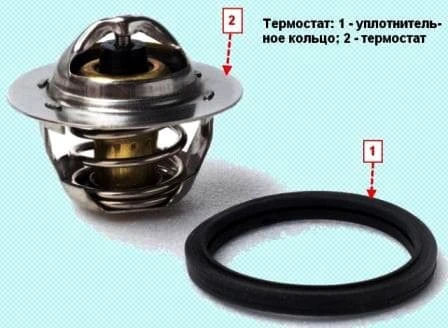
The joint between the thermostat and the housing and cover is sealed by a rubber gasket.
If the gasket is damaged or has lost its elasticity, it must be replaced with a new one.
To check the thermostat, we lower it into a vessel with water.
We heat the vessel, at the same time stirring the water and monitoring by thermometer the beginning of the opening of the thermostat valve.
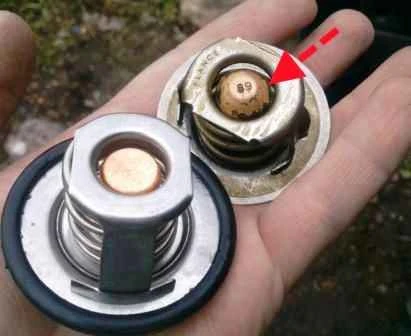
At a temperature of 95±2 °C the valve must open fully — the travel of the stem must in this case be at least 8 mm.
We install the thermostat in the reverse order.
We fill the liquid into the cooling system and bring the liquid level in the expansion tank to normal.
Removal of the water distributor
We remove the water distributor to replace the sealing gasket in the joint between the cylinder head and the flange of the thermostat housing, as well as during repair of the cylinder head.
We drain the coolant from the cooling system
We withdraw the thermostat, as described above.
We remove the air intake and the resonator of the engine air tract.
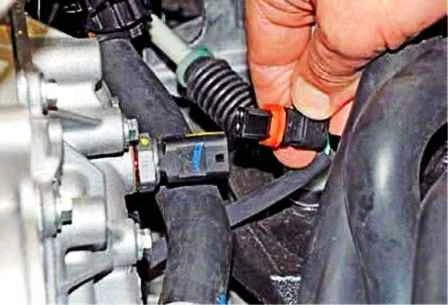
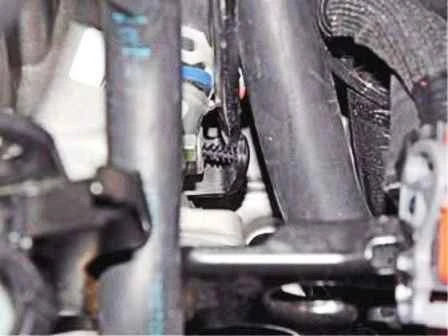
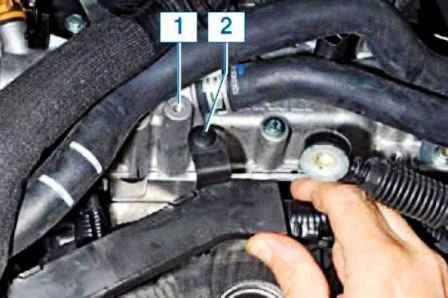
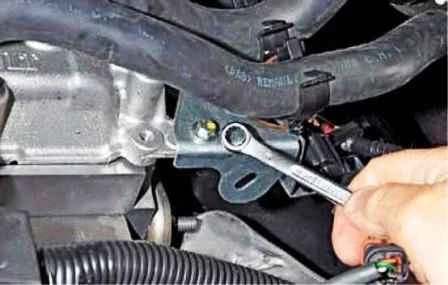
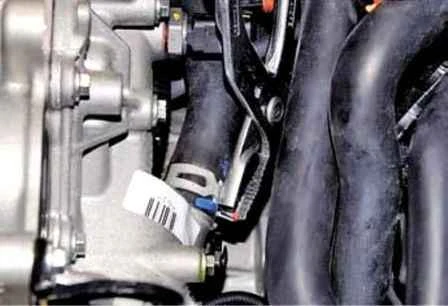
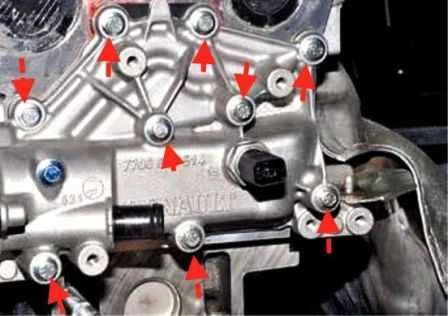
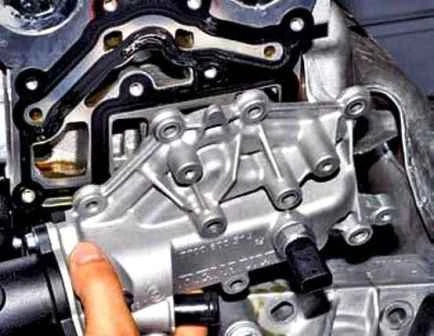
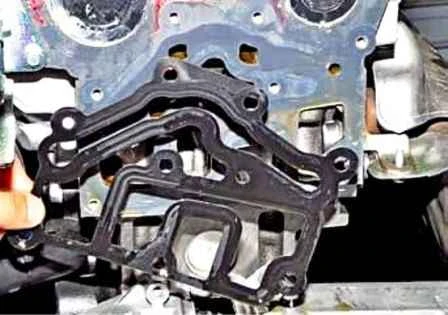
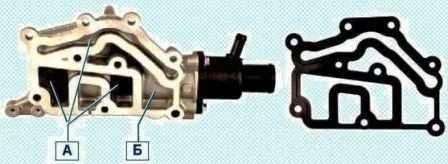
In the housing and the gasket, channels for oil and coolant are provided.
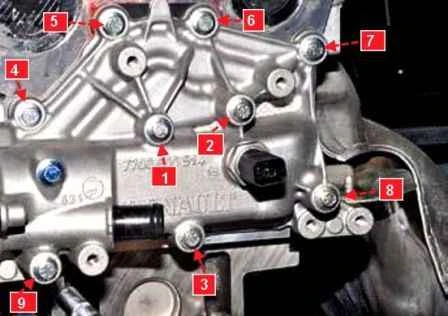
Tightening torque – 10 Nm.


