


The vacuum required for the operation of the brake booster is generated by a vacuum pump driven from the front end of the engine's camshaft.
This is because a turbocharged diesel engine does not have the vacuum in the intake manifold that is used to operate the brake booster in vehicles with gasoline engines.
A direct splined connection between the camshaft and the vacuum pump drive is provided in the cylinder head.
The operation of the vacuum pump does not require synchronization with the operation of the engine.
The vacuum is generated by a vane mounted on the pump rotor.
The rotor is located in the pump housing and is connected to the pump shaft.
Lubricating oil is supplied to the pump under pressure through an oil passage in the cylinder head.
The lubricating oil drains through the lower part of the pump into the crankcase.
To prevent oil from entering the vehicle's vacuum lines, a check ball is installed in the vacuum port of the pump.
The pump is designed to maintain a minimum pressure of –45 kPa at idle speed.
The vacuum pump, the vacuum reservoir, and the brake booster are connected via hoses.
The vacuum reservoir increases the volumetric capacity of the system.
Reasons for replacing the vacuum pump:
- the vacuum pump drive is damaged;
- the vacuum pump is worn or damaged.
Checking the Vacuum Pump
To check the vacuum pump, disconnect the vacuum pump hose.
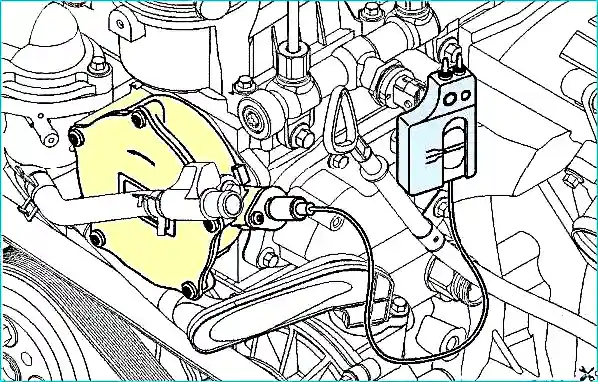
Connect the pressure gauge/vacuum gauge (catalog number 3164491) to the vacuum port of the pump.
Start the engine. Let the engine run at idle for 1 minute to build up the required vacuum in the system.
Important: The vacuum gauge must be rated to measure a pressure of at least –45 kPa so that the operation of the pump can be assessed.
If this minimum vacuum level cannot be achieved, the vacuum pump must be replaced.
Important: The design of the vacuum pump is quite complex; special tools and equipment are required for its repair, so if the pump fails, replace it as a complete assembly.
Removal and Installation of the Vacuum Pump
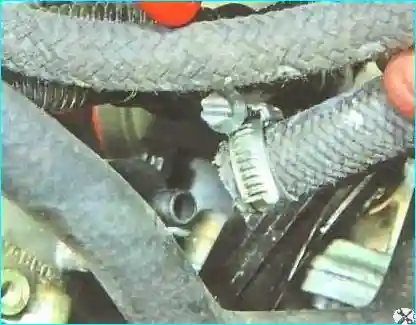
Loosen the clamp securing the hose to the vacuum pump port. Disconnect the hose from the pump.
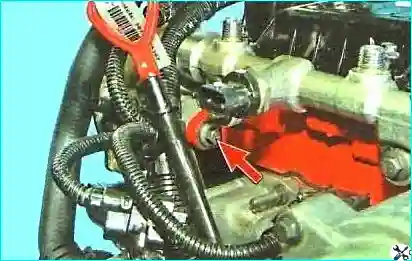
Unscrew the rear mounting bolt of the vacuum pump.
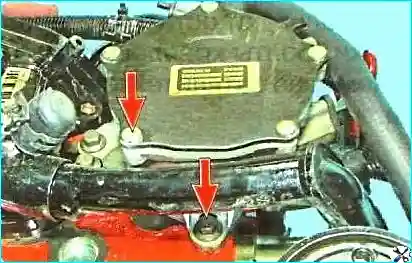
Unscrew the two front mounting bolts securing the vacuum pump to the cylinder head.
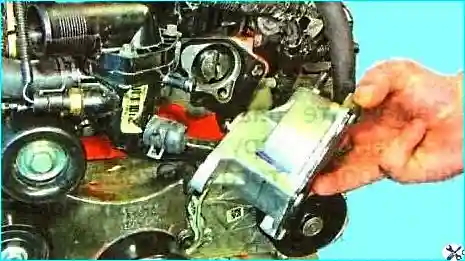
Remove the pump.
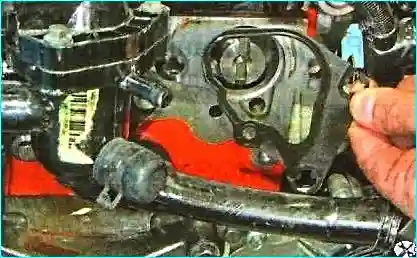
Remove the gasket.
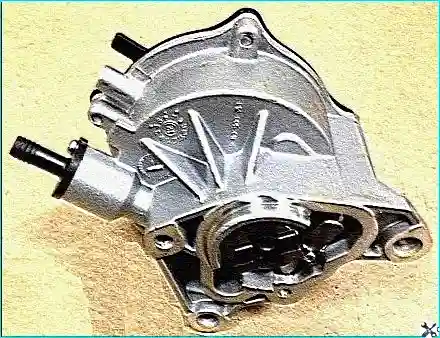
Important: Install the pump in the reverse order.
Materials and Tools Used
- vacuum gauge/pressure gauge (catalog number 3164491) with a measuring range of at least –45 kPa;
- new vacuum pump as a complete assembly (if replacement is necessary);
- new vacuum pump gasket;
- vacuum pump hose and retaining clamp;
- set of open-end and socket wrenches;
- screwdriver or tool for loosening the clamp;
- motor oil recommended by the engine manufacturer;
- rags for cleaning surfaces of oil and dirt.
Before installing the new pump, check the condition of the hose and clamp and make sure the mating surface of the cylinder head is clean. After installing the pump, check the engine oil level and top it up to the correct level if necessary.